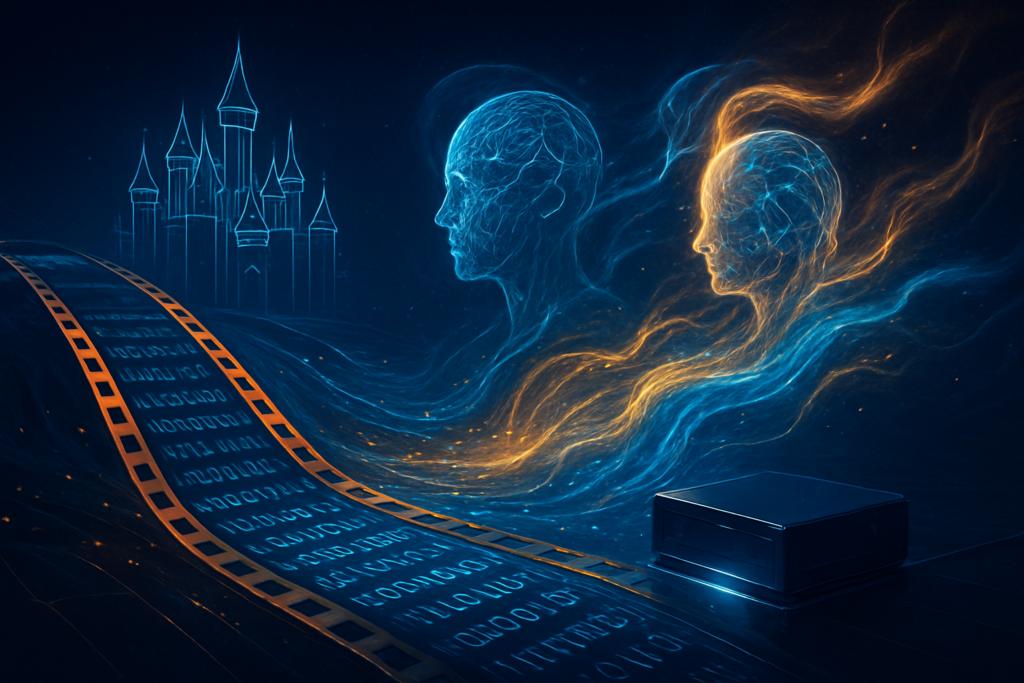
In a move that has sent shockwaves through both Silicon Valley and the San Fernando Valley, The Walt Disney Company (NYSE: DIS) has officially cemented its status as the pioneer of the AI-driven entertainment era. Following a landmark $1 billion equity investment and a three-year licensing agreement with OpenAI, Disney is integrating its most iconic intellectual properties—from Mickey Mouse to the Marvel Cinematic Universe—directly into OpenAI’s Sora video generation platform. This partnership represents a historic pivot in the entertainment industry, moving away from the defensive litigation that has characterized the last two years and toward a model of aggressive, regulated AI integration.
The deal, which was a central theme of Disney’s Q1 2026 earnings call on February 2, signifies more than just a financial tie-up; it is a fundamental shift in how "The Mouse" views the creation and distribution of content. By allowing OpenAI to train and deploy specific models on its legendary character library, Disney is effectively betting that the future of storytelling is not just broadcast to an audience, but co-created with them.
A New Frontier for Generative Cinema
Technically, the integration centers on the newly released Sora 2, which OpenAI debuted in late 2025. This updated model introduces "Character Cameos," a feature specifically designed to handle the rigorous brand safety requirements of a company like Disney. Users can now generate high-fidelity, 30-second video clips featuring over 250 licensed characters, including favorites from Pixar, Disney Animation, and the Star Wars galaxy. The technical specifications of Sora 2 allow for unprecedented temporal consistency, ensuring that a character like Elsa or Grogu maintains perfect visual fidelity across complex movements and lighting environments—a feat that previous generative models struggled to achieve.
Crucially, the deal includes stringent "hard restrictions" to navigate the legal and ethical minefields of the post-strike Hollywood landscape. The integration strictly excludes the likenesses and voices of live-action human talent. This means while a user can prompt Sora to create a scene with the Iron Man suit or a Stormtrooper, the AI is programmatically barred from generating the faces or voices of actors like Robert Downey Jr. or Pedro Pascal. This technical guardrail was essential for Disney to maintain its precarious peace with SAG-AFTRA, positioning the tool as a platform for "character-driven" rather than "actor-driven" generative content.
Redefining the Competitive Landscape
The strategic implications for the broader tech and media landscape are profound. While competitors like Netflix (NASDAQ: NFLX) and Warner Bros. Discovery (NASDAQ: WBD) have experimented with AI for back-end production and localization, Disney is the first to open its "vault" to a third-party generative platform. This gives OpenAI a massive competitive advantage over rivals like Google (NASDAQ: GOOGL) and Meta (NASDAQ: META), who are currently embroiled in copyright disputes with various content creators. Disney’s parallel move—issuing a cease-and-desist to Google over unauthorized IP use in its Gemini models—underscores a "pay-to-play" strategy that could become the industry standard.
For OpenAI, the $1 billion influx and the association with Disney’s brand provide a level of cultural legitimacy that no amount of raw computing power could buy. It positions Sora not as a threat to creativity, but as an official "creative partner" to the world's largest storytelling engine. This alliance forces other tech giants to choose between potentially infringing on IP or following Disney's lead by striking expensive, exclusive licensing deals with the remaining major studios.
The Cultural and Ethical Pivot
This milestone marks a definitive end to the "containment" era of AI in Hollywood. For years, the industry’s stance was characterized by fear and restriction; today, it is about monetization and controlled access. However, the move is not without its detractors. The Writers Guild of America (WGA) has been vocal in its criticism, suggesting that such deals "sanction the theft" of human creativity by automating the narrative process. The concern is that as Sora-generated clips become more sophisticated, the line between professional animation and AI-generated "fan-fiction" will blur, potentially devaluing the labor of human artists.
Furthermore, the "walled garden" approach Disney is taking—curating the best Sora-generated clips for a dedicated section on Disney+—mirrors the rise of user-generated platforms like TikTok, but with a high-budget, cinematic sheen. This raises questions about the future of the "Disney brand." If anyone can generate a Disney "movie" in 30 seconds, does the traditional 90-minute feature film lose its luster? Disney CEO Bob Iger addressed this in the February earnings call, arguing that AI will foster a "more intimate relationship" with the audience rather than replacing the spectacle of high-end filmmaking.
The Road Ahead: Personalization and Safety
Looking forward, the Disney-OpenAI partnership is expected to evolve into even more immersive applications. Rumors are already circulating about "Personalized Parks Experiences," where AI-generated characters could interact with guests via augmented reality in real-time, using the same Sora-derived logic to maintain character consistency. Near-term, we expect to see the 30-second limit expanded as compute costs decrease, potentially allowing for the creation of entire short-form series by users within the Disney+ ecosystem.
However, the primary challenge remains the "Responsible AI" framework. Disney and OpenAI have implemented robust "safety filtering" to prevent iconic characters from being placed in violent or inappropriate contexts. Maintaining these filters at scale while allowing for creative freedom will be a constant technical battle. As AI continues to democratize content creation, the burden of "brand policing" will shift from legal departments to automated algorithms.
A Turning Point in Media History
Disney’s $1 billion bet on OpenAI Sora is a watershed moment that will likely be remembered as the point when AI became an official part of the Hollywood establishment. It represents a sophisticated compromise between the disruptive power of generative technology and the protective instincts of a century-old media titan. By integrating its IP into Sora, Disney is no longer just a content creator; it is a platform for the collective imagination of its global audience.
In the coming months, the industry will be watching closely to see how users interact with these official character models and whether the guardrails against human likeness hold up under pressure. If successful, this partnership will serve as the blueprint for the next decade of entertainment, where the boundary between the "Magic Kingdom" and the digital world finally disappears.
This content is intended for informational purposes only and represents analysis of current AI developments.
TokenRing AI delivers enterprise-grade solutions for multi-agent AI workflow orchestration, AI-powered development tools, and seamless remote collaboration platforms.
For more information, visit https://www.tokenring.ai/.