SANTA CLARA, CA – As the calendar turns to January 2026, the global appetite for artificial intelligence compute has reached an unprecedented fever pitch. Leading the charge is a massive surge in demand for NVIDIA Corporation (NASDAQ: NVDA) and its high-performance Blackwell and H200 architectures. Driven by a landmark $14 billion order from ByteDance and sustained aggressive procurement from Western hyperscalers, the demand has forced Taiwan Semiconductor Manufacturing Company (NYSE: TSM) into an emergency expansion of its advanced packaging facilities. This "compute-at-all-costs" era has redefined the semiconductor supply chain, as nations and corporations alike scramble to secure the silicon necessary to power the next generation of "Agentic AI" and frontier models.
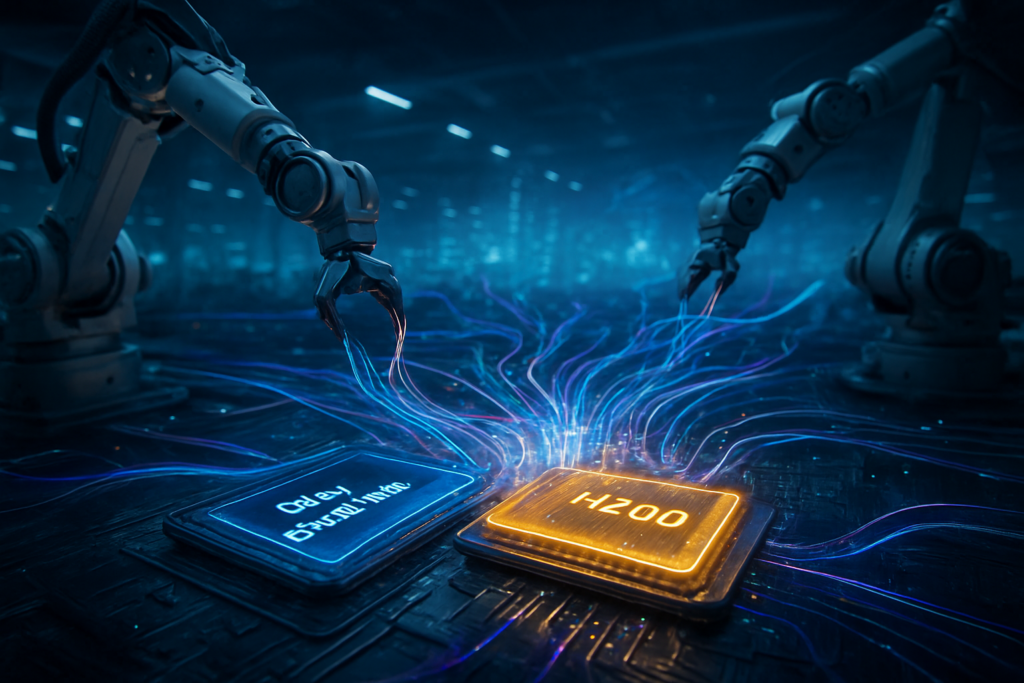
The current bottleneck is no longer just the fabrication of the chips themselves, but the complex Chip on Wafer on Substrate (CoWoS) packaging required to bond high-bandwidth memory to the GPU dies. With NVIDIA securing over 60% of TSMC’s total CoWoS capacity for 2026, the industry is witnessing a "dual-track" demand cycle: while the cutting-edge Blackwell B200 and B300 units are being funneled into massive training clusters for models like Llama-4 and GPT-5, the H200 has found a lucrative "second wind" as the primary engine for large-scale inference and regional AI factories.
The Architectural Leap: From Monolithic to Chiplet Dominance
The Blackwell architecture represents the most significant technical pivot in NVIDIA’s history, moving away from the monolithic die design of the previous Hopper (H100/H200) generation to a sophisticated dual-die chiplet approach. The B200 GPU boasts a staggering 208 billion transistors, more than double the 80 billion found in the H100. By utilizing the TSMC 4NP process node, NVIDIA has managed to link two primary dies with a 10 TB/s interconnect, allowing them to function as a single, massive processor. This design is specifically optimized for the FP4 precision format, which offers a 5x performance increase over the H100 in specific AI inference tasks, a critical capability as the industry shifts from training models to deploying them at scale.
While Blackwell is the performance leader, the H200 remains a cornerstone of the market due to its 141GB of HBM3e memory and 4.8 TB/s of bandwidth. Industry experts note that the H200’s reliability and established software stack have made it the preferred choice for "Agentic AI" workloads—autonomous systems that require constant, low-latency inference. The technical community has lauded NVIDIA’s ability to maintain a unified CUDA software environment across these disparate architectures, allowing developers to migrate workloads from the aging Hopper clusters to the new Blackwell "super-pods" with minimal friction, a strategic moat that competitors have yet to bridge.
A $14 Billion Signal: ByteDance and the Global Hyperscale War
The market dynamics shifted dramatically in late 2025 following the introduction of a new "transactional diffusion" trade model by the U.S. government. This regulatory framework allowed NVIDIA to resume high-volume exports of H200-class silicon to approved Chinese entities in exchange for significant revenue-sharing fees. ByteDance, the parent company of TikTok, immediately capitalized on this, placing a historic $14 billion order for H200 units to be delivered throughout 2026. This move is seen as a strategic play to solidify ByteDance’s lead in AI-driven recommendation engines and its "Doubao" LLM ecosystem, which currently dominates the Chinese domestic market.
However, the competition is not limited to China. In the West, Microsoft Corp. (NASDAQ: MSFT), Meta Platforms Inc. (NASDAQ: META), and Alphabet Inc. (NASDAQ: GOOGL) continue to be NVIDIA’s "anchor tenants." While these giants are increasingly deploying internal silicon—such as Microsoft’s Maia 100 and Alphabet’s TPU v6—to handle routine inference and reduce Total Cost of Ownership (TCO), they remain entirely dependent on NVIDIA for frontier model training. Meta, in particular, has utilized its internal MTIA chips for recommendation algorithms to free up its vast Blackwell reserves for the development of Llama-4, signaling a future where custom silicon and NVIDIA GPUs coexist in a tiered compute hierarchy.
The Geopolitics of Compute and the "Connectivity Wall"
The broader significance of the current Blackwell-H200 surge lies in the emergence of what analysts call the "Connectivity Wall." As individual chips reach the physical limits of power density, the focus has shifted to how these chips are networked. NVIDIA’s NVLink 5.0, which provides 1.8 TB/s of bidirectional throughput, has become as essential as the GPU itself. This has transformed data centers from collections of individual servers into "AI Factories"—single, warehouse-scale computers. This shift has profound implications for global energy consumption, as a single Blackwell NVL72 rack can consume up to 120kW of power, necessitating a revolution in liquid-cooling infrastructure.
Comparisons are frequently drawn to the early 20th-century oil boom, but with a digital twist. The ability to manufacture and deploy these chips has become a metric of national power. The TSMC expansion, which aims to reach 150,000 CoWoS wafers per month by the end of 2026, is no longer just a corporate milestone but a matter of international economic security. Concerns remain, however, regarding the concentration of this manufacturing in Taiwan and the potential for a "compute divide," where only the wealthiest nations and corporations can afford the entry price for frontier AI development.
Beyond Blackwell: The Arrival of Rubin and HBM4
Looking ahead, the industry is already bracing for the next architectural shift. At GTC 2025, NVIDIA teased the "Rubin" (R100) architecture, which is expected to enter mass production in the second half of 2026. Rubin will mark NVIDIA’s first transition to the 3nm process node and the adoption of HBM4 memory, promising a 2.5x leap in performance-per-watt over Blackwell. This transition is critical for addressing the power-consumption crisis that currently threatens to stall data center expansion in major tech hubs.
The near-term challenge remains the supply chain. While TSMC is racing to add capacity, the lead times for Blackwell systems still stretch into 2027 for new customers. Experts predict that 2026 will be the year of "Inference at Scale," where the massive compute clusters built over the last two years finally begin to deliver consumer-facing autonomous agents capable of complex reasoning and multi-step task execution. The primary hurdle will be the availability of clean energy to power these facilities and the continued evolution of high-speed networking to prevent data bottlenecks.
The 2026 Outlook: A Defining Moment for AI Infrastructure
The current demand for Blackwell and H200 silicon represents a watershed moment in the history of technology. NVIDIA has successfully transitioned from a component manufacturer to the architect of the world’s most powerful industrial machines. The scale of investment from companies like ByteDance and Microsoft underscores a collective belief that the path to Artificial General Intelligence (AGI) is paved with unprecedented amounts of compute.
As we move further into 2026, the key metrics to watch will be TSMC’s ability to meet its aggressive CoWoS expansion targets and the successful trial production of the Rubin R100 series. For now, the "Silicon Gold Rush" shows no signs of slowing down. With NVIDIA firmly at the helm and the world’s largest tech giants locked in a multi-billion dollar arms race, the next twelve months will likely determine the winners and losers of the AI era for the next decade.
This content is intended for informational purposes only and represents analysis of current AI developments.
TokenRing AI delivers enterprise-grade solutions for multi-agent AI workflow orchestration, AI-powered development tools, and seamless remote collaboration platforms.
For more information, visit https://www.tokenring.ai/.