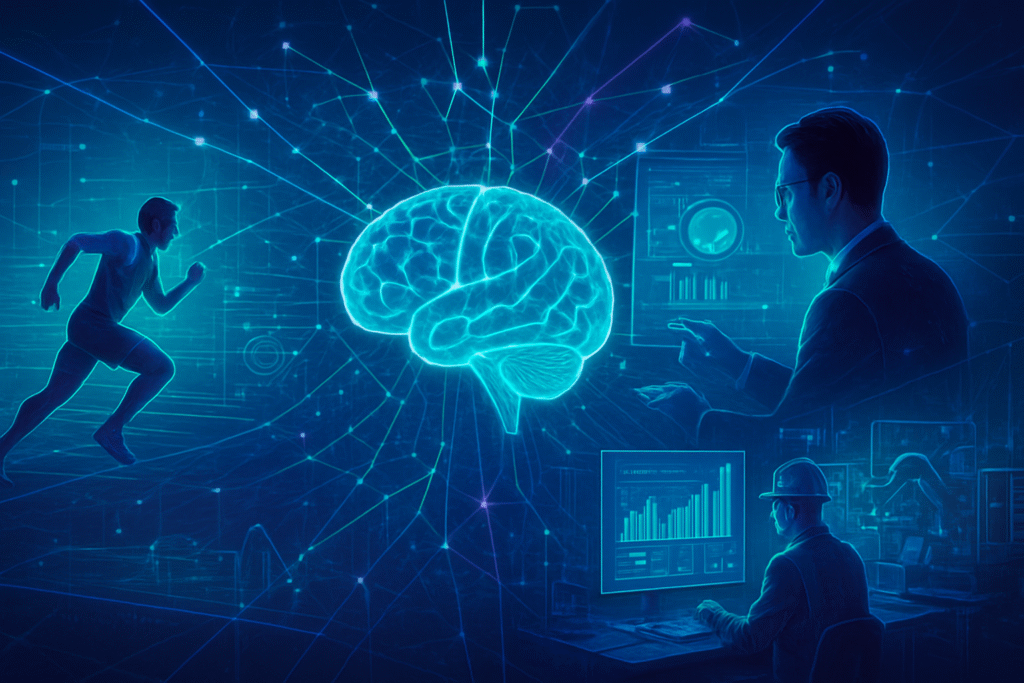
The application of Artificial Intelligence (AI) in performance analysis, initially gaining traction in niche areas like figure skating, is rapidly expanding its reach across a multitude of high-performance sports and skilled professions. This seismic shift signals the dawn of a new era in data-driven performance optimization, promising unprecedented insights and immediate, actionable feedback to athletes, professionals, and organizations alike. AI is transforming how we understand, measure, and improve human capabilities by leveraging advanced machine learning, deep learning, natural language processing, and predictive analytics to process vast datasets at speeds impossible for human analysis, thereby minimizing bias and identifying subtle patterns that previously went unnoticed.
This transformative power extends beyond individual athletic prowess, impacting team strategies, talent identification, injury prevention, and even the operational efficiency and strategic decision-making within complex professional environments. From meticulously dissecting a golfer's swing to optimizing a manufacturing supply chain or refining an employee's professional development path, AI is becoming the ubiquitous coach and analyst, driving a paradigm shift towards continuous, objective, and highly personalized improvement across all high-stakes domains.
The AI Revolution Extends Beyond the Rink: A New Era of Data-Driven Performance Optimization
The technical bedrock of AI in performance analysis is built upon sophisticated algorithms, diverse data sources, and the imperative for real-time capabilities. At its core, computer vision (CV) plays a pivotal role, utilizing deep learning architectures like Convolutional Neural Networks (CNNs), Spatiotemporal Transformers, and Graph Convolutional Networks (GCNs) for advanced pose estimation. These algorithms meticulously track and reconstruct human movement in 2D and 3D, identifying critical body points and biomechanical inefficiencies in actions ranging from a swimmer's stroke to a dancer's leap. Object detection and tracking algorithms, such as YOLO models, further enhance this by measuring speed, acceleration, and trajectories of athletes and equipment in dynamic environments. Beyond vision, a suite of machine learning (ML) models, including Deep Learning Architectures (e.g., CNN-LSTM hybrids), Logistic Regression, Support Vector Machines (SVM), and Random Forest, are deployed for tasks like injury prediction, talent identification, tactical analysis, and employee performance evaluation, often achieving high accuracy rates. Reinforcement Learning is also emerging, capable of simulating countless scenarios to test and refine strategies.
These algorithms are fed by a rich tapestry of data sources. High-resolution video footage from multiple cameras provides the visual raw material for movement and tactical analysis, with platforms like SkillCorner even generating tracking data from standard video. Wearable sensors, including GPS trackers, accelerometers, gyroscopes, and heart rate monitors, collect crucial biometric and movement data, offering insights into speed, power output, and physiological responses. Companies like Zebra MotionWorks (NASDAQ: ZBRA) in the NFL and Wimu Pro exemplify this, providing advanced positional and motion data. In professional contexts, comprehensive datasets from job portals, industry reports, and internal employee records contribute to a holistic performance picture.
A key differentiator of AI-driven performance analysis is its real-time capability, a significant departure from traditional, retrospective methods. AI systems can analyze data streams instantaneously, providing immediate feedback during training or competition, allowing for swift adjustments to technique or strategy. This enables in-game decision support for coaches and rapid course correction for professionals. However, achieving true real-time performance presents technical challenges such as latency from model complexity, hardware constraints, and network congestion. Solutions involve asynchronous processing, dynamic batch management, data caching, and increasingly, edge computing, which processes data locally to minimize reliance on external networks.
Initial reactions from the AI research community and industry experts are largely optimistic, citing enhanced productivity, objective and detailed analysis, and proactive strategies for injury prevention and talent identification. Many professionals (around 75%) believe AI boosts their productivity, with some experiencing 25-50% improvements. However, concerns persist regarding algorithmic bias, the difficulty in evaluating subjective aspects like artistic merit, data quality and scarcity, and the challenges of generalizing findings from controlled environments to unpredictable real-world settings. Ethical considerations, including data privacy, algorithmic transparency, and cybersecurity risks, also remain critical areas of focus, with a recognized shortage of data scientists and engineers in many sports organizations.
Shifting Tides: How AI Performance Analysis Reshapes the Tech Landscape
The integration of AI into performance analysis is not merely an enhancement; it's a profound reshaping of the competitive landscape for AI companies, established tech giants, and agile startups. Companies specializing in AI development and solutions, particularly those focused on human-AI collaboration platforms and augmented intelligence tools, stand to gain significantly. Developing interpretable, controllable, and ethically aligned AI models will be crucial for securing a competitive edge in an intensely competitive AI stack.
Major tech giants like Alphabet (NASDAQ: GOOGL), Meta Platforms (NASDAQ: META), Amazon (NASDAQ: AMZN), Spotify (NYSE: SPOT), TikTok (privately held by ByteDance), YouTube (part of Alphabet), and Alibaba (NYSE: BABA) are already leveraging AI performance analysis to optimize their vast ecosystems. This includes enhancing sophisticated recommendation engines, streamlining supply chains, and improving human resources management. For instance, Amazon Personalize offers tailored product recommendations, Spotify curates personalized playlists, and TikTok's algorithm adapts content in real-time. IBM's (NYSE: IBM) AI-driven systems assist managers in identifying high-potential employees, leading to increased internal promotions. These giants benefit from their extensive data resources and computational power, enabling them to optimize AI models for cost-efficiency and scalability.
Startups, while lacking the scale of tech giants, can leverage AI performance analysis to scale faster and derive deeper insights from their data. By understanding consumer behavior, sales history, and market trends, they can implement personalized marketing and product tailoring, boosting revenue and growth. AI tools empower startups to predict future customer behaviors, optimize inventory, and make informed decisions on product launches. Furthermore, AI can identify skill gaps in employees and recommend tailored training, enhancing productivity. Startups in niche areas, such as AI-assisted therapy or ethical AI auditing, are poised for significant growth by augmenting human expertise with AI.
The rise of AI in performance analysis intensifies competition across the entire AI stack, from hardware to foundation models and applications. Companies that prioritize human-AI collaboration and integrate human judgment and oversight into AI workflows will gain a significant competitive advantage. Investing in research to bridge the gap between AI's analytical power and human cognitive strengths, such as common sense reasoning and ethical frameworks, will be crucial for differentiation. Strategic metrics that focus on user engagement, business impact, operational efficiency, robustness, fairness, and scalability, as demonstrated by companies like Netflix (NASDAQ: NFLX) and Alphabet, will define competitive success.
This technological shift also carries significant disruptive potential. Traditional business models face obsolescence as AI creates new markets and fundamentally alters existing ones. Products and services built on publicly available information are at high risk, as frontier AI companies can easily synthesize these sources, challenging traditional market research. Generative AI tools are already diverting traffic from established platforms like Google Search, and the emergence of "agentic AI" systems could reduce current software platforms to mere data repositories, threatening traditional software business models. Companies that fail to effectively integrate human oversight into their AI systems risk significant failures and public distrust, particularly in critical sectors.
A Broader Lens: Societal Implications and Ethical Crossroads of AI in Performance
The widespread adoption of AI in performance analysis is not merely a technological advancement; it's a societal shift with profound implications that extend into ethical considerations. This integration firmly places AI in performance analysis within the broader AI landscape, characterized by a transition from raw computational power to an emphasis on efficiency, commercial validation, and increasingly, ethical deployment. It reflects a growing trend towards practical application, moving AI from isolated pilots to strategic, integrated operations across various business functions.
One of the most significant societal impacts revolves around transparency and accountability. Many AI algorithms operate as "black boxes," making their decision-making processes opaque. This lack of transparency can erode trust, especially in performance evaluations, making it difficult for individuals to understand or challenge feedback. Robust regulations and accountability mechanisms are crucial to ensure organizations are responsible for AI-related decisions. Furthermore, AI-driven automation has the potential to exacerbate socioeconomic inequality by displacing jobs, particularly those involving manual or repetitive tasks, and potentially even affecting white-collar professions. This could lead to wage declines and an uneven distribution of economic benefits, placing a burden on vulnerable populations.
Potential concerns are multifaceted, with privacy at the forefront. AI systems often collect and analyze vast amounts of personal and sensitive data, including productivity metrics, behavioral patterns, and even biometric data. This raises significant privacy concerns regarding consent, data security, and the potential for intrusive surveillance. Inadequate security measures can lead to data breaches and non-compliance with data protection regulations like GDPR and CCPA. Algorithmic bias is another critical concern. AI algorithms, trained on historical data, can perpetuate and amplify existing human biases (e.g., gender or racial biases), leading to discriminatory outcomes in performance evaluations, hiring, and promotions. Addressing this requires diverse and representative datasets.
The fear of job displacement due to AI-driven automation is a major societal concern, raising fears of widespread unemployment. While AI may create new job opportunities in areas like AI development and ethical oversight, there is a clear need for workforce reskilling and education programs to mitigate economic disruptions and help workers transition to AI-enhanced roles.
Comparing this to previous AI milestones, AI in performance analysis represents a significant evolution. Early AI developments, like ELIZA (1960s) and expert systems (1980s), demonstrated problem-solving but were often rule-based. The late 1980s saw a shift to probabilistic approaches, laying the groundwork for modern machine learning. The current "AI revolution" (2010s-Present), fueled by computational power, big data, and deep learning, has brought breakthroughs like convolutional neural networks (CNNs) for image recognition and recurrent neural networks (RNNs) for natural language processing. Milestones like AlphaGo defeating the world's Go champion in 2016 showcased AI's ability to master complex strategic games. More recently, advanced natural language models like ChatGPT-3 and GPT-4 have demonstrated AI's ability to understand and generate human-like text, and even process images and videos, marking a substantial leap. AI in performance analysis directly benefits from these advancements, leveraging enhanced data processing, predictive analytics, and sophisticated algorithms for identifying complex patterns, far surpassing the capabilities of earlier, narrower AI applications.
The Horizon Ahead: Navigating the Future of AI-Powered Performance
The future of AI in performance analysis promises a continuous evolution, moving towards even more sophisticated, integrated, and intelligent systems. In the near term, we can expect significant advancements in real-time performance tracking, with AI-powered systems offering continuous feedback and replacing traditional annual reviews across various domains. Advanced predictive analytics will become even more precise, forecasting sales trends, employee performance, and market shifts with greater accuracy, enabling proactive management and strategic planning. Automated reporting and insights, powered by Natural Language Processing (NLP), will streamline data analysis and report generation, providing quick, actionable snapshots of performance. Furthermore, AI will refine feedback and coaching mechanisms, generating more objective and constructive guidance while also detecting biases in human-written feedback.
Looking further ahead, long-term developments will see the emergence of "Performance Intelligence" systems. These unified platforms will transcend mere assessment, actively anticipating success by merging performance tracking, objectives and key results (OKRs), and learning analytics to recommend personalized coaching, optimize workloads, and forecast team outcomes. Explainable AI (XAI) will become paramount, addressing the "black box" problem by enhancing transparency and interpretability of AI models, fostering trust and accountability. Edge analytics, processing data closer to its source, will become more prevalent, particularly with the integration of emerging technologies like 5G, enabling faster, real-time insights. AI will also automate increasingly complex tasks, such as financial forecasting, risk assessment, and dynamic goal optimization, where AI autonomously adjusts goals based on market shifts.
The potential applications and use cases on the horizon are vast and transformative. In Human Resources, AI will provide unbiased, data-driven employee performance evaluations, identify top performers, forecast future leaders, and significantly reduce bias in promotions. It will also facilitate personalized development plans, talent retention by identifying "flight risks," and skills gap analysis to recommend tailored training. In business operations and IT, AI will continue to optimize healthcare, retail, finance, manufacturing, and application performance monitoring (APM), ensuring seamless operations and predictive maintenance. In sports, AI will further enhance athlete performance optimization through real-time monitoring, personalized training, injury prevention, and sophisticated skill development feedback.
However, several significant challenges need to be addressed for AI in performance analysis to reach its full potential. Data quality remains a critical hurdle; inaccurate, inconsistent, or biased data can lead to flawed insights and unreliable AI models. Algorithmic bias, perpetuating existing human prejudices, requires diverse and representative datasets. The lack of transparency and explainability in many AI systems can lead to mistrust. Ethical and privacy concerns surrounding extensive employee monitoring, data security, and the potential misuse of sensitive information are paramount. High costs, a lack of specialized expertise, resistance to change, and integration difficulties with existing systems also present substantial barriers. Furthermore, AI "hallucinations" – where AI tools produce nonsensical or inaccurate outputs – necessitate human verification to prevent significant liability.
Experts predict a continued and accelerated integration of AI, moving beyond a mere trend to a fundamental shift in organizational operations. A 2021 McKinsey study indicated that 70% of organizations will incorporate AI by 2025, with Gartner forecasting that 75% of HR teams plan AI integration in performance management. The decline of traditional annual reviews will continue, replaced by continuous, real-time, AI-driven feedback. The performance management software market is projected to double to $12 billion by 2032. By 2030, over 80% of large enterprises are expected to adopt AI-driven systems that merge performance tracking, OKRs, and learning analytics into unified platforms. Experts emphasize the necessity of AI for data-driven decision-making, improved efficiency, and innovation, while stressing the importance of ethical AI frameworks, robust data privacy policies, and transparency in algorithms to foster trust and ensure fairness.
The Unfolding Narrative: A Concluding Look at AI's Enduring Impact
The integration of AI into performance analysis marks a pivotal moment in the history of artificial intelligence, transforming how we understand, measure, and optimize human and organizational capabilities. The key takeaways underscore AI's reliance on advanced machine learning, natural language processing, and predictive analytics to deliver real-time, objective, and actionable insights. This has led to enhanced decision-making, significant operational efficiencies, and a revolution in talent management across diverse industries, from high-performance sports to complex professional fields. Companies are reporting substantial improvements in productivity and decision-making speed, highlighting the tangible benefits of this technological embrace.
This development signifies AI's transition from an experimental technology to an indispensable tool for modern organizations. It’s not merely an incremental improvement over traditional methods but a foundational change, allowing for the processing and interpretation of massive datasets at speeds and with depths of insight previously unimaginable. This evolution positions AI as a critical component for future success, augmenting human intelligence and fostering more precise, agile, and strategic operations in an increasingly competitive global market.
The long-term impact of AI in performance analysis is poised to be transformative, fundamentally reshaping organizational structures and the nature of work itself. With McKinsey projecting a staggering $4.4 trillion in added productivity growth potential from corporate AI use cases, AI will continue to be a catalyst for redesigning workflows, accelerating innovation, and fostering a deeply data-driven organizational culture. However, this future necessitates a careful balance, emphasizing human-AI collaboration, ensuring transparency and interpretability of AI models through Explainable AI (XAI), and continuously addressing critical issues of data quality and algorithmic bias. The ultimate goal is to leverage AI to amplify human capabilities, not to diminish critical thinking or autonomy.
In the coming weeks and months, several key trends bear close watching. The continued emphasis on Explainable AI (XAI) will be crucial for building trust and accountability in sensitive areas. We can expect to see further advancements in edge analytics and real-time processing, enabling even faster insights in dynamic environments. The scope of AI-powered automation will expand to increasingly complex tasks, moving beyond simple data processing to areas like financial forecasting and strategic planning. The shift towards continuous feedback and adaptive performance systems, moving away from static annual reviews, will become more prevalent. Furthermore, the development of multimodal AI and advanced reasoning capabilities will open new avenues for nuanced problem-solving. Finally, expect intensified efforts in ethical AI governance, robust data privacy policies, and proactive mitigation of algorithmic bias as AI becomes more pervasive across all aspects of performance analysis.
This content is intended for informational purposes only and represents analysis of current AI developments.
TokenRing AI delivers enterprise-grade solutions for multi-agent AI workflow orchestration, AI-powered development tools, and seamless remote collaboration platforms.
For more information, visit https://www.tokenring.ai/.