The burgeoning field of Artificial Intelligence, particularly the explosive growth of large language models (LLMs) and generative AI, is fueling an unprecedented demand for advanced semiconductor solutions across nearly every technological sector. This symbiotic relationship sees AI's rapid advancements necessitating more sophisticated and specialized chips, while these cutting-edge semiconductors, in turn, unlock even greater AI capabilities. This pivotal trend is not merely an incremental shift but a fundamental reordering of priorities within the global technology landscape, marking AI as the undisputed primary engine of growth for the semiconductor industry.
The immediate significance of this phenomenon is profound, driving a "supercycle" in the semiconductor market with robust growth projections and intense capital expenditure. From powering vast data centers and cloud computing infrastructures to enabling real-time processing on edge devices like autonomous vehicles and smart sensors, the computational intensity of modern AI demands hardware far beyond traditional general-purpose processors. This necessitates a relentless pursuit of innovation in chip design and manufacturing, pushing the boundaries towards smaller process nodes and specialized architectures, ultimately reshaping the entire tech ecosystem.
The Dawn of Specialized AI Silicon: Technical Deep Dive
The current wave of AI, characterized by its complexity and data-intensive nature, has fundamentally transformed the requirements for semiconductor hardware. Unlike previous computing paradigms that largely relied on general-purpose Central Processing Units (CPUs), modern AI workloads, especially deep learning and neural networks, thrive on parallel processing capabilities. This has propelled Graphics Processing Units (GPUs) into the spotlight as the workhorse of AI, with companies like Nvidia (NASDAQ: NVDA) pioneering architectures specifically optimized for AI computations.
However, the evolution doesn't stop at GPUs. The industry is rapidly moving towards even more specialized Application-Specific Integrated Circuits (ASICs) and Neural Processing Units (NPUs). These custom-designed chips are engineered from the ground up to execute specific AI algorithms with unparalleled efficiency, offering significant advantages in terms of speed, power consumption, and cost-effectiveness for large-scale deployments. For instance, an NPU might integrate dedicated tensor cores or matrix multiplication units that can perform thousands of operations simultaneously, a capability far exceeding traditional CPU cores. This contrasts sharply with older approaches where AI tasks were shoehorned onto general-purpose hardware, leading to bottlenecks and inefficiencies.
Technical specifications now often highlight parameters like TeraFLOPS (Trillions of Floating Point Operations Per Second) for AI workloads, memory bandwidth (with High Bandwidth Memory or HBM becoming standard), and interconnect speeds (e.g., NVLink, CXL). These metrics are critical for handling the immense datasets and complex model parameters characteristic of LLMs. The shift represents a departure from the "one-size-fits-all" computing model towards a highly fragmented and specialized silicon ecosystem, where each AI application demands tailored hardware. Initial reactions from the AI research community have been overwhelmingly positive, recognizing that these hardware advancements are crucial for pushing the boundaries of what AI can achieve, enabling larger models, faster training, and more sophisticated inference at scale.
Reshaping the Competitive Landscape: Impact on Tech Giants and Startups
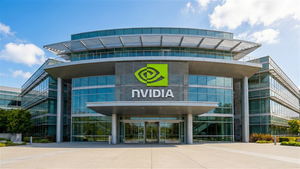
The insatiable demand for advanced AI semiconductors is profoundly reshaping the competitive dynamics across the tech industry, creating clear winners and presenting significant challenges for others. Companies at the forefront of AI chip design and manufacturing, such as Nvidia (NASDAQ: NVDA), TSMC (NYSE: TSM), and Samsung (KRX: 005930), stand to benefit immensely. Nvidia, in particular, has cemented its position as a dominant force, with its GPUs becoming the de facto standard for AI training and inference. Its CUDA platform further creates a powerful ecosystem lock-in, making it challenging for competitors to gain ground.
Tech giants like Google (NASDAQ: GOOGL), Amazon (NASDAQ: AMZN), and Microsoft (NASDAQ: MSFT) are also heavily investing in custom AI silicon to power their cloud services and reduce reliance on external suppliers. Google's Tensor Processing Units (TPUs), Amazon's Inferentia and Trainium chips, and Microsoft's Athena project are prime examples of this strategic pivot. This internal chip development offers these companies competitive advantages by optimizing hardware-software co-design, leading to superior performance and cost efficiencies for their specific AI workloads. This trend could potentially disrupt the market for off-the-shelf AI accelerators, challenging smaller startups that might struggle to compete with the R&D budgets and manufacturing scale of these behemoths.
For startups specializing in AI, the landscape is both opportunistic and challenging. Those developing innovative AI algorithms or applications benefit from the availability of more powerful hardware, enabling them to bring sophisticated solutions to market. However, the high cost of accessing cutting-edge AI compute resources can be a barrier. Companies that can differentiate themselves with highly optimized software that extracts maximum performance from existing hardware, or those developing niche AI accelerators for specific use cases (e.g., neuromorphic computing, quantum-inspired AI), might find strategic advantages. The market positioning is increasingly defined by access to advanced silicon, making partnerships with semiconductor manufacturers or cloud providers with proprietary chips crucial for sustained growth and innovation.
Wider Significance: A New Era of AI Innovation and Challenges
The escalating demand for advanced semiconductors driven by AI fits squarely into the broader AI landscape as a foundational trend, underscoring the critical interplay between hardware and software in achieving next-generation intelligence. This development is not merely about faster computers; it's about enabling entirely new paradigms of AI that were previously computationally infeasible. It facilitates the creation of larger, more complex models with billions or even trillions of parameters, leading to breakthroughs in natural language understanding, computer vision, and generative capabilities that are transforming industries from healthcare to entertainment.
The impacts are far-reaching. On one hand, it accelerates scientific discovery and technological innovation, empowering researchers and developers to tackle grand challenges. On the other hand, it raises potential concerns. The immense energy consumption of AI data centers, fueled by these powerful chips, poses environmental challenges and necessitates a focus on energy-efficient designs. Furthermore, the concentration of advanced semiconductor manufacturing, primarily in a few regions, exacerbates geopolitical tensions and creates supply chain vulnerabilities, as seen in recent global chip shortages.
Compared to previous AI milestones, such as the advent of expert systems or early machine learning algorithms, the current hardware-driven surge is distinct in its scale and the fundamental re-architecture it demands. While earlier AI advancements often relied on algorithmic breakthroughs, today's progress is equally dependent on the ability to process vast quantities of data at unprecedented speeds. This era marks a transition where hardware is no longer just an enabler but an active co-developer of AI capabilities, pushing the boundaries of what AI can learn, understand, and create.
The Horizon: Future Developments and Uncharted Territories
Looking ahead, the trajectory of AI's influence on semiconductor development promises even more profound transformations. In the near term, we can expect continued advancements in process technology, with manufacturers like TSMC (NYSE: TSM) pushing towards 2nm and even 1.4nm nodes, enabling more transistors in smaller, more power-efficient packages. There will also be a relentless focus on increasing memory bandwidth and integrating heterogeneous computing elements, where different types of processors (CPUs, GPUs, NPUs, FPGAs) work seamlessly together within a single system or even on a single chip. Chiplet architectures, which allow for modular design and integration of specialized components, are also expected to become more prevalent, offering greater flexibility and scalability.
Longer-term developments could see the rise of entirely new computing paradigms. Neuromorphic computing, which seeks to mimic the structure and function of the human brain, holds the promise of ultra-low-power, event-driven AI processing, moving beyond traditional Von Neumann architectures. Quantum computing, while still in its nascent stages, could eventually offer exponential speedups for certain AI algorithms, though its practical application for mainstream AI is likely decades away. Potential applications on the horizon include truly autonomous agents capable of complex reasoning, personalized medicine driven by AI-powered diagnostics on compact devices, and highly immersive virtual and augmented reality experiences rendered in real-time by advanced edge AI chips.
However, significant challenges remain. The "memory wall" – the bottleneck between processing units and memory – continues to be a major hurdle, prompting innovations like in-package memory and advanced interconnects. Thermal management for increasingly dense and powerful chips is another critical engineering challenge. Furthermore, the software ecosystem needs to evolve rapidly to fully leverage these new hardware capabilities, requiring new programming models and optimization techniques. Experts predict a future where AI and semiconductor design become even more intertwined, with AI itself playing a greater role in designing the next generation of AI chips, creating a virtuous cycle of innovation.
A New Silicon Renaissance: AI's Enduring Legacy
In summary, the pivotal role of AI in driving the demand for advanced semiconductor solutions marks a new renaissance in the silicon industry. This era is defined by an unprecedented push for specialized, high-performance, and energy-efficient chips tailored for the computationally intensive demands of modern AI, particularly large language models and generative AI. Key takeaways include the shift from general-purpose to specialized accelerators (GPUs, ASICs, NPUs), the strategic imperative for tech giants to develop proprietary silicon, and the profound impact on global supply chains and geopolitical dynamics.
This development's significance in AI history cannot be overstated; it represents a fundamental hardware-software co-evolution that is unlocking capabilities previously confined to science fiction. It underscores that the future of AI is inextricably linked to the continuous innovation in semiconductor technology. The long-term impact will likely see a more intelligent, interconnected world, albeit one that must grapple with challenges related to energy consumption, supply chain resilience, and the ethical implications of increasingly powerful AI.
In the coming weeks and months, industry watchers should keenly observe the progress in sub-2nm process nodes, the commercialization of novel architectures like chiplets and neuromorphic designs, and the strategic partnerships and acquisitions in the semiconductor space. The race to build the most efficient and powerful AI hardware is far from over, and its outcomes will undoubtedly shape the technological landscape for decades to come.
This content is intended for informational purposes only and represents analysis of current AI developments.
TokenRing AI delivers enterprise-grade solutions for multi-agent AI workflow orchestration, AI-powered development tools, and seamless remote collaboration platforms.
For more information, visit https://www.tokenring.ai/.