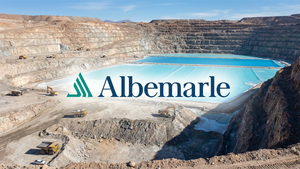
As we conclude 2025, Albemarle Corporation (NYSE: ALB) stands at a critical juncture in the global energy transition. After weathering a brutal "lithium winter" that saw commodity prices collapse from their 2022 highs, the Charlotte-based specialty chemicals giant has spent the past year reinventing itself. Once defined by aggressive, high-capital expansion, the Albemarle of today is leaner, more functional, and laser-focused on efficiency. With lithium prices finally stabilizing in the $12,000–$15,000 per metric ton range, the company remains the world’s leading provider of the essential element for electric vehicle (EV) batteries, even as it navigates a transformed competitive landscape now featuring diversified mining titans.
Historical Background
Albemarle’s history is one of constant evolution. Founded in 1887 as the Albemarle Paper Manufacturing Company, it spent nearly a century in the paper and packaging industry before pivoting toward chemicals. The modern era of the company began in 1994, when it was spun off from Ethyl Corporation. However, the most consequential move occurred in 2015 with the $6.2 billion acquisition of Rockwood Holdings. This transformed Albemarle into a global leader in lithium and bromine, positioning it perfectly for the subsequent explosion in lithium-ion battery demand. Over the last decade, Albemarle has shed legacy units to double down on its "Big Three" segments: Lithium, Bromine, and Catalysts.
Business Model
Albemarle operates through a diversified model that balances the high-growth, high-volatility lithium market with the steady, cash-generative bromine and catalyst businesses.
- Energy Storage (Lithium): This is the primary growth engine, sourcing lithium from brine operations in the Salar de Atacama (Chile) and Silver Peak (USA), as well as hard-rock mines via joint ventures in Australia (Greenbushes and Wodgina).
- Specialties (Bromine): A high-margin segment where Albemarle is a global leader. Bromine is used in flame retardants, oilfield services, and water treatment, providing a "safety net" during lithium downturns.
- Ketjen (Catalysts): Operating as a wholly owned subsidiary, Ketjen provides catalysts for the refinery and petrochemical industries. This segment has seen a significant turnaround in 2024–2025, driven by demand for clean fuel technologies.
Stock Performance Overview
The stock performance of ALB over the past decade reflects the boom-and-bust cycles of the green energy revolution:
- 10-Year View: Investors who held through the decade have seen significant volatility. ALB rose from approximately $50 in 2015 to a peak over $320 in late 2022, before the 2024 correction brought it back to earth.
- 5-Year View: This period captures the parabolic rise of 2021 and the subsequent 80% peak-to-trough decline in lithium prices that devastated the share price in late 2023 and 2024.
- 1-Year View (2025): The stock has shown signs of a "U-shaped" recovery in 2025. After bottoming out in late 2024, shares have climbed roughly 15% this year as investors reward the company’s cost-cutting measures and the stabilization of lithium spot prices.
Financial Performance
Albemarle’s 2024 fiscal year was a masterclass in crisis management. Total revenue for 2024 fell to approximately $5.4 billion, down from the $9.6 billion high of 2023. This resulted in a statutory net loss of roughly $1.2 billion, heavily weighted by non-cash impairments of nearly $900 million as the company shuttered expensive expansion projects like Kemerton Trains 3 and 4 in Australia.
However, the 2025 outlook is more robust. Having achieved $400 million in annual cost savings through workforce reductions and operational streamlining, Albemarle's Adjusted EBITDA margins have stabilized between 22% and 25%. Liquidity remains a strong suit, with nearly $2.8 billion in available capital, bolstered by a proactive restructuring of debt covenants in late 2024.
Leadership and Management
Under CEO Kent Masters, Albemarle has undergone a structural revolution. Effective November 2024, the company moved away from its siloed business units to a "functional" operating model. This shift was designed to eliminate redundancies and speed up decision-making. Masters, known for his disciplined approach to capital, has successfully pivoted the company from a "growth at any cost" mindset to one of "value-driven growth." The appointment of Mark Mummert as COO and Eric Norris as CCO has further solidified this lean-management approach.
Products, Services, and Innovations
Albemarle’s competitive edge lies in its ability to produce battery-grade lithium at scale across various chemical forms, including carbonate and hydroxide.
- Meishan Plant: The successful 2024 ramp-up of the Meishan plant in China has significantly boosted the company’s hydroxide capacity.
- Direct Lithium Extraction (DLE): In Chile, Albemarle is a pioneer in DLE technology, having completed successful pilot testing in 2025. DLE promises to increase yield while reducing water usage, a key requirement for long-term operations in the Atacama.
- R&D: The company holds hundreds of patents focused on next-generation battery anodes and recycling technologies, ensuring it stays relevant as battery chemistries evolve.
Competitive Landscape
The competitive landscape shifted dramatically in late 2024 when Rio Tinto (NYSE: RIO) acquired Arcadium Lithium, creating a massive new competitor with deep pockets. Albemarle still holds the top spot by volume, but it now faces pressure from:
- The Mining Titans: Rio Tinto and Glencore are increasingly entering the space.
- Chinese Rivals: Ganfeng Lithium and Tianqi Lithium continue to dominate refining, though Albemarle's integrated supply chain in China (Meishan and Qinzhou) allows it to compete effectively on cost.
- Low-Cost Producers: SQM (NYSE: SQM) remains a formidable peer in Chile, benefiting from the same high-grade brine assets as Albemarle.
Industry and Market Trends
The "Lithium 2.0" era of 2025 is defined by more realistic expectations for EV growth. While pure-EV adoption slowed slightly in 2024, the explosion of hybrid vehicles—which still require significant lithium—has provided a floor for demand. Furthermore, the supply side has consolidated; the "lithium winter" forced high-cost marginal producers (especially lepidolite miners in China) to exit the market, which has helped rebalance the supply-demand equation.
Risks and Challenges
- Commodity Price Sensitivity: Albemarle remains highly leveraged to the spot price of lithium. While 2025 has been stable, any further macroeconomic slowdown could re-test the price floor.
- Execution Risk: Large-scale projects like the Kings Mountain mine in North Carolina face rigorous environmental permitting hurdles.
- Concentration Risk: A significant portion of Albemarle’s production is tied to China and Chile, exposing it to localized political and economic shifts.
Opportunities and Catalysts
- Kings Mountain (USA): The potential finalization of the Environmental and Social Impact Assessment (ESIA) by late 2025 or early 2026 would be a massive catalyst, signaling the start of a major domestic US supply source.
- Inflation Reduction Act (IRA): Albemarle continues to receive millions in US federal grants to build out a "China-plus-one" supply chain.
- Strategic M&A: With a strengthened balance sheet, Albemarle may look to acquire distressed junior miners that struggled during the 2024 downturn.
Investor Sentiment and Analyst Coverage
Wall Street sentiment toward ALB has shifted from "Sell" in early 2024 to a cautious "Buy" or "Hold" by late 2025. Major institutional investors, including Vanguard and BlackRock, have maintained their core positions, viewing Albemarle as the highest-quality play in the lithium space. Analysts note that while the "easy money" of the 2022 hype is gone, Albemarle’s current valuation offers a more attractive entry point for those with a 5-to-10-year horizon.
Regulatory, Policy, and Geopolitical Factors
Geopolitics remains a double-edged sword. In Chile, the government’s move toward a state-led "National Lithium Strategy" created uncertainty, though Albemarle’s contract remains secure until 2043. In the US, the company is a primary beneficiary of the IRA, but it must navigate the complex "Foreign Entity of Concern" (FEOC) rules, which limit the use of Chinese-sourced components in vehicles eligible for US tax credits. Albemarle’s efforts to build a domestic supply chain are critical to helping its automotive customers meet these requirements.
Conclusion
As 2025 draws to a close, Albemarle Corporation has emerged from the lithium market's most significant downturn with its market leadership intact. By prioritizing fiscal discipline over unbridled expansion, the company has positioned itself to profit from the next phase of the energy transition. For the patient investor, ALB represents a battle-tested industrial leader with a footprint that is indispensable to the future of global transport. While the road ahead will likely remain volatile, Albemarle’s refined strategy and high-quality assets make it the primary benchmark for the lithium industry.
This content is intended for informational purposes only and is not financial advice.