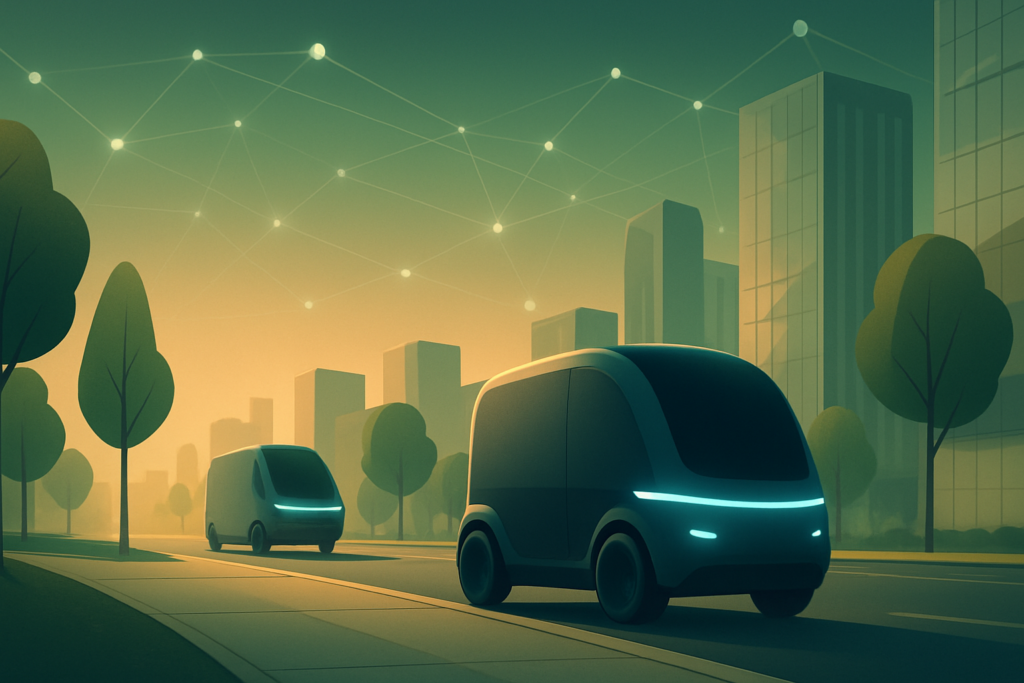
As of December 24, 2025, Uber Technologies (NYSE: UBER) has completed one of the most significant strategic transformations in modern corporate history. Once viewed as a capital-intensive, loss-making disruptor of taxi services, Uber has emerged as the global "Operating System for Autonomous Mobility." In 2025, the company's relevance has moved beyond human-driven ride-hailing to focus on a complex, multi-vendor ecosystem of autonomous delivery partnerships. By positioning itself as the critical demand-side gatekeeper for autonomous vehicle (AV) developers, Uber has effectively decoupled its growth from the rising costs of human labor, turning its platform into a high-margin toll booth for the future of local commerce.
Historical Background
Uber was founded in 2009 by Travis Kalanick and Garrett Camp as "UberCab," a luxury black car service. Under Kalanick, the company grew with a "scorched earth" expansion strategy, prioritizing market share over profitability. Central to Kalanick’s vision was the Advanced Technologies Group (ATG), Uber’s internal unit dedicated to building its own self-driving cars—a project he deemed "existential."
However, the high cost of R&D and a 2018 fatal accident involving an autonomous test vehicle forced a strategic rethink. In December 2020, under the leadership of current CEO Dara Khosrowshahi, Uber sold ATG to Aurora Innovation. This pivot marked the end of Uber as a hardware developer and the beginning of its life as an "asset-light" platform. By offloading the expensive burden of vehicle manufacturing, Uber focused on what it did best: matching supply with demand at a massive global scale.
Business Model
Uber’s business model in 2025 is organized into four primary revenue streams:
- Mobility: The core ride-hailing business, increasingly powered by a mix of human drivers and autonomous partners like Waymo.
- Delivery (Uber Eats): A mature segment that has evolved from food to "anything" delivery, utilizing sidewalk robots for short-distance urban logistics.
- Freight: A logistics platform connecting shippers with carriers, now featuring autonomous long-haul trucking routes in partnership with Aurora.
- Advertising: The high-margin "hidden gem" of Uber’s model. By 2025, advertising across the Mobility and Delivery apps has surpassed a $1.5 billion annual run rate, significantly boosting overall EBITDA margins.
Stock Performance Overview
Uber’s stock has undergone a re-rating by Wall Street over the last five years as the company achieved consistent profitability.
- 1-Year Performance: In 2025, UBER shares have gained approximately 36%, trading between $81 and $85 in December after hitting an all-time high of $101.99 in October.
- 5-Year Performance: From late 2020 to late 2025, the stock has returned roughly 56%. The transition from a speculative "growth at all costs" stock to an S&P 500 staple (joined in late 2023) has attracted a more stable base of institutional investors.
- 10-Year Performance: Long-term investors who weathered the 2019 IPO volatility have seen the company survive existential threats, including the COVID-19 pandemic and regulatory crackdowns, eventually emerging as a cash-flow-positive giant.
Financial Performance
Financial results for the fiscal year 2025 highlight Uber's newfound efficiency:
- Gross Bookings: On track to exceed $170 billion for the full year.
- Free Cash Flow (FCF): Reached a record $9.5 billion on a trailing twelve-month basis by Q4 2025.
- Shareholder Returns: In early 2025, Uber initiated its largest-ever $20 billion share repurchase program, signaling a shift toward capital return to shareholders.
- Margins: Adjusted EBITDA margins have expanded as the delivery segment reached scale and advertising revenue began to contribute a larger portion of the bottom line.
Leadership and Management
CEO Dara Khosrowshahi remains the architect of Uber's "Pragmatic Autonomy" strategy. His leadership is characterized by operational discipline and a focus on unit economics rather than sheer volume. Under his tenure, the company has repaired its relationship with regulators and focused on the Uber One membership program, which now boasts over 40 million members. CFO Prashanth Mahendra-Rajah has been instrumental in the company’s share buyback strategy and disciplined capital allocation, while the board remains focused on navigating the upcoming 2026 EU regulatory shifts.
Products, Services, and Innovations
The hallmark of Uber’s 2025 innovation is its suite of autonomous delivery partnerships:
- Waymo-via-Uber: Now operational in Phoenix, Austin, and Atlanta, allowing users to hail fully driverless vehicles directly in the Uber app.
- Serve Robotics: Uber’s primary partner for sidewalk delivery, which deployed its 1,000th robot in late 2025, focusing on dense urban areas like Los Angeles and Chicago.
- Cartken: Expanding Uber’s reach into Japan through a partnership with Mitsubishi Electric to scale autonomous delivery in Tokyo.
- Aurora Freight: Commercial driverless trucking routes between Dallas and Houston are now live, aiming to solve the long-haul driver shortage.
- Avride and May Mobility: Late 2025 saw the addition of these partners to the platform, further diversifying Uber’s technology stack to hedge against any single manufacturer's failure.
Competitive Landscape
Uber faces a two-front war in late 2025:
- DoorDash: Remains the U.S. market leader in food delivery with a ~60% share. However, Uber Eats is winning in urban density and cross-platform loyalty (Ride + Eat), leveraging its autonomous sidewalk robots to lower delivery costs below DoorDash’s human-dependent model.
- Tesla (TSLA): The "Cybercab" threat remains the largest long-term risk. Tesla launched limited robotaxi operations in San Francisco in late 2025. While Tesla aims for a lower cost-per-mile, Uber counters with its massive 15,000-city distribution network and superior customer support infrastructure. Analysts increasingly predict a "co-opetition" where Tesla may eventually list its fleet on Uber’s network to maximize utilization.
Industry and Market Trends
The "Last Mile" is the current focus of the logistics industry. The shift toward autonomous delivery is driven by high labor costs and the need for 24/7 availability. Furthermore, the integration of Generative AI into the Uber app has streamlined the user experience, allowing for voice-activated, complex multi-stop delivery and ride requests that were impossible two years ago.
Risks and Challenges
- AV Safety Scandals: In late 2025, NHTSA opened probes into Waymo following incidents involving school buses, creating potential for sudden regulatory shutdowns of autonomous services.
- Tech Maturity: While autonomous delivery works in sun-belt cities, snowy and complex "edge case" environments still require human intervention, limiting the total addressable market in the near term.
- Platform Fatigue: As Uber One pricing increases, the company faces the risk of consumer churn if perceived value does not keep pace with subscription costs.
Opportunities and Catalysts
- International AV Scaling: Success in Tokyo with Cartken provides a blueprint for European and Asian expansion.
- Ads Expansion: There is significant room to grow advertising within the Uber Freight and grocery delivery verticals.
- M&A Potential: With nearly $10 billion in annual FCF, Uber is well-positioned to acquire smaller autonomous software startups or distressed competitors in the delivery space.
Investor Sentiment and Analyst Coverage
Wall Street sentiment in Q4 2025 remains overwhelmingly bullish. Approximately 85% of analysts covering the stock maintain a "Strong Buy" or "Buy" rating. The consensus 12-month price target is roughly $108.00, representing a ~25% upside from current levels. Institutional investors, including Vanguard and BlackRock, have increased their stakes, viewing Uber as a "core" tech holding alongside Alphabet and Amazon.
Regulatory, Policy, and Geopolitical Factors
The most pressing regulatory hurdle is the EU Platform Work Directive. With a December 2026 deadline, Uber is currently restructuring its European operations to avoid the "rebuttable presumption of employment." In the U.S., the Department of Labor’s move in May 2025 to stop enforcing stricter gig worker rules has provided a temporary reprieve, though a "patchwork" of state-level laws (Massachusetts, California) continues to complicate the national operating model.
Conclusion
By December 2025, Uber Technologies has successfully navigated its transition from a disruptive startup to a foundational utility. Its strategy of "Pragmatic Autonomy"—partnering with the winners of the self-driving race rather than competing with them—has protected the company from the immense capital risks of hardware development. For investors, Uber represents a unique play on the autonomous future: a high-margin marketplace that wins regardless of which robotaxi manufacturer eventually dominates. While regulatory risks in the EU and safety probes in the U.S. provide headwinds, Uber’s record free cash flow and dominant market position make it the definitive orchestrator of the last-mile revolution.
This content is intended for informational purposes only and is not financial advice. Today’s Date: 12/24/2025.