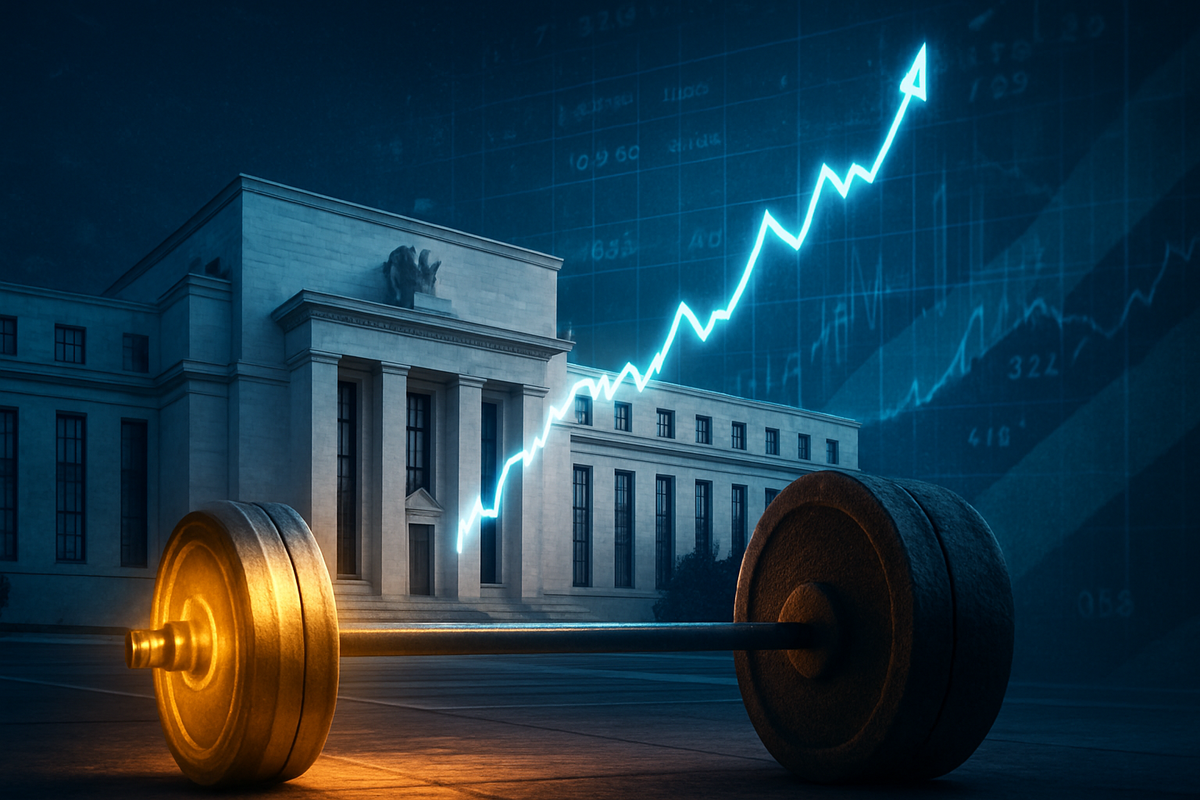
The financial landscape shifted dramatically on January 30, 2026, when President Donald Trump officially nominated Kevin Warsh to serve as the next Chairman of the Federal Reserve. Replacing Jerome Powell, whose term is slated to conclude on May 15, 2026, Warsh represents a significant pivot toward a more disciplined, market-oriented monetary authority. The nomination has sent ripples through global markets, as investors grapple with the implications of a leader known for his skepticism of expansive central bank intervention.
Immediate market reactions, dubbed the "Warsh Shock" by Wall Street analysts, saw a violent repricing of risk. While the Dow Jones Industrial Average surged toward the historic 50,000 mark on hopes of deregulation and productivity-led growth, the bond market faced a brutal sell-off. The 10-year Treasury yield spiked above 4.5%, signaling that the era of "easy money" and massive Fed balance sheets may be coming to a definitive end under Warsh’s stewardship.
A Return to 'Monetary Realism'
Kevin Warsh is no stranger to the inner workings of the Eccles Building, having served as the youngest-ever Federal Reserve Governor from 2006 to 2011. During his previous tenure, he established himself as a "principled hawk," famously resigning in 2011 in protest against the Fed’s second round of quantitative easing (QE2), which he feared would sow the seeds of long-term inflation. His return to the Fed is viewed by many as a mandate to dismantle the "activist" central banking model that has defined the last decade.
The timeline leading to this nomination was marked by months of speculation and a strategic rebranding by Warsh himself. Throughout 2025, Warsh promoted a "Monetary Barbell" strategy—a nuanced approach that balances "productive dovishness" with aggressive "quantitative tightening." He argues that advancements in Artificial Intelligence (AI) and broad deregulation will act as powerful disinflationary forces, allowing the Fed to maintain lower short-term interest rates without overheating the economy. However, his hawkishness remains focused on the Fed’s $6.6 trillion balance sheet, which he intends to shrink far more rapidly than his predecessors.
The announcement was met with a mix of acclaim from fiscal conservatives and apprehension from growth-focused investors. For the Trump administration, Warsh is seen as the ideal partner to Treasury Secretary Scott Bessent, aiming to create a "New Accord" that aligns monetary policy with the administration's goals of boosting American manufacturing and reducing the national debt burden. The move signals a shift away from the Fed’s recent focus on "non-core" issues such as climate change and social equity, returning the institution's focus strictly to price stability and financial "plumbing."
Winners and Losers in the New Regime
The nomination of a balance-sheet hawk has created a clear divide in the equity markets. Large financial institutions have emerged as the primary beneficiaries of the steepening yield curve. JPMorgan Chase & Co. (NYSE: JPM) and The Goldman Sachs Group, Inc. (NYSE: GS) saw their shares rally as higher long-term rates and increased volatility promised healthier net interest margins and robust trading revenues. Similarly, industrial giants like Caterpillar Inc. (NYSE: CAT) benefited from the rotation into "old economy" stocks that stand to gain from the administration's deregulation agenda and anticipated infrastructure spending.
Conversely, the "Warsh Shock" has been a painful ordeal for high-valuation growth sectors. Nvidia Corporation (NASDAQ: NVDA) and other technology leaders faced a bruising drawdown as the spike in Treasury yields forced a downward revision of future cash flow valuations. The era of "growth at any price" is being challenged by a higher discount rate environment. Furthermore, the "debasement trade"—investments held as hedges against a weakening dollar or runaway inflation—suffered historic losses. Gold mining leader Newmont Corporation (NYSE: NEM) saw its stock slide alongside falling bullion prices as the dollar strengthened on the news.
The digital asset space was not immune to the shift. Coinbase Global, Inc. (NASDAQ: COIN) and Bitcoin-related equities faced significant selling pressure in what traders termed the "Great Metal Flush." The logic among institutional investors is that a disciplined, hawkish Fed reduces the immediate need for alternative "store of value" assets. If Warsh successfully restores faith in the dollar's long-term purchasing power, the speculative premium on cryptocurrencies could continue to erode.
A Broader Shift in Central Bank Philosophy
Warsh's potential chairmanship marks a significant departure from the "forward guidance" era popularized by Ben Bernanke and Janet Yellen. Warsh has been a vocal critic of the "dot plot" and the Fed’s tendency to telegraph every move months in advance, arguing it makes policymakers "prisoners of their own words." Investors should expect a "straight-shooter" Fed that provides less public signaling and more decisive, data-dependent action. This could lead to higher intraday market volatility but, according to Warsh's supporters, a more resilient and less distorted financial system.
This event fits into a broader global trend of "monetary normalization." As other central banks struggle with the hangover of post-pandemic stimulus, the U.S. appears to be taking the lead in aggressively shrinking its role in the capital markets. The regulatory implications are also profound; Warsh is expected to push for a lighter touch on bank capital requirements, potentially clashing with international standards but aiming to unlock domestic lending. This "America First" approach to monetary policy mirrors the administration's broader geopolitical and economic strategies.
Historical comparisons are already being drawn between Warsh and Paul Volcker, the legendary Fed Chair who broke the back of inflation in the early 1980s. While the current inflationary environment is not as dire as the 1970s, the resolve to reduce the central bank's footprint is strikingly similar. However, unlike Volcker, Warsh must contend with a much larger federal debt and a global economy that is deeply interconnected, making any misstep in balance sheet reduction potentially more catastrophic for global liquidity.
The Road to Confirmation and Beyond
The path to the Chairmanship is not without obstacles. As of February 2026, Warsh faces a complicated confirmation process in the Senate. Republican Senator Thom Tillis has temporarily blocked progress on Fed nominations, citing a demand for a thorough investigation into Jerome Powell’s management of construction cost overruns at the Fed's Washington headquarters. While a compromise is being brokered to move this investigation to the Senate Banking Committee, the political friction could delay Warsh’s official start date past the May deadline.
In the short term, the "Powell Fed" is expected to enter a "lame duck" period, where any significant policy shifts will be viewed through the lens of the coming Warsh era. Strategic pivots will be required for hedge funds and institutional desks that have spent years betting on a "Fed Put" or a return to zero-interest-rate policy. Market participants must now adapt to a regime where liquidity is scarce and the cost of capital is dictated more by market forces than by administrative fiat.
Long-term scenarios for a Warsh-led Fed involve a "high-growth, high-yield" environment. If his thesis on AI productivity proves correct, the U.S. could see a period of non-inflationary expansion even as the Fed withdraws its support from the bond market. However, the risk remains that an aggressive reduction in the balance sheet could trigger a "liquidity crunch" in the repo markets, similar to the disruptions seen in 2019. The ability of the Fed to manage this transition will be the ultimate test of the "Monetary Barbell" philosophy.
Final Assessment: A New Era for the Dollar
The nomination of Kevin Warsh signals the end of the post-2008 consensus on central banking. By moving away from massive asset purchases and toward a focus on price stability and productivity, the Fed is attempting to re-establish its independence and its credibility as the guardian of the world’s reserve currency. For investors, the takeaway is clear: the "easy money" tailwind has been replaced by a "productivity" headwind, where fundamental earnings and balance sheet strength will matter more than central bank liquidity.
As we move toward the mid-point of 2026, the market will be hyper-focused on Warsh’s confirmation hearings. Any signs of a softening in his hawkish stance on the balance sheet could lead to a relief rally in tech and gold, while a firm commitment to his "Barbell" strategy will likely keep yields elevated. Investors should keep a close eye on the 10-year Treasury yield as the primary barometer of the market's confidence in this new monetary regime.
This content is intended for informational purposes only and is not financial advice