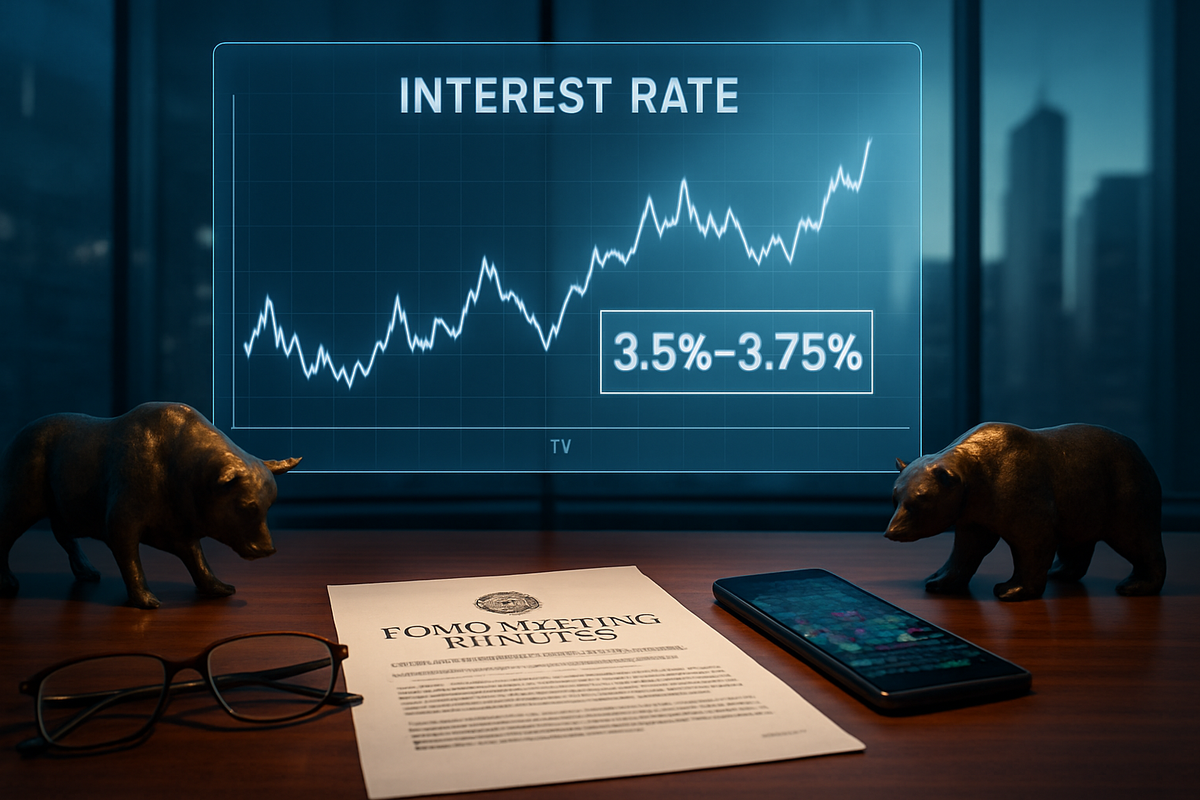
As the financial world braces for the release of the January Federal Open Market Committee (FOMC) meeting minutes tomorrow, February 18, 2026, investors are meticulously scanning the horizon for any signals regarding the future path of U.S. monetary policy. With the federal funds rate currently held at a target range of 3.5% to 3.75%, the central bank is at a critical juncture, attempting to balance a "solid" economic expansion against lingering, tariff-driven inflationary pressures. The upcoming document is expected to provide a deeper look into the internal deliberations that led to the Fed’s recent decision to pause its easing cycle after a series of cuts in late 2025.
The immediate implications of this release are profound for both institutional and retail investors. Currently, the CME FedWatch Tool indicates a 90% probability that the Federal Reserve will maintain interest rates at their current level during the March meeting. However, the true focus lies in the "dots" and the dialogue: the market is desperate to understand if the "measured and gradual" approach signaled by Chair Jerome Powell in January suggests a long summer pause or if a pivot toward further cuts could arrive sooner than the current June or September consensus.
Inside the January Deliberations: A Timeline of Tensions
The FOMC meeting on January 27-28, 2026, was anything but a routine affair. While the committee ultimately voted 10-2 to maintain the status quo, the dissent from Governors Christopher Waller and Stephen Miran marked a significant shift in the Fed's internal unity. Both dissenters argued for an immediate 25-basis-point reduction to 3.25%-3.5%, citing a need to proactively support a labor market that, while stabilizing, has shown signs of softening in the manufacturing and tech sectors. This split decision suggests that the "pause" may be more fragile than the headline rate suggests.
The path to this moment began in late 2025, when the Fed aggressively cut rates three times to navigate a slowing global economy. As 2026 opened, the narrative shifted. Economic data released in early February showed the U.S. economy entering the year on a "firm footing," prompting the Fed to upgrade its growth outlook from "moderate" to "solid." This upgrade, combined with the implementation of new trade tariffs that introduced "one-time" inflationary spikes, complicated the Fed's mandate. The minutes are expected to detail exactly how the committee weighed these transitory price increases against the underlying trend of cooling core inflation.
Throughout the January press conference, Chair Jerome Powell was forced to repeatedly defend the independence of the Federal Reserve. The backdrop of public pressure from the executive branch to lower rates has created a politically charged environment for the central bank. Market observers are looking to the minutes to see if the committee discussed any specific strategies to insulate monetary policy decisions from external political influence, a move that could significantly impact long-term bond yields and investor confidence in the dollar.
Corporate Impact: Assessing the Winners and Losers
The current rate environment of 3.5% to 3.75% creates a diverse set of outcomes for public companies, particularly those in capital-intensive or growth-oriented sectors. Prologis, Inc. (NYSE: PLD), the world’s largest logistics real estate investment trust, stands as a primary beneficiary of any dovish tilt in the minutes. As a REIT, Prologis relies heavily on low borrowing costs to fund its massive global acquisition pipeline. A signal of future rate cuts would lower its cost of capital and potentially spark a rally in its shares, which have been sensitive to the Fed's "higher-for-longer" rhetoric in the early weeks of February.
In the technology sector, Snowflake Inc. (NYSE: SNOW) represents the quintessential "high-duration" growth stock. Companies like Snowflake, which prioritize long-term scale and future cash flows over immediate dividends, are highly sensitive to the discount rates used in valuation models. If the minutes reveal a consensus that rates have peaked and are destined for a downward trajectory by mid-2026, the discount rate applied to Snowflake’s future earnings could drop, making its current valuation significantly more attractive to institutional investors.
Conversely, the banking sector faces a more complex reality. JPMorgan Chase & Co. (NYSE: JPM) and other major lenders have benefited from the current 3.5%-3.75% range through healthy net interest margins. However, a prolonged pause without the prospect of future growth can stifle loan demand. If the minutes suggest that the Fed is prepared to keep rates at this level for the remainder of the year to combat tariff-related inflation, the "goldilocks" period for bank earnings may begin to fade as credit costs rise for consumers and businesses alike.
The housing market is also on a knife-edge. PulteGroup, Inc. (NYSE: PHM) has seen its stock price fluctuate in tandem with mortgage rate expectations. Homebuilders like PulteGroup are highly reactive to any news that might influence the 10-year Treasury yield. Any indication in the minutes that the Fed is concerned about a "re-acceleration" of the economy could push yields higher, further pricing out potential homebuyers and dampening the spring selling season. Meanwhile, consumer discretionary firms like Crocs, Inc. (NASDAQ: CROX) are watching for signals that the Fed will eventually ease the burden on the American consumer, whose purchasing power has been pinched by the dual forces of high rates and recent price increases in imported goods.
Broader Significance and Historical Context
The Fed's current stance fits into a broader global trend of "cautious easing." Unlike the rapid-fire rate hikes of 2022-2023, the 2026 cycle is characterized by a "wait-and-see" approach that echoes the mid-cycle adjustments of the 1990s. The central bank is attempting a "soft landing" in an era of deglobalization and shifting trade policies—factors that did not exist in previous cycles. The focus on "one-time" tariff effects in the January meeting indicates a Fed that is increasingly looking beyond standard CPI data to understand the structural shifts in the American economy.
The ripple effects of the Fed's decision extend far beyond U.S. borders. A more hawkish or "patient" Fed has kept the U.S. Dollar (DXY) relatively strong, putting pressure on emerging market economies that hold dollar-denominated debt. If the minutes show a committee that is more concerned about inflation than growth, it could signal a period of prolonged dollar strength, complicating the efforts of other central banks, such as the ECB or the Bank of Japan, to manage their own inflation and currency stability.
Regulatory and policy implications are also at the forefront. The Fed's emphasis on its independence in the face of political pressure is a significant historical precedent. If the minutes reveal a unified front against political interference, it could bolster the credibility of the U.S. financial system during a period of geopolitical volatility. This institutional strength is a key component of the "safety premium" that investors place on U.S. Treasuries, particularly as gold prices reach record highs in early 2026.
The Road Ahead: Potential Scenarios and Strategies
Looking forward, the market is bracing for two primary scenarios. The first, a "June Pivot," assumes that the tariff-related inflation spikes are indeed transitory. In this scenario, the Fed would use the late spring to prepare the markets for a 25-basis-point cut in June, followed by another in September, bringing the terminal rate toward 3.0% by year-end. This would likely trigger a broad-based rally in equities and a narrowing of credit spreads.
The second, more cautious scenario involves a "High-Rate Plateau" through late 2026. If the minutes tomorrow show that a majority of governors are worried about the "solid" economy overheating, the Fed may choose to hold rates at 3.5%-3.75% well into the fourth quarter. This would force a strategic pivot for many corporations, requiring them to focus on internal efficiency and debt reduction rather than expansion. Companies with heavy debt loads would face significant challenges in refinancing, potentially leading to a wave of consolidations across the mid-cap space.
Strategic adaptations are already underway in the private sector. Major retailers and manufacturers are increasingly hedging their interest rate exposure, while investors are rotating toward "quality" stocks with strong balance sheets. The upcoming minutes will either validate this cautious rotation or provide the "green light" for a return to more aggressive growth strategies.
Summary and Investor Outlook
The release of the January FOMC minutes on February 18, 2026, represents the most significant data point of the month for financial markets. Investors are caught between a robust economy and the uncertainty of new inflationary pressures. The key takeaways from the minutes will likely center on the depth of the dissent within the committee, the Fed’s specific interpretation of tariff-related price moves, and the timeline for the next potential rate cut.
Moving forward, the market is likely to remain in a state of "wait-and-see" until the March meeting. However, the nuances found in the minutes could trigger immediate volatility in the bond and currency markets. Investors should watch for any language regarding "sufficiently restrictive" policy and the threshold for the next cut.
In the coming months, the focus will shift from the Fed’s words to the hard data of the spring economic season. For now, the 3.5% to 3.75% range remains the anchor for the U.S. financial system, and whether that anchor is lifted or dropped further will depend on the delicate balance of data and politics currently being debated within the halls of the Federal Reserve.
This content is intended for informational purposes only and is not financial advice.