In a landmark move for the global semiconductor industry, Applied Materials (NASDAQ: AMAT) and Samsung Electronics (KRX: 005930) officially inaugurated their joint research residency at the newly minted EPIC Center in Silicon Valley. The announcement, made today, February 12, 2026, positions Samsung as the "founding member" of the $5 billion Equipment and Process Innovation and Commercialization (EPIC) Center. This collaboration is designed to fundamentally alter how the industry approaches advanced chip packaging and atomic-scale materials engineering, aiming to shave years off the development cycle for the most sophisticated artificial intelligence hardware.
The immediate implications of this partnership are profound. By embedding Samsung’s top-tier engineers directly within Applied Materials’ R&D hub, the two giants are effectively blurring the lines between equipment manufacturing and semiconductor fabrication. This "co-innovation" model is a direct response to the "complexity wall" facing the industry, where traditional shrinking of transistors is no longer sufficient to meet the energy and performance demands of the AI era. The partnership's initial focus on 2.5D and 3D packaging synergies is expected to accelerate the commercialization of HBM4 (High Bandwidth Memory) and next-generation AI accelerators.
Bridging the Lab-to-Fab Chasm
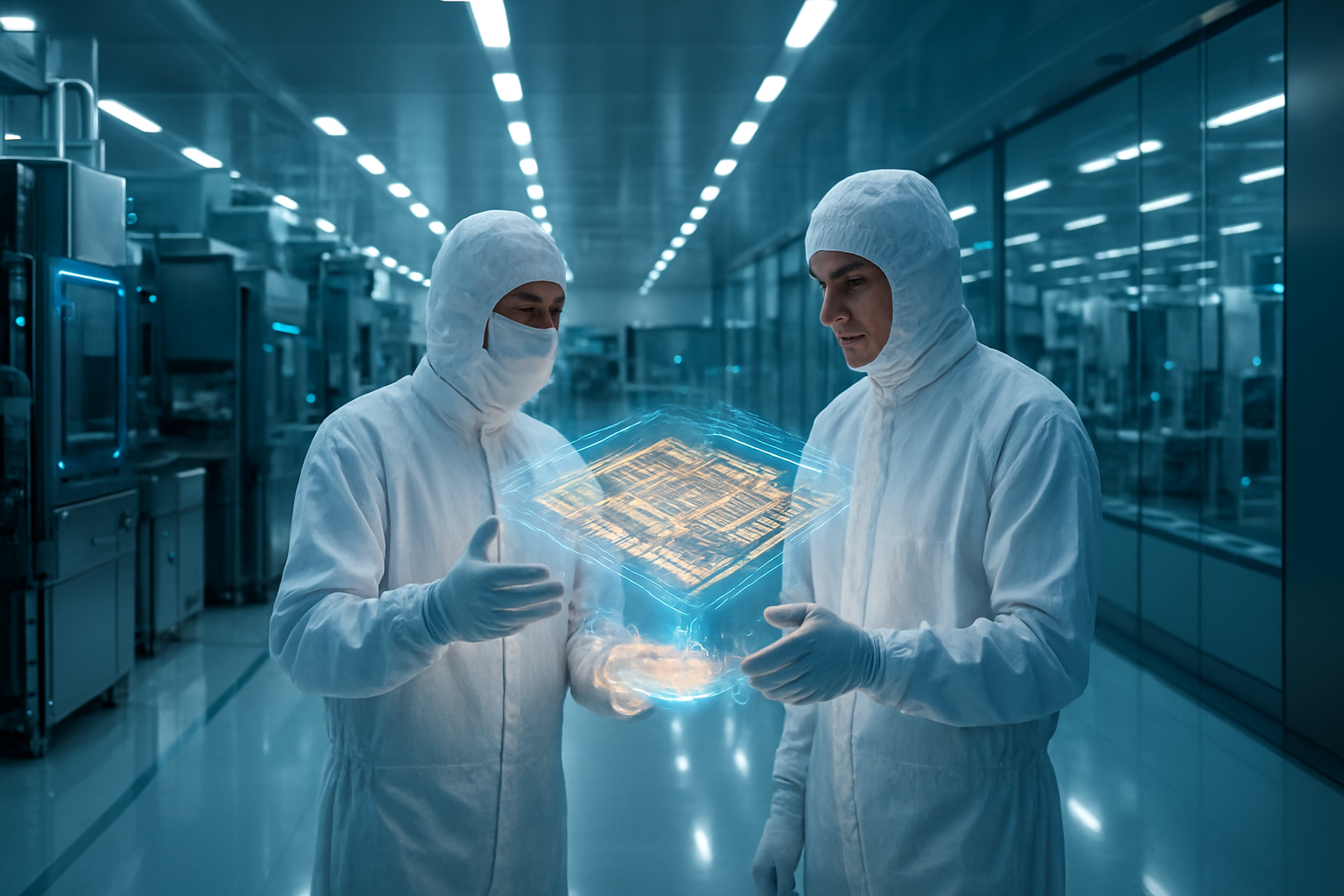
The EPIC Center, spanning over 180,000 square feet of state-of-the-art cleanroom space, is the culmination of a multi-year vision first unveiled by Applied Materials in 2023. Since that initial announcement, the project has weathered shifts in federal funding landscapes and intense global competition to emerge as the largest private investment in U.S. semiconductor R&D history. The facility is now in its final stages of commissioning and is expected to be fully operational by Spring 2026. The integration of Samsung as a founding member represents the first major "anchor tenant" strategy, which allows Samsung to test and refine Applied Materials’ newest tools months—or even years—before they reach the general market.
This milestone follows a rigorous timeline of development. Throughout 2024 and 2025, Applied Materials worked closely with state and federal officials to align the EPIC Center with the goals of the CHIPS and Science Act, positioning it as a commercial counterpart to the National Semiconductor Technology Center (NSTC). For Samsung, the move is a strategic pivot to regain its lead in the advanced memory and foundry markets. Key stakeholders, including Applied Materials CEO Gary Dickerson and Samsung’s leadership, have emphasized that this is not a traditional vendor-customer relationship but a "parallel R&D" initiative where equipment and chip architecture are designed in tandem.
Industry reaction has been overwhelmingly positive, though marked by a sense of urgency. Analysts at major financial institutions noted that the speed at which the EPIC Center has reached operational status reflects the frantic pace of the AI "arms race." Market watchers are particularly focused on the "cycle time reduction" promise; if successful, the EPIC model could reduce the time it takes to move a new material from a laboratory concept to high-volume manufacturing from the current decade-long timeline to just three or four years.
Winners, Losers, and the Battle for Advanced Packaging
Applied Materials (NASDAQ: AMAT) stands as the primary beneficiary of this initiative. By locking in a Tier-1 customer like Samsung into its R&D workflow, AMAT creates a high-moat environment that is difficult for competitors to penetrate. This "center of gravity" for materials science allows AMAT to dictate the pace of innovation in etching, deposition, and patterning. Conversely, this move puts immense pressure on rivals like Lam Research (NASDAQ: LRCX) and Tokyo Electron (OTC: TOELY). Lam Research, which has historically dominated the high-aspect ratio etching market essential for 3D NAND and HBM, may find its market share threatened if the AMAT-Samsung collaboration produces proprietary synergies in packaging that Lam cannot easily replicate.
Samsung (KRX: 005930) also emerges as a clear winner, gaining a first-mover advantage in the adoption of glass substrates and extreme 3D stacking. This could allow Samsung to leapfrog TSMC (NYSE: TSM) in specific AI-centric packaging segments. However, the "loser" in this scenario could be the traditional industry status quo. Companies that remain siloed in their R&D efforts—unwilling or unable to join such co-innovation hubs—risk being left behind by the sheer speed of development at the EPIC Center. Intel (NASDAQ: INTC), while also investing heavily in its own U.S.-based R&D, will now have to compete with a Samsung-AMAT powerhouse that is operating in Intel’s own backyard of Silicon Valley.
A New Paradigm for Global Industry Trends
The collaboration at the EPIC Center fits into a broader shift toward "materials-enabled scaling." As Moore's Law slows, the industry is moving away from purely lithographic improvements and toward complex 3D structures and new materials. The focus on glass substrates, which offer superior thermal stability over traditional organic materials, is a prime example of this trend. By 2026, glass substrates are expected to become the new standard for massive chiplet-based designs used in data centers, and the AMAT-Samsung partnership is positioned at the very epicenter of this transition.
Furthermore, this event highlights the shifting geopolitical landscape of semiconductor manufacturing. The EPIC Center serves as a bridge between South Korean manufacturing prowess and American equipment innovation, fulfilling the U.S. government's policy goal of creating a self-sustaining domestic ecosystem for advanced chips. It mirrors historical precedents like the creation of SEMATECH in the 1980s, but with a modern, private-sector-led twist that prioritizes commercial speed over bureaucratic oversight. This model is likely to be replicated in other sectors, such as quantum computing and green energy storage.
The Road Ahead: 2nm and Beyond
In the short term, the industry should look for the first batch of experimental wafers to emerge from the EPIC Center by late 2026. These will likely showcase the first successful integration of Backside Power Delivery and Gate-All-Around (GAA) transistors at the 2nm node and below. Strategic pivots may be required from other equipment vendors who must now decide whether to build their own rival hubs or seek collaboration within the EPIC framework.
The ultimate success of the EPIC Center will be measured not by the research papers it produces, but by the yield rates of Samsung’s 2027 and 2028 chip lineups. As AI models continue to grow exponentially in size, the demand for the ultra-dense packaging being developed here will only intensify, creating a "winner-take-all" dynamic for the first companies to master these complex processes.
Conclusion: A Milestone in Silicon Evolution
The opening of the EPIC Center and Samsung’s role as its founding member marks a definitive turn in the history of semiconductor manufacturing. By prioritizing "co-innovation" and "parallel R&D," Applied Materials and Samsung are addressing the most critical bottlenecks in the path toward a $1 trillion global semiconductor market. The key takeaways for the market are clear: the future of chips is 3D, it is materials-intensive, and it is being built through deep, multi-national partnerships.
Moving forward, the market should remain buoyant on the prospects of the equipment sector, but investors must be discerning about which players have the collaborative reach to survive this new era. Watch for quarterly updates from Applied Materials regarding additional "founding members" joining the EPIC Center, and monitor Samsung’s progress in HBM4 yields as the first indicators of this partnership’s real-world impact. In the coming months, the results from this Silicon Valley nexus will likely set the tone for the next decade of computing.
This content is intended for informational purposes only and is not financial advice.