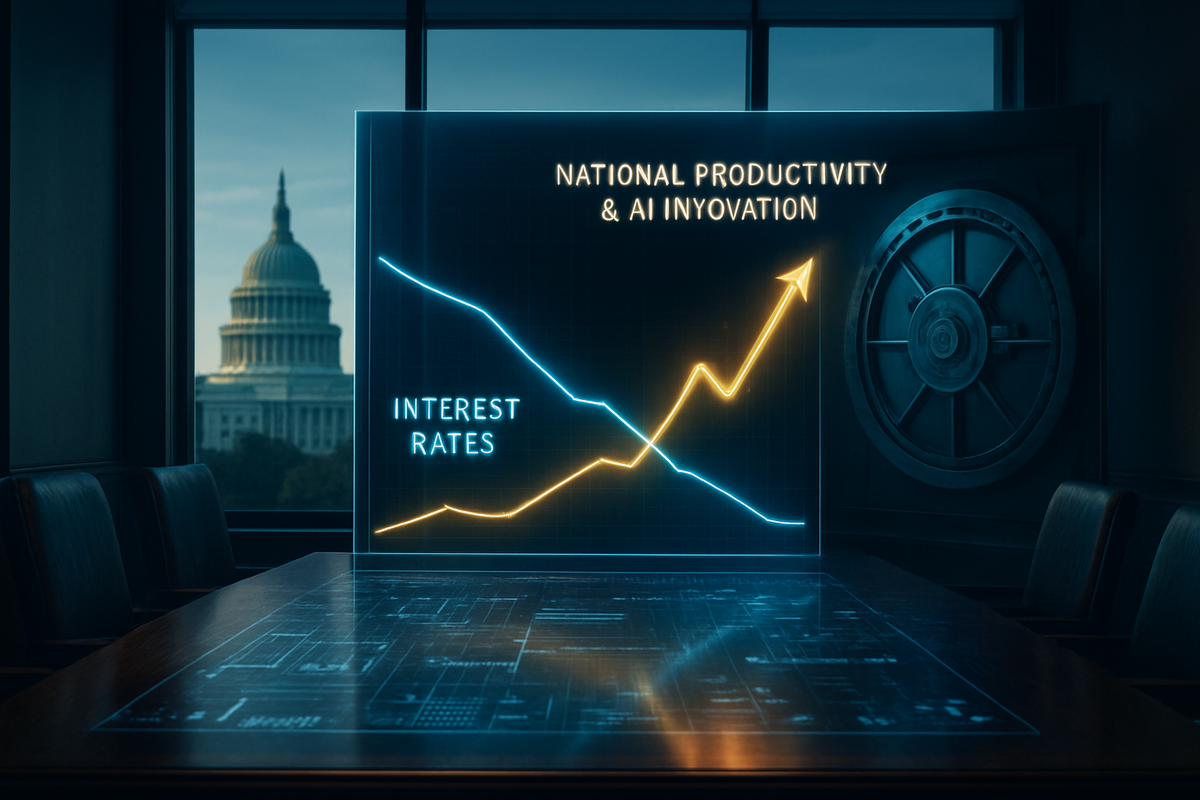
The global financial landscape has entered a period of profound transformation following the nomination of Kevin Warsh to succeed Jerome Powell as Chair of the Federal Reserve. Announced in late January 2026, the transition—scheduled for May—marks a pivot from the "gradualism" that defined the Powell years toward a more aggressive, growth-oriented monetary philosophy. Warsh, a former Fed Governor and Hoover Institution scholar, brings a unique "Productive Dovishness" that seeks to balance low interest rates with a significant reduction in the central bank’s massive balance sheet.
This nomination comes at a critical juncture for the U.S. economy, as the artificial intelligence revolution begins to show tangible impacts on national productivity. By choosing Warsh, the administration is signaling a departure from traditional inflation-targeting models in favor of a framework that trusts technological innovation to keep prices stable while the Fed steps back from its role as the market's primary liquidity provider.
The 'Warsh Shock' and the Path to the Chairmanship
The formal announcement of Kevin Warsh’s nomination on January 30, 2026, sent immediate ripples through global markets, an event quickly dubbed the "Warsh Shock." The decision follows months of public speculation and reported friction between the White House and outgoing Chair Jerome Powell. Warsh, at 55, is returning to the institution where he served as the youngest Governor in history during the 2008 financial crisis, but he returns with a vastly different mandate: dismantling the "Fed Put" while fueling AI-driven expansion.
The timeline leading to this moment has been defined by Warsh’s prolific output at the Hoover Institution, where he served as the Shepard Family Distinguished Visiting Fellow. His recent research argued that the Fed has been "backward-looking," failing to account for the deflationary pressure of massive AI adoption. This intellectual groundwork paved the way for his selection, as he was seen as the only candidate capable of satisfying the administration's demand for lower rates while maintaining a hard-money stance on the Fed's $6.6 trillion balance sheet.
Initial market reactions were swift and "violent." On the day of the announcement, gold prices plummeted nearly 11% to fall below $5,000 per ounce, as investors unwound the "debasement trade" that had thrived under expectations of perpetual liquidity. Simultaneously, the U.S. dollar surged to multi-year highs. The bond market experienced a "bear steepening," where short-term yields drifted lower in anticipation of rate cuts, while long-term yields rose as traders realized the Fed would soon stop its massive support of the Treasury market.
Winners and Losers in the Warsh Era
The shift in policy creates a distinct set of winners and losers across the corporate landscape. Major financial institutions are among the primary beneficiaries. JPMorgan Chase & Co. (NYSE: JPM), The Goldman Sachs Group, Inc. (NYSE: GS), and Wells Fargo & Company (NYSE: WFC) are poised to profit from a steeper yield curve, which expands the margin between what they pay on deposits and what they earn on loans. Furthermore, Warsh’s vocal support for banking deregulation and a rethink of the "Basel III Endgame" capital requirements suggests a more lenient regulatory environment for Wall Street.
In the technology sector, the reaction is bifurcated. Companies at the forefront of the AI boom, such as NVIDIA Corporation (NASDAQ: NVDA) and Meta Platforms, Inc. (NASDAQ: META), stand to gain from Warsh’s "low rate/high growth" thesis. His policy is built on the belief that these firms are driving a structural productivity surge that justifies lower interest rates. Conversely, "zombie" tech firms—older, less efficient companies that have relied on ultra-cheap credit to survive—may face a liquidity crunch as the Fed’s balance sheet shrinks and credit spreads widen.
The commodities and real estate sectors face significant headwinds. Newmont Corporation (NYSE: NEM) and other precious metal miners saw their valuations slashed as the speculative premium on gold evaporated in the face of a stronger dollar. In real estate, while commercial developers may benefit from lower short-term refinancing rates, residential homebuilders and buyers face a paradox: Warsh’s plan to aggressively sell mortgage-backed securities (MBS) could keep long-term mortgage rates stubbornly high, even as the Fed cuts the headline federal funds rate.
A Fundamental Shift in Monetary Philosophy
The nomination of Kevin Warsh represents more than just a change in leadership; it is a rejection of the monetary orthodoxy that has prevailed since the 2008 crisis. For over a decade, the Federal Reserve has used its balance sheet as a primary tool for market stability. Warsh’s "narrow central bank" philosophy aims to end this era of mission creep. By focusing strictly on a rules-based framework, he intends to "privatize" liquidity, forcing markets to price risk without the safety net of constant central bank intervention.
This move mirrors historical shifts, such as Paul Volcker’s pivot in the late 1970s, though in the opposite direction regarding growth. While Volcker sought to crush inflation through high rates, Warsh seeks to enable growth through lower rates, using productivity as his primary hedge against rising prices. This "New Economy" approach assumes that the current technological cycle is powerful enough to offset the inflationary risks of a more accommodative interest rate environment.
The regulatory implications are equally significant. Warsh has long argued that the Fed should not be an arbiter of social or environmental policy. Under his leadership, the market can expect a rollback of climate-related financial disclosures and a narrower focus on institutional independence. This has already sparked debate in the Senate Banking Committee, where Chair Tim Scott (R-SC) has signaled support, while some opposition remains regarding the Fed's recent internal governance.
The Road to May: What Comes Next
Between now and the official handover in May 2026, the markets face a "lame duck" period for Jerome Powell. Investors will be watching for any signs of friction between the outgoing and incoming Chairs, particularly during the upcoming FOMC meetings. The primary short-term challenge will be the Senate confirmation hearings, where Warsh will likely face intense questioning regarding his plan to shrink the balance sheet without triggering a "taper tantrum" or a systemic liquidity crisis in the shadow banking sector.
In the long term, the success of the "Warsh Revolution" depends entirely on the AI productivity narrative. If the expected gains in efficiency do not materialize or are slower than anticipated, his dovish stance on interest rates could reignite inflation, forcing a painful strategic pivot. Market participants must prepare for a period of heightened volatility in long-dated bonds and a potentially permanent shift in the relationship between the Fed and the private sector.
Opportunities may emerge for investors who can identify firms with genuine, AI-driven margin expansion. However, the withdrawal of the "Fed liquidity blanket" means that corporate fundamentals will matter more than they have in a generation. The era of "rising tides lifting all boats" is likely over, replaced by a market that rewards efficiency and punishes dependency on central bank support.
Final Assessment and Investor Outlook
As we move toward the mid-point of February 2026, the nomination of Kevin Warsh stands as the most significant development in central banking in nearly a decade. By attempting to marry a hawkish reduction of the Fed's footprint with a dovish stance on growth, Warsh is taking a massive gamble on the resilience of the U.S. economy and the transformative power of technology. The "Warsh Revolution" promises to bring discipline back to the financial markets, but it also removes the insurance policy that many investors have taken for granted.
Moving forward, the market will be defined by "productive discipline." Investors should closely monitor the spread between the federal funds rate and the 10-year Treasury yield, as this will be the ultimate barometer of the plan's success. If the yield curve remains steep and growth holds steady, Warsh may successfully orchestrate a "soft landing" into a new era of prosperity. If long-term rates spike too high, the resulting pressure on the housing market and government debt servicing could create significant headwinds.
For the coming months, the focus remains on the Senate confirmation and Warsh’s initial speeches as Chair-designate. Any deviation from his stated goal of balance sheet reduction or any sign that inflation is re-accelerating will be met with swift market corrections. In this new regime, the Fed is no longer the market's best friend—it is once again its referee.
This content is intended for informational purposes only and is not financial advice.