The U.S. stock market kicked off the second Friday of 2026 with a historic performance, as both the S&P 500 and the Dow Jones Industrial Average closed at all-time record highs. Investors shrugged off a lukewarm December jobs report, choosing instead to focus on a falling unemployment rate and the resilience of the American economy following a turbulent 2025. The S&P 500 climbed 0.65% to finish at 6,966.28, while the Dow Jones Industrial Average rose 0.48% to a milestone 49,504.07, inching closer to the psychological 50,000 barrier.
This record-breaking start to the year suggests that the "soft landing" narrative—where inflation cools without a major recession—remains the dominant market sentiment. Despite 2025 being marred by government shutdowns and trade tariff disputes, the market's ability to reach new peaks indicates a high level of confidence in corporate earnings and the long-term productivity gains promised by artificial intelligence.
The rally on January 9, 2026, was catalyzed by the release of the Bureau of Labor Statistics' December employment situation report. The data showed that the U.S. economy added 50,000 nonfarm payroll jobs in December, falling short of the consensus forecast of approximately 63,000. While the headline number was modest, the unemployment rate unexpectedly dropped to 4.4% from 4.6% in November. This decline, combined with steady wage growth of 3.8% year-over-year, provided a "Goldilocks" scenario for investors: a labor market that is cooling enough to prevent runaway inflation but strong enough to support consumer spending.
The timeline leading up to this record-breaking day was fraught with uncertainty. Throughout much of late 2025, a prolonged government shutdown and a budget impasse had suspended the collection of vital economic data for three months. This created a "data vacuum" that left investors flying blind until late in the fourth quarter. As the data finally normalized in early January, the realization that the economy had survived the fiscal turbulence triggered a massive relief rally across the board.
Key stakeholders, including institutional investors and Federal Reserve officials, have been closely monitoring these developments. The mixed nature of the jobs report led to immediate shifts in the bond market, where Treasury yields fluctuated as traders recalibrated their expectations for interest rate cuts in 2026. While some analysts had hoped for more aggressive easing, the steady wage growth suggests the Fed may maintain a "higher-for-longer" stance on rates to ensure inflation remains firmly under control.
The technology sector continues to be the primary engine of market growth. Companies like Oracle (NYSE: ORCL) and Datadog (NASDAQ: DDOG) saw significant gains as investors doubled down on software and cloud infrastructure providers that facilitate AI integration. The Trade Desk (NASDAQ: TTD) also benefited from the rally, as its programmatic advertising platform showed resilience despite broader concerns about retail demand. These high-growth tech firms are increasingly seen as safe havens due to their strong cash flows and central roles in the modern digital economy.
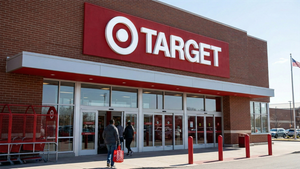
In contrast, the retail sector faced a more challenging day. Traditional retailers like Walmart (NYSE: WMT) and Target (NYSE: TGT) have been grappling with the impact of trade tariffs introduced in early 2025, which have squeezed margins and dampened holiday demand. The December jobs report confirmed this trend, showing a loss of 25,000 jobs in the retail trade sector. While the broader market celebrated, these companies are navigating a difficult environment where rising import costs must be balanced against a more price-sensitive consumer base.
The financial sector, led by giants like JPMorgan Chase (NYSE: JPM), experienced a stable but cautious session. While the record-high indices are a boon for asset management and investment banking divisions, the uncertainty surrounding the Federal Reserve’s next move limits the upside for net interest margins. Banks are currently in a "wait-and-see" mode, awaiting clarity on whether the Fed will prioritize supporting the cooling labor market or keeping a lid on wage-induced inflation.
This record-breaking day is a significant milestone in the post-2025 economic recovery. It highlights a shift in market dynamics where "bad news" in the labor market (lower job growth) is often interpreted as "good news" for the stock market, as it reduces the pressure on the Federal Reserve to maintain restrictive monetary policies. This event fits into a broader trend of market "recalibration," where investors are moving away from broad-based index betting and toward company-specific fundamentals and productivity metrics.
The potential ripple effects are substantial. For competitors in the tech space, the success of AI-integrated firms is forcing a rapid pivot toward automated services and specialized hardware. Furthermore, the market's resilience despite the 2025 government shutdown sets a historical precedent, suggesting that the U.S. economy has become more decoupled from political volatility than previously thought. This could lead to a more aggressive investment environment even during periods of future legislative gridlock.
From a policy perspective, the record highs may give the Federal Reserve less room to maneuver. If the market continues to surge, the "wealth effect" could stimulate spending and reignite inflationary pressures, potentially delaying the very interest rate cuts that investors are cheering for. Additionally, the ongoing Supreme Court deliberations regarding the legality of 2025’s trade tariffs remain a significant "wild card" that could either accelerate this rally or bring it to a grinding halt depending on the ruling.
Looking ahead, the short-term focus will shift to the upcoming fourth-quarter earnings season. Investors will be looking for concrete evidence that the record-high valuations of the S&P 500 and Dow are justified by bottom-line growth. A key challenge will be whether companies can maintain their margins in the face of steady wage growth and the lingering costs associated with the 2025 tariff implementations.
Strategic pivots are already underway. Many firms are expected to increase their capital expenditure on AI and automation to offset the anemic job growth seen in the December report. If the labor market remains tight while hiring slows, productivity-enhancing technology will be the only way for companies to grow without significantly increasing their headcount. This creates a massive market opportunity for enterprise software and robotics companies.
Potential scenarios for the remainder of 2026 range from a continued "melt-up" toward Dow 55,000 to a period of stagnation if the Supreme Court upholds the trade tariffs. Investors should prepare for increased volatility as the market attempts to find its footing at these elevated levels. The ability of the S&P 500 to hold the 6,900 level will be a crucial technical indicator for the health of this bull market in the months to come.
The record-closing highs of January 9, 2026, represent a triumph of economic resilience over fiscal and political adversity. The S&P 500 and Dow Jones have effectively signaled that the U.S. economy is on a path toward a sustainable, if slower, growth trajectory. The key takeaways from today's session are the cooling yet stable labor market, the continued dominance of the technology sector, and the market's remarkable ability to look past short-term political disruptions.
Moving forward, the market will likely be characterized by a "stock picker’s" environment. While the indices are at records, the underlying divergence between sectors—specifically the strength in tech versus the struggle in retail—suggests that broad index gains may be harder to come by in the latter half of the year. Investors should watch for the Federal Reserve’s commentary in the coming weeks and the resolution of the tariff legal battles, as these will be the primary drivers of sentiment.
Ultimately, the significance of this record-breaking start to 2026 cannot be overstated. It provides a much-needed psychological boost to both institutional and retail investors, setting a positive tone for the year. As the Dow eyes the 50,000 mark, the focus remains on whether the "soft landing" can be successfully maintained or if the weight of 2025’s policy decisions will eventually catch up to the market’s lofty expectations.
This content is intended for informational purposes only and is not financial advice