As of January 9, 2026, the intersection of artificial intelligence and carbon-free energy has reached a fever pitch, with Oklo Inc. (NYSE: OKLO) standing at the epicenter of this industrial revolution. The company’s stock has witnessed a staggering 36% surge in the first week of the new year, culminating in a market capitalization of $15.25 billion. This rally follows the landmark announcement today of a massive 1.2-gigawatt (GW) agreement with Meta Platforms (NASDAQ: META), signaling that the "Nuclear-AI Nexus" is no longer a speculative future but a present-day reality for the world’s largest technology firms.
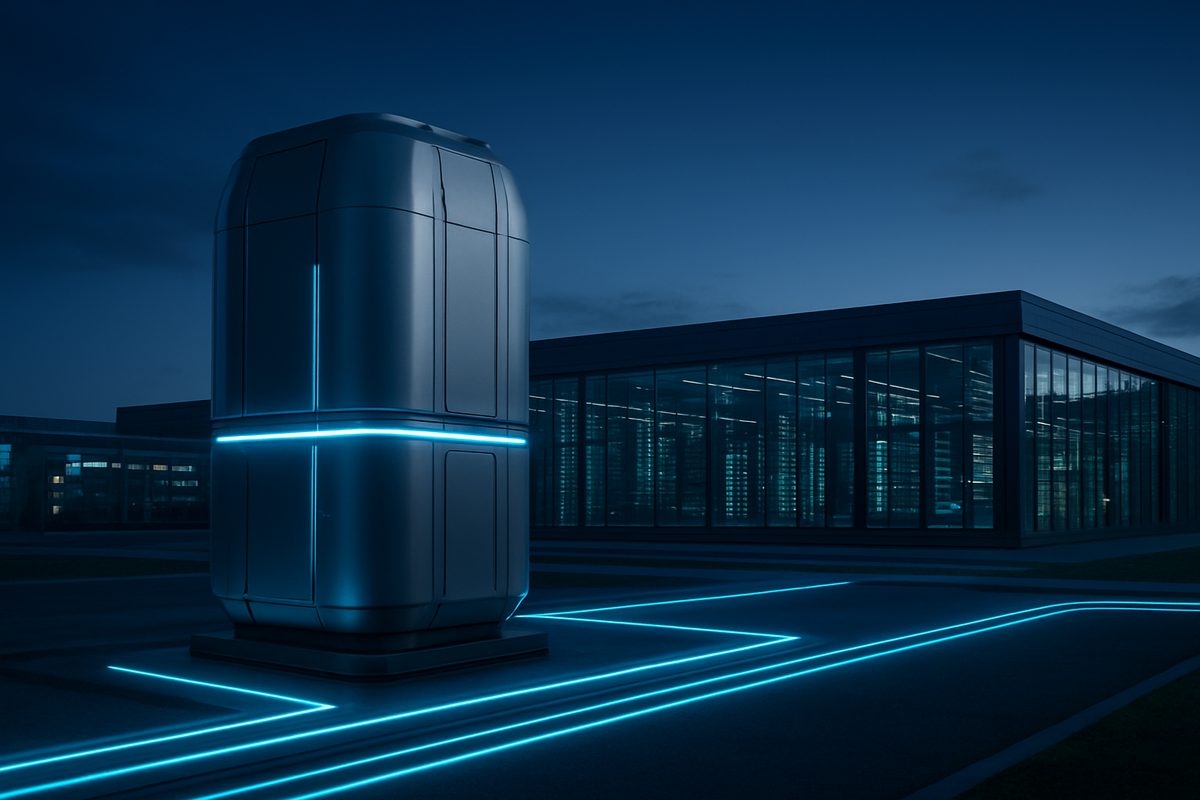
The immediate implications of this surge are profound. For years, the primary bottleneck for the deployment of Artificial General Intelligence (AGI) was thought to be the availability of high-end GPUs; however, by early 2026, the constraint has shifted decisively to the power grid. Oklo’s ability to provide small, modular, and rapidly deployable reactors—known as the Aurora powerhouse—has positioned it as the preferred infrastructure partner for "AI factories" that require massive, uninterrupted baseload power that wind and solar alone cannot provide.
The Meta "Prometheus" Deal and the Road to Ohio
The catalyst for Oklo’s recent market dominance is the "Prometheus" project, a multi-year strategic partnership with Meta Platforms. Under the terms of the deal announced this morning, Oklo will develop an advanced nuclear technology campus in Pike County, Ohio. This campus is designed to deliver up to 1.2 GW of clean power specifically to feed Meta’s "Prometheus" AI supercluster located in nearby New Albany. Unlike traditional power purchase agreements, Meta has agreed to a "Power-as-a-Service" model, providing Oklo with significant upfront capital to accelerate the construction of multiple Aurora reactors simultaneously.
This milestone follows a rapid succession of events throughout late 2025. In September, Oklo officially broke ground at the Idaho National Laboratory (INL) for its first commercial-scale reactor, a move that silenced skeptics who doubted the company’s ability to move from design to physical deployment. Simultaneously, the Nuclear Regulatory Commission (NRC) accepted Oklo’s Principal Design Criteria (PDC) topical report under an expedited review framework, a regulatory win that has streamlined the licensing process for the company's entire fleet.
The involvement of Sam Altman, though now strictly as a major investor and advocate rather than Chairman, remains a key driver of investor confidence. Altman stepped down from the board in April 2025 to mitigate potential conflicts of interest as Oklo began negotiating with OpenAI’s direct competitors. His continued public stance that "AGI is physically impossible without nuclear fission" has become the rallying cry for a sector that was once considered a pariah of the green energy movement.
Winners and Losers in the Nuclear Renaissance
The primary winner in this shifting landscape is undoubtedly Oklo (NYSE: OKLO), which has successfully transitioned from a high-risk SPAC to a blue-chip infrastructure play. However, the ripple effects are being felt across the entire energy and tech stack. Constellation Energy (NASDAQ: CEG) has also benefited, with its stock trading at record highs as its project to restart the Crane Clean Energy Center (formerly Three Mile Island) for Microsoft (NASDAQ: MSFT) remains ahead of schedule for a 2027 launch.
Infrastructure providers like Vertiv (NYSE: VRT) are also emerging as winners. Vertiv’s 2025 partnership with Oklo to create integrated cooling and power modules for modular data centers has made them an essential part of the "AI factory" blueprint. On the other hand, traditional utilities that have been slow to adapt to "front-of-the-meter" co-location requests from tech giants are finding themselves sidelined. Companies like Talen Energy (NASDAQ: TLN) have had to fight rigorous legal battles to secure their 1.9 GW deal with Amazon (NASDAQ: AMZN), highlighting the competitive disadvantage of legacy regulatory frameworks compared to Oklo’s nimble, site-specific approach.
A Fundamental Shift in Industrial Policy
The rise of Oklo represents a broader industry trend where energy is being treated as a matter of national security and technological leadership. Entering 2026, the federal government has implemented new executive orders directing the Federal Energy Regulatory Commission (FERC) to prioritize and expedite permitting for "AI-Nuclear co-location" projects. This policy shift acknowledges that the race for AI supremacy is essentially a race for energy density.
Historically, the nuclear industry was defined by massive, multi-decade projects that often fell victim to cost overruns and regulatory stagnation. Oklo’s fast-fission technology, which can utilize recycled nuclear fuel, offers a historical pivot similar to the shift from mainframe computers to distributed PCs. By shrinking the scale and modularizing the construction, Oklo has bypassed the "megaproject" trap that hindered the industry for forty years. This has forced competitors like Google (NASDAQ: GOOGL), which is currently partnering with Kairos Power for its own SMR fleet, to accelerate their timelines to match Oklo’s aggressive deployment schedule.
The Path to Commercialization and Beyond
Looking ahead to the remainder of 2026 and 2027, the primary challenge for Oklo will be the successful execution of its Idaho and Ohio projects. While the regulatory path has been cleared significantly, the physical assembly of the Aurora reactors will be the ultimate test of the company’s "Power-as-a-Service" model. Investors should watch for the Department of Energy’s final safety evaluations of Oklo’s fuel fabrication facility, which is slated to begin producing HALEU-based fuel by late 2026.
In the short term, the market may see a period of consolidation as the "January surge" cools, but the long-term trajectory is tied to the scaling of AI. If Meta’s Prometheus supercluster achieves the performance gains expected, it will likely trigger a second wave of orders from other hyperscalers and even sovereign wealth funds looking to build national AI infrastructures. The strategic pivot required for Oklo will be managing a global supply chain for specialized reactor components, a challenge that has historically tripped up even the most seasoned industrial giants.
Final Assessment: The New Utility Paradigm
The events of early 2026 have solidified Oklo’s position as a transformative force in both the energy and technology sectors. The company has successfully bridged the gap between the high-growth world of Silicon Valley and the high-reliability world of nuclear engineering. For the market, the key takeaway is that the "AI trade" has evolved; it is no longer just about software and chips, but about the physical atoms required to power them.
As we move forward, the "Nuclear-AI Nexus" will likely be the defining investment theme of the decade. Investors should keep a close eye on NRC draft evaluations and any further "pre-payment" deals from Big Tech, as these will serve as the primary indicators of Oklo’s ability to meet its 14 GW pipeline. In a world where intelligence is the ultimate currency, Oklo has positioned itself as the mint.
This content is intended for informational purposes only and is not financial advice.