In its fourth-quarter and full-year 2025 earnings report delivered on January 27, 2026, American Airlines (NASDAQ: AAL) signaled a decisive shift in its corporate identity. The Fort Worth-based carrier reported a record-breaking $14.0 billion in quarterly revenue, bringing its full-year 2025 total to a staggering $54.6 billion. However, the celebration was tempered by thin profit margins, with adjusted earnings per diluted share (EPS) coming in at just $0.16 for the quarter—a result of significant operational headwinds, including a fourth-quarter government shutdown and the disruptive force of Winter Storm Fern in early January.
Despite these immediate pressures, the market's attention has shifted toward American’s aggressive long-term strategy to capture the high-yield travel segment. By retrofitting its aging fleet and introducing the state-of-the-art "Flagship Suite," American is effectively declaring war on its rivals for the loyalty of premium travelers. This strategic pivot aims to increase the airline’s premium seat capacity by 45% on long-haul flights and 30% across its domestic fleet by 2030, a move intended to close the valuation and profitability gap that has long separated American from its primary competitors.
A Record Year Stalled by External Turbulence
The financial narrative of late 2025 and early 2026 for American Airlines has been one of resilience in the face of chaos. The $325 million revenue loss attributed to the federal government shutdown in late 2025 initially cast a shadow over the carrier’s year-end performance. This was compounded by Winter Storm Fern, which forced over 9,000 flight cancellations in the first two weeks of January 2026, leading to a projected loss for the current first quarter. Nevertheless, management remained steadfast, highlighting that the airline successfully reduced its total debt by $2.1 billion during 2025, ending the year with $36.5 billion in total obligations.
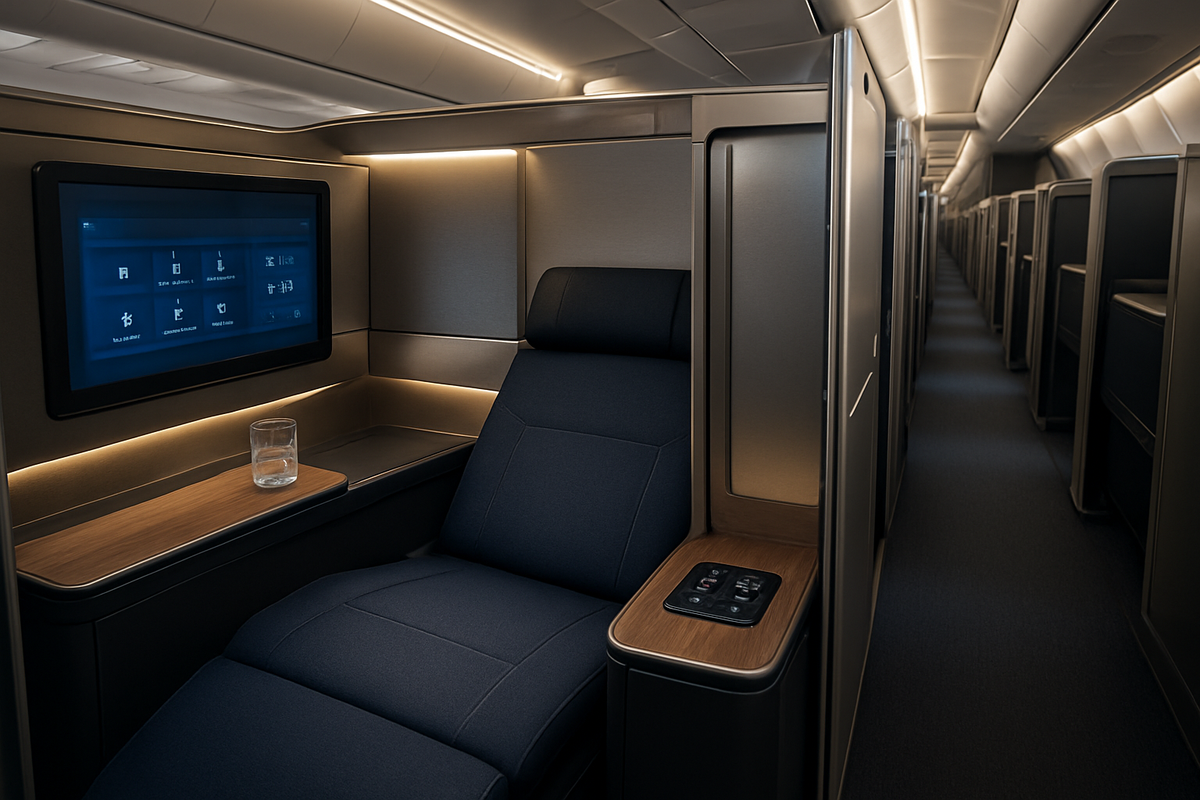
The centerpiece of American's recovery plan is the "Flagship Suite" rollout. Following a series of certification delays that pushed the product’s debut from 2024 to June 2025, the new suites are now flying on new-delivery Boeing (NYSE: BA) 787-9P aircraft. These suites feature sliding privacy doors and direct aisle access, effectively eliminating the airline’s traditional "Flagship First" class in favor of a more consistent, high-capacity business-class offering. Furthermore, on December 18, 2025, American officially inaugurated its Airbus (OTC:EADSY) A321XLR service on the New York (JFK) to Los Angeles (LAX) route, marking the first time a narrowbody aircraft in American’s fleet has offered a lie-flat suite with a privacy door.
Winners and Losers in the Premium Arms Race
The primary winner in American's strategic shift is arguably the supply chain responsible for these luxury interiors. Adient Aerospace, a joint venture between Adient (NYSE: ADNT) and Boeing, is the manufacturer of the "Ascent" platform used for the widebody Flagship Suites. Similarly, RTX Corporation (NYSE: RTX) via its subsidiary Collins Aerospace, stands to benefit as the provider of the "Aurora" seats for the A321XLR fleet. These manufacturers are seeing a massive backlog of orders as airlines globally race to "premiumize" their cabins. AT&T (NYSE: T) also secured a win, becoming the official sponsor of American’s new free high-speed Wi-Fi rollout for AAdvantage members, which launched across the narrowbody fleet this month.
Conversely, the "losers" in this transition could be the price-sensitive passengers who may find fewer "Basic Economy" options as the airline reconfigures its domestic A319 and A320 aircraft to add more First Class seats at the expense of cabin density. Additionally, American itself faces the "loser" risk of execution: the airline has struggled with the FAA over seat safety certifications, particularly regarding movable armrests for passengers with disabilities. Any further regulatory hurdles or delivery delays from Boeing or Airbus could leave American with an inconsistent product offering compared to its peers for years to come.
The Broader Significance: A Three-Way Fight for the High-End Flyer
American’s move is part of a broader industry trend where "premium" is no longer an optional luxury but a survival requirement. Delta Air Lines (NYSE: DAL) and United Airlines (NASDAQ: UAL) have both spent the last three years aggressively expanding their premium offerings. Delta is currently taking delivery of the Airbus A350-1000, which features an even more exclusive "Delta One" experience, while United has launched "United Polaris Studio" seats that offer 25% more space than their standard business class. American’s strategy is unique in its focus on volume—by removing First Class, they are able to fit 70 suites on a Boeing 777-300ER, more than any other U.S. carrier in that aircraft category.
Historically, American was often seen as the "utility" player among the Big Three, focused on operational scale rather than cabin luxury. This pivot represents a fundamental change in the airline's philosophy, moving away from a three-class (First, Business, Coach) system toward a high-margin two-class system (Suites, Economy). This alignment with global standards—seen in carriers like Qatar Airways or British Airways—suggests that the U.S. domestic market is finally maturing into a service-led industry rather than a purely price-led one.
The Road Ahead: 2026 and Beyond
Looking forward, 2026 is set to be a "catch-up" year for American Airlines. The company has issued a bullish full-year EPS guidance of $1.70 to $2.70, a massive jump from the $0.36 earned in 2025. This optimism is based on the expectation that 55 new aircraft will be delivered this year, many of which will be the high-margin 787-9P and A321XLR models. Investors should also watch for the expansion of the A321XLR to international routes, with the first trans-Atlantic flight to Edinburgh scheduled for March 8, 2026.
However, challenges remain. The retrofit of the existing 777-200ER fleet isn't scheduled to begin until this fall, and the 777-300ER fleet is only just starting its conversion process. This means American will operate a "split fleet" for at least the next two years, where a passenger booking a "Flagship" ticket may end up on an older, un-retrofitted aircraft. Managing customer expectations during this transition period will be critical to maintaining the brand loyalty necessary to justify these multi-billion dollar capital expenditures.
Final Assessment: Can American Close the Gap?
The Q4 2025 earnings report and the subsequent premium rollout confirm that American Airlines is no longer content with being the third-place finisher in the luxury market. By committing to $4.5 billion in capital expenditures for 2026, the company is doubling down on a future where the high-spend traveler is the primary driver of profitability. The reduction of debt toward the $35 billion target is a positive sign for credit-conscious investors, but the real test will be the airline's ability to maintain its "Record Revenue" status while expanding its margins.
As the industry moves through 2026, investors should keep a close eye on two things: the reliability of Boeing’s delivery schedule and the quarterly "Premium Revenue" growth figures. If American can successfully migrate its corporate and luxury travelers into these new suites, it may finally achieve the valuation parity it seeks with Delta. For now, American is an airline in transition—navigating the turbulence of today to build the luxury fleet of tomorrow.
This content is intended for informational purposes only and is not financial advice.