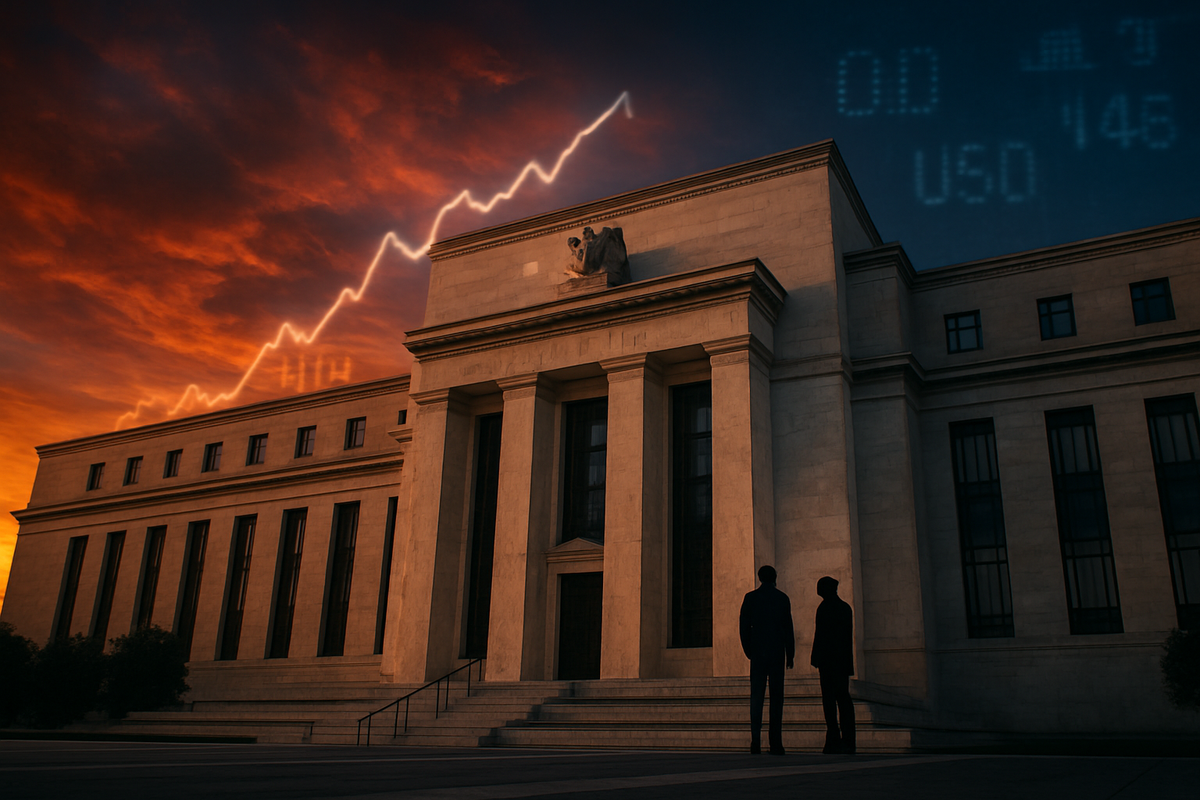
The global financial community is bracing for a tectonic shift in monetary policy as President Trump prepares to announce his nominee for the next Chair of the Federal Reserve. Following a series of high-profile meetings at the World Economic Forum in Davos, Switzerland, the race to succeed Jerome Powell has narrowed to a high-stakes duel between BlackRock (NYSE: BLK) Chief Investment Officer Rick Rieder and former Fed Governor Kevin Warsh. The announcement, expected in the coming days, has already sent shockwaves through the bond markets, with investors pricing in a "political risk premium" that has pushed the 10-year Treasury yield above 4.2%.
The transition comes at a precarious moment for the U.S. economy. With Jerome Powell’s term set to expire on May 15, 2026, the administration has intensified its "Shadow Chair" strategy, openly vetting candidates while simultaneously exerting unprecedented pressure on the current leadership. The US Dollar has faced sustained selling pressure as the prospect of a more politically aligned Fed weighs on the currency’s status as a neutral reserve, with the EUR/USD pair trending toward 1.18 as of late January.
The Davos Shortlist and the "Jerome Too-Late" Feud
The path to this moment was paved in the snow-capped peaks of Davos, where President Trump utilized his January 21 keynote address to signal a departure from traditional central bank independence. Throughout the week, the President and Treasury Secretary Scott Bessent met with a shortlist of finalists that included Rieder, Warsh, and National Economic Council Director Kevin Hassett. Rick Rieder, once considered a long-shot "industry candidate," has emerged as the frontrunner with prediction market odds surging to 60%. Trump’s public praise for Rieder’s "pragmatic" view on interest rates—specifically his suggestion of a 3% neutral rate—contrasts sharply with his escalating attacks on the incumbent.
The relationship between the White House and the Federal Reserve has hit a historic low. Trump has frequently referred to the current Chair as "Jerome too-late Powell," accusing him of stifling growth by maintaining a restrictive posture. This personal animosity has moved beyond rhetoric; the Department of Justice has recently issued grand jury subpoenas to the Fed regarding cost overruns in its $2.5 billion headquarters renovation. Powell has characterized these investigations as a "pretext" for political intimidation, setting the stage for a contentious confirmation battle in the Senate regardless of who is chosen.
Market Winners and Institutional Shifts
The prospect of a Rick Rieder-led Fed has created a distinct set of winners and losers across the financial landscape. As the CIO of BlackRock (NYSE: BLK), Rieder represents the "market's candidate"—someone with deep ties to the $2.4 trillion global fixed-income market. Shares of major asset managers and investment banks, including Goldman Sachs (NYSE: GS) and JPMorgan Chase & Co. (NYSE: JPM), have seen increased volatility as traders weigh the benefits of a potentially more dovish, market-responsive Fed against the risks of long-term inflationary pressure.
While a "dovish" pick like Rieder might initially buoy equity markets, the bond market is signaling deep unease. The sell-off in long-dated Treasuries reflects a fear that the Fed’s dual mandate—price stability and maximum employment—could be compromised by political mandates for lower rates. Conversely, a Kevin Warsh appointment is seen as a win for "institutionalists." Warsh, though a critic of Powell’s recent tenure, is perceived as more likely to defend the Fed’s structural independence, even if he pursues a more hawkish stance on long-term inflation.
Redefining Federal Reserve Independence
The 2026 race is more than a personnel change; it represents a potential paradigm shift in how the U.S. government interacts with its central bank. Historically, the Fed has operated at arm's length from the executive branch to ensure that monetary policy is not used for short-term political gain. However, the current administration’s focus on "America First" economics has led to calls for a Fed that actively supports trade and industrial policies. This has drawn comparisons to the 1970s, when President Richard Nixon successfully pressured Arthur Burns to keep rates low ahead of an election—a move that many economists believe contributed to the decade’s subsequent "Great Inflation."
The regulatory implications are equally significant. A new Chair may look to roll back Basel III "Endgame" capital requirements, a move that would be cheered by the banking sector but criticized by consumer advocates. Furthermore, the "weaponization" of DOJ investigations into Fed operations marks a departure from historical precedent, suggesting that the next Chair will have to navigate a landscape where technical expertise is often secondary to political loyalty.
The Road to May 15: What Comes Next
As the formal nomination looms, the market's attention will shift to the Senate Banking Committee. The confirmation process for either Rieder or Warsh is expected to be one of the most scrutinized in decades. A key variable remains Jerome Powell’s status; while his term as Chair ends in May, his seat on the Board of Governors lasts until 2028. If Powell chooses to stay on the board—a move some have called an "internal shadow government"—the new Chair could face an unprecedented level of internal resistance and institutional friction.
In the short term, investors should prepare for heightened volatility in the foreign exchange and sovereign debt markets. Any confirmation of a "pro-growth at all costs" nominee could lead to a further spike in gold prices and a flight from the US Dollar. Strategic pivots by major corporations are already underway, with many hedging against the possibility of a "regime change" that prioritizes lower short-term rates at the expense of currency stability.
A New Era for Global Monetary Policy
The intensifying race for the Fed Chairmanship marks the end of the post-2008 era of central banking "standardization." Whether it is the market-driven pragmatism of Rick Rieder or the reformist institutionalism of Kevin Warsh, the next leader of the Federal Reserve will inherit a fragmented global economy and a highly politicized domestic environment. The Davos summit has made one thing clear: the days of the Fed operating in a political vacuum are over.
For investors, the coming months will require a close watch on Treasury auctions and the yield curve. A persistent "term premium" in long-term bonds suggests that the market is not yet convinced that a more political Fed can successfully contain inflation in 2026 and beyond. As the announcement nears, the focus remains on whether the new Chair can balance the President’s demands for growth with the global market’s demand for institutional stability.
This content is intended for informational purposes only and is not financial advice.