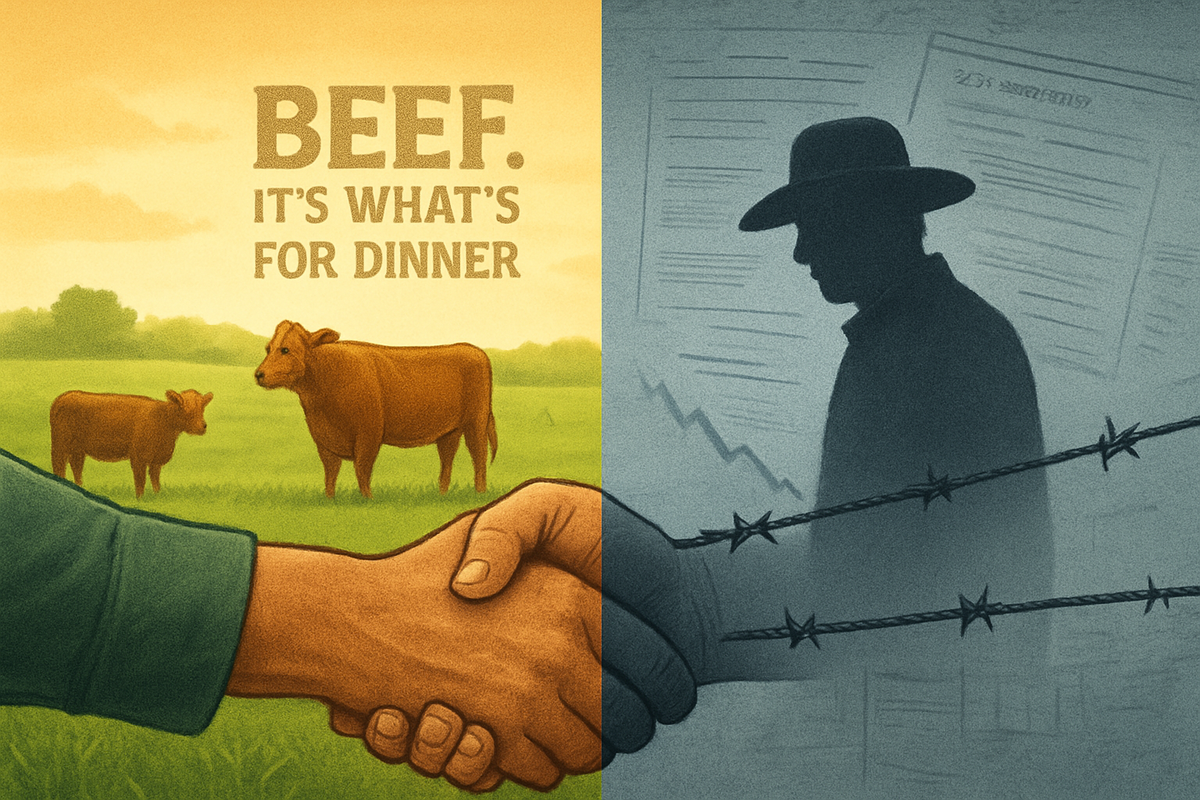
The Beef Checkoff program, a national, producer-funded initiative designed to bolster demand for U.S. beef, is marking its 40-year milestone amidst a confluence of significant investment plans and escalating legal and ethical challenges. Established through the 1985 Farm Bill and made mandatory in 1988, the program levies a $1 per head assessment on all cattle sales, aiming to drive consumption through promotion, research, and education. As of late 2025, while the program continues to allocate tens of millions to these efforts, it finds itself under intense scrutiny from various rancher advocacy groups and animal welfare organizations, who are questioning its transparency, accountability, and the allocation of its substantial funds.
This pivotal moment for the Beef Checkoff highlights a growing schism within the cattle industry. On one side, proponents point to decades of successful marketing campaigns, like the iconic "Beef. It's what's for dinner," and crucial research advancements that have undoubtedly contributed to beef's enduring presence on dinner tables globally. On the other, a vocal contingent of producers and watchdogs argues that the program, intended to benefit all cattle producers, has become opaque and disproportionately benefits larger industry players and specific organizations, raising concerns about conflicts of interest and a lack of direct oversight from the very ranchers who fund it. The outcomes of ongoing legal battles and internal reviews could redefine the program's future, potentially altering its structure, funding mechanisms, and overall impact on the diverse landscape of the American cattle industry.
Four Decades of Beef Promotion Face Modern-Day Scrutiny
The Beef Checkoff program's operational framework is built upon a mandatory $1 assessment collected each time a head of cattle is sold, whether domestically or imported. Half of this dollar can be retained by state beef councils for local initiatives, while the remainder flows to the Cattlemen's Beef Board (CBB) for national and international programs. These funds are legally mandated to be used for promotion, research, consumer education, and foreign marketing, explicitly prohibiting their use for lobbying or influencing government policy. The program's historical impact includes significant contributions to beef safety research, nutritional studies, and the development of new beef products, alongside its widely recognized promotional campaigns.
A significant development in 2025 saw the CBB announce, in September, a proposed investment of over $38 million into various Beef Checkoff programs for the 2026 fiscal year, pending USDA approval. This allocation includes a substantial $9.3 million earmarked for research in areas such as beef safety, scientific affairs, nutrition, and sustainability, reflecting an industry-wide push towards addressing modern consumer concerns. Furthermore, July 2025 marked the unveiling of a new Beef Industry Long Range Plan for 2026-2030, a strategic blueprint designed to guide the industry in meeting global consumer demands for sustainable, high-quality beef.
However, these forward-looking plans are overshadowed by a resurgence of controversy. A significant point of contention revolves around the allocation of over $25 million in producer funds to the National Cattlemen's Beef Association (NCBA) in September 2025. This funding has ignited strong criticism from several rancher advocacy groups, who allege that the NCBA, a powerful industry lobby, has ties to large meatpacking companies, creating a conflict of interest. These critics argue that the mandatory nature of the checkoff program, coupled with what they perceive as a lack of transparency and producer control over fund allocation, undermines its stated purpose of benefiting all producers equally.
The discontent has materialized into legal action. July 2025 saw the filing of two new lawsuits challenging the program's integrity. One lawsuit contests the fairness of board appointments and demands refunds for state checkoff funds, while another, brought by animal welfare advocates, accuses the USDA of approving misleading claims about the environmental benefits of cattle production in checkoff promotions. These legal challenges are pushing for greater accountability and the release of USDA documents pertaining to the program's oversight, signaling a period of intense scrutiny for the 40-year-old initiative.
Who Wins and Who Loses? Navigating the Checkoff's Economic Currents
The Beef Checkoff program, with its broad mandate to increase beef demand, theoretically benefits all participants in the U.S. cattle industry. However, the practical distribution of these benefits and the program's current controversies suggest a more nuanced reality, creating potential winners and losers across the supply chain.
Potential Winners:
- Large Meatpacking Companies: While not directly funded by the checkoff, companies like (Tyson Foods (NYSE: TSN)), (JBS S.A. (B3: JBSS3)), and (Cargill (Private)) indirectly benefit significantly from increased beef demand driven by checkoff promotions. A robust market for beef ensures consistent demand for their processing services and products. The alleged ties between the NCBA and these larger entities, as cited by critics, further suggest an indirect advantage through policy influence and market shaping.
- National Cattlemen's Beef Association (NCBA): As a primary recipient of significant checkoff funds for promotional and research activities, the NCBA clearly benefits from the program's current structure. These funds bolster its operational capacity, influence, and ability to execute large-scale industry initiatives.
- Companies in Beef Research and Development: Organizations and institutions involved in beef safety, nutrition, product development, and sustainability research, often funded through checkoff grants, stand to gain. This includes agricultural science firms and university research departments that receive funding for projects aligned with the checkoff's goals.
- Marketing and Advertising Agencies: The agencies responsible for developing and executing the extensive promotional campaigns, such as "Beef. It's what's for dinner," are direct beneficiaries of the program's advertising budget.
Potential Losers:
- Independent and Small-to-Mid-Sized Ranchers: Many individual cattle producers, particularly those operating smaller ranches, often voice frustration. They bear the mandatory $1 per head assessment but frequently perceive a lack of direct return on investment or influence over how funds are spent. The feeling of subsidizing larger industry players or an organization they don't feel represents their interests leads to a sense of disenfranchisement.
- Rancher Advocacy Groups Seeking Reform: Organizations actively challenging the checkoff's structure and transparency, while fighting for what they believe is right, expend significant resources on legal battles and public relations campaigns. Their "losses" are primarily in the ongoing struggle to achieve their reform goals against a well-funded establishment.
- Alternative Protein Producers: To the extent that the Beef Checkoff successfully promotes beef, it inherently competes with and potentially hinders the growth of alternative protein markets. If the program's controversies lead to a decline in consumer trust in conventional beef, however, this could paradoxically benefit alternative protein companies.
The core tension lies in the mandatory nature of the assessment. While all producers contribute, the perceived benefits are not uniformly distributed, leading to a strong feeling among some that the program, in its current form, creates an uneven playing field that favors larger, more integrated segments of the beef industry at the expense of independent producers.
The Wider Significance: A Bellwether for Agricultural Commodity Programs
The current challenges facing the Beef Checkoff program extend far beyond the immediate concerns of cattle producers; they represent a significant bellwether for broader trends within the agricultural industry and commodity checkoff programs nationwide. The scrutiny over transparency, accountability, and fund allocation mirrors similar debates in other sectors, raising questions about the efficacy and fairness of such mandatory funding mechanisms.
This event fits squarely into broader industry trends emphasizing sustainability, transparency, and ethical sourcing. Consumers are increasingly demanding to know where their food comes from, how it's produced, and its environmental footprint. The lawsuit by animal welfare advocates challenging "misleading claims" about beef's environmental benefits directly taps into this trend, putting pressure on the entire beef industry to authenticate its sustainability narratives. Should these claims be substantiated, it could significantly tarnish beef's image, impacting consumer choices and potentially driving demand towards more transparent or plant-based alternatives.
The ripple effects on competitors and partners are considerable. If the Beef Checkoff program's effectiveness is diminished due to ongoing controversies or if its funds are redirected, it could impact the overall marketing strength of U.S. beef. This could create opportunities for international beef producers or for the burgeoning alternative protein market to capture greater market share. Furthermore, the internal strife within the cattle industry could weaken its collective lobbying power on other critical issues, affecting policies related to trade, land use, and environmental regulations.
From a regulatory and policy perspective, the lawsuits and calls for audits could trigger a comprehensive review by the U.S. Department of Agriculture (USDA) regarding its oversight of the Beef Checkoff program. The USDA's role is to ensure that checkoff funds are used in accordance with the law and that the programs are operating fairly. Increased scrutiny could lead to stricter regulations on fund allocation, greater transparency requirements, or even legislative amendments to the 1985 Beef Promotion and Research Act. This could set a precedent for other commodity checkoff programs, such as those for dairy, pork, or cotton, which have faced their own share of controversies regarding mandatory fees and lobbying activities.
Historically, commodity checkoff programs have periodically faced challenges regarding their governance and perceived fairness. The dairy checkoff, for instance, has also been scrutinized for its relationships with industry groups and its impact on small farmers. The current situation with the Beef Checkoff echoes these historical precedents, highlighting the inherent tension in programs that mandate producer contributions while being administered by boards that some perceive as disconnected or biased. The outcome of the current legal and political battles will likely shape the future landscape of how agricultural commodities are promoted and regulated in the United States.
What Comes Next: A Crossroads for the Beef Checkoff and the Cattle Industry
The Beef Checkoff program stands at a critical juncture, with several short-term and long-term possibilities that could fundamentally reshape its operations and impact on the U.S. cattle industry. The coming months will be crucial in determining the program's trajectory amid escalating legal battles and calls for reform.
In the short-term, the immediate focus will be on the outcomes of the lawsuits filed in July 2025. Rulings on the fairness of board appointments, demands for state checkoff refunds, and the allegations of misleading environmental claims could force immediate operational adjustments for the CBB and the USDA. The USDA's response to demands for increased transparency and full audits will also be closely watched. A proactive stance by the USDA in addressing these concerns could help restore some producer confidence, while a perceived lack of action could further fuel dissent and legal challenges. The ongoing debate over the allocation of funds to the NCBA will also continue to be a flashpoint, potentially leading to revised funding mechanisms or more stringent oversight of how partner organizations utilize checkoff dollars.
Looking to the long-term, the most significant possibility is a fundamental reform of the Beef Checkoff program itself. This could range from legislative changes to the 1985 Act that would make the checkoff voluntary, rather than mandatory, a move strongly advocated by some rancher groups. Such a shift would dramatically alter the program's funding base and potentially its scope. Alternatively, reforms could focus on enhancing producer representation on oversight boards, implementing stricter transparency requirements for financial allocations, and establishing clearer guidelines to prevent conflicts of interest. The unveiling of the 2026-2030 Beef Industry Long Range Plan in July 2025 indicates a strategic pivot towards addressing sustainability and global consumer demands. However, the success of this plan will hinge on the program's ability to navigate its internal challenges and rebuild trust with its funding base.
Market opportunities and challenges will undoubtedly emerge. If the program successfully reforms and regains widespread producer and consumer trust, it could strengthen the U.S. beef industry's position globally, particularly in areas of sustainable production and product innovation. Conversely, a continued erosion of trust and ongoing legal battles could distract from core promotional efforts, potentially allowing competing protein sources or international beef producers to gain market share. This situation could also spur the growth of niche markets for "checkoff-free" or "transparently funded" beef, catering to consumers and producers who prioritize these values. Strategic pivots or adaptations will be required from all stakeholders, from the CBB and NCBA to individual ranchers, to ensure the long-term viability and integrity of the program and the industry it serves.
A Legacy Tested: The Beef Checkoff's Enduring Impact and Future Direction
The Beef Checkoff program, celebrating four decades of operation, stands as a testament to the U.S. cattle industry's collective effort to promote its product and secure its future. From its inception in the 1985 Farm Bill to its current strategic plans for 2026-2030, the program has undeniably played a crucial role in elevating beef's profile through iconic advertising campaigns, critical research into beef safety and nutrition, and expanding international markets. These efforts have contributed to sustaining consumer demand and fostering innovation across the beef supply chain.
However, the program's 40-year journey has brought it to a critical juncture, marked by increasing internal dissent and external legal challenges. The core takeaway from the current situation is the inherent tension between a mandatory, industry-wide funding mechanism and the diverse interests of its contributors. While the program aims for broad benefit, concerns over transparency, accountability, and the equitable distribution of funds have created a palpable divide, particularly among independent ranchers who feel their mandatory contributions do not yield proportional returns or influence. The allegations of conflicts of interest, especially concerning funding allocations to organizations like the National Cattlemen's Beef Association (NCBA), are not merely administrative quibbles but strike at the heart of the program's legitimacy and its foundational promise to serve all producers.
Moving forward, the market for beef will continue to evolve under the twin pressures of sustained consumer demand and increasing scrutiny over production practices, environmental impact, and animal welfare. The Beef Checkoff's ability to adapt to these pressures, particularly by demonstrating greater transparency and responsiveness to its diverse producer base, will be paramount. The outcome of the lawsuits filed in July 2025 and any subsequent regulatory actions by the USDA will significantly shape the program's future structure and operational guidelines.
Investors should closely watch several key indicators in the coming months. Firstly, monitor the progress and rulings in the ongoing legal challenges, as these could necessitate significant changes to the checkoff's governance or even its mandatory nature. Secondly, observe the USDA's response to calls for increased oversight and transparency; any major policy shifts could impact the broader agricultural commodity landscape. Thirdly, pay attention to shifts in consumer sentiment regarding beef, particularly concerning sustainability claims, as these could influence demand and market dynamics for major beef producers like (Tyson Foods (NYSE: TSN)) and (JBS S.A. (B3: JBSS3)). Finally, watch for any internal reforms or strategic pivots initiated by the CBB or NCBA aimed at rebuilding trust and addressing producer concerns, as these efforts will be crucial for the long-term stability and effectiveness of the Beef Checkoff program and, by extension, the entire U.S. cattle industry.
This content is intended for informational purposes only and is not financial advice