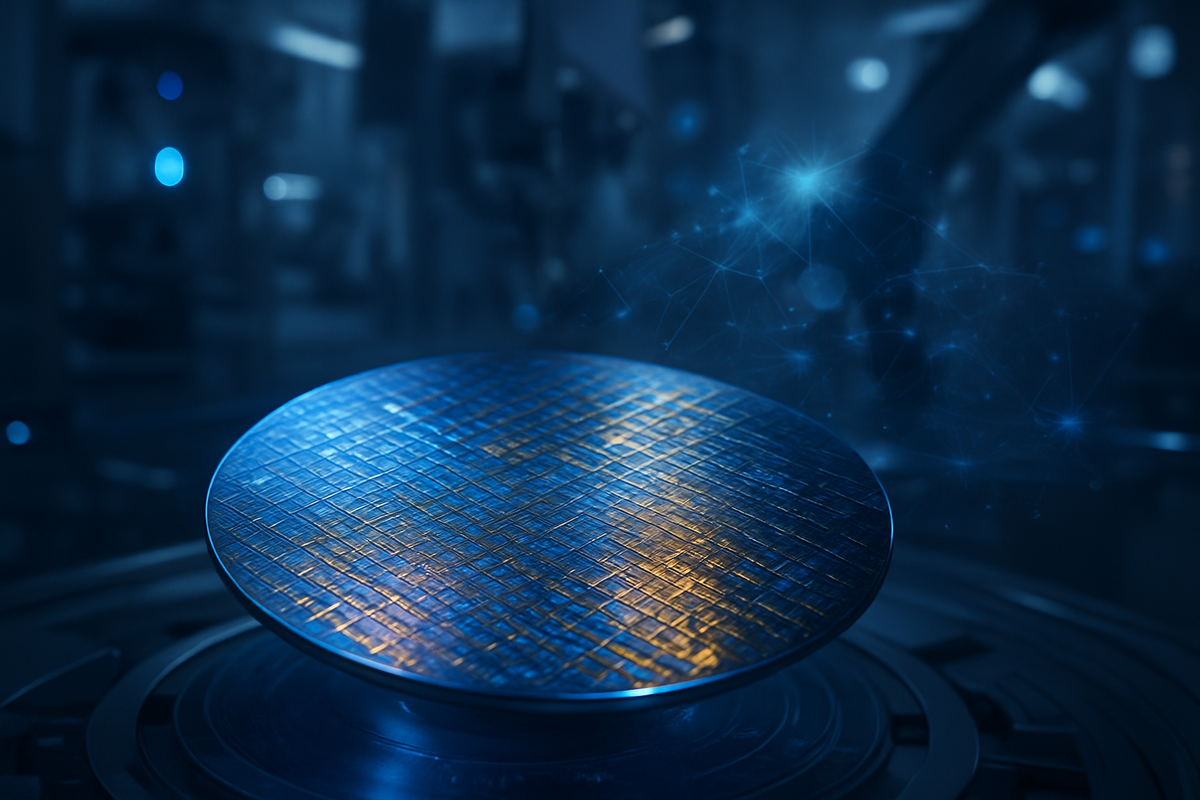
As the sun sets on 2025, the semiconductor landscape stands at its most volatile juncture in decades. For Intel Corporation (Nasdaq: INTC), this holiday season is not merely a time for reflection but a high-stakes transition into what many analysts are calling the "make-or-break" year of 2026. After a grueling five-year turnaround effort led by a radical leadership shift and a multi-billion-dollar infusion of government capital, the Santa Clara giant is finally shipping its most advanced chips, positioning itself as the primary domestic alternative to the global foundry monopoly.
The immediate implications are profound. With the successful entry of the Intel 18A (1.8nm) process node into high-volume manufacturing this quarter, the company has effectively closed the technological gap with its rivals for the first time in nearly a decade. However, the victory remains fragile; while Intel has secured its status as a "National Strategic Asset" through the CHIPS Act, it faces a market where the definition of computing is being rewritten by AI, and where the costs of failure have never been higher.
The 18A Milestone: From Blueprint to High-Volume Reality
The journey to this moment has been defined by the ambitious "five nodes in four years" roadmap, a strategy that many industry observers initially dismissed as impossible. As of late December 2025, Intel has officially achieved high-volume manufacturing (HVM) for its 18A process. This node is the first in the world to successfully integrate RibbonFET gate-all-around transistors and PowerVia backside power delivery—technologies that are essential for the next generation of power-efficient AI processors. The timeline leading to this Christmas has been a rollercoaster: following the resignation of Pat Gelsinger and the appointment of Lip-Bu Tan as CEO in March 2025, the company narrowed its focus, spinning off non-core units and doubling down on its foundry services.
Initial market reactions have been a mix of relief and skepticism. While Intel has successfully booted its "Clearwater Forest" Xeon processors and is sampling "Panther Lake" for the consumer market, yield rates remain the primary point of contention. Currently estimated between 55% and 65%, these yields are sufficient for internal production but still trail the 70%+ gold standard required for a highly profitable commercial foundry. Stakeholders, including the U.S. Department of Defense—which recently awarded Intel a $3 billion "Secure Enclave" contract—are watching closely to see if the company can scale these yields before the 2026 "AI PC" supercycle begins in earnest.
The Competitive Fallout: Winners and Losers in the Foundry Wars
The primary winner in this shift, paradoxically, may be Intel’s rivals who are seeking to diversify their supply chains. Microsoft (Nasdaq: MSFT) and Amazon (Nasdaq: AMZN) have already committed to using Intel 18A for their custom AI silicon (Maia 2 and Trainium 3, respectively), seeking to reduce their total reliance on Taiwan Semiconductor Manufacturing Company (NYSE: TSM). For these hyperscalers, Intel represents a vital "escape valve" in a world where TSMC’s advanced packaging capacity remains perpetually overbooked.
Conversely, Nvidia (Nasdaq: NVDA) presents a more complex case. While Nvidia reportedly halted certain 18A testing earlier this year due to stability concerns, the AI titan remains a critical stakeholder, having recently made a $5 billion equity investment in Intel’s foundry infrastructure. This move is seen as a strategic hedge against geopolitical instability in the Taiwan Strait. Meanwhile, Advanced Micro Devices (Nasdaq: AMD) and Qualcomm (Nasdaq: QCOM) are facing a revitalized Intel in the "AI PC" segment. If Intel’s Panther Lake chips deliver on their promised 40+ TOPS (Trillion Operations Per Second) of NPU performance, it could stall the recent market share gains made by ARM-based competitors in the Windows ecosystem.
A Broader Shift: The Geopolitics of Silicon and the Glass Substrate Frontier
Intel’s current trajectory fits into a broader industry trend of "technological sovereignty." As the 2025 calendar year closes, the semiconductor industry is moving away from a globalized model toward a regionalized one, spurred by the $9 billion in CHIPS Act grants Intel received this year. This event mirrors the historical pivot of the 1980s when the U.S. government intervened to protect the domestic memory chip industry, but the scale today is vastly larger. The ripple effects are felt most in the packaging sector; Intel is currently leading the transition to glass substrates, a breakthrough expected to reach mass production in late 2026.
Glass substrates allow for larger, flatter packages that can house over one trillion transistors, a requirement for the "Great AI Models" of 2026. While competitors like Broadcom (Nasdaq: AVGO) are focusing on networking and interconnects, Intel is betting that its lead in advanced packaging (specifically Foveros Direct 3D) will make it the indispensable partner for any company building high-end AI hardware. This technological moat is Intel's primary defense against the regulatory scrutiny and market volatility that have plagued the sector throughout 2025.
The 2026 Outlook: The Crossover Year for AI Everything
Looking ahead to 2026, the short-term challenge for Intel is the "yield ramp." The company must move from 60% to 75% yields on 18A to achieve the gross margins investors are demanding. Strategically, 2026 will be the "go/no-go" year for the 14A (1.4nm) node, which will utilize the industry’s first High-NA EUV lithography machines at scale. If Intel can successfully execute the 14A transition while TSMC ramps its 2nm (N2) process, it will have officially reclaimed the title of "unquestioned process leader" for the first time since 2014.
The market opportunity lies in the "AI PC" crossover. Analysts expect AI-capable PCs to command over 50% of the total market by late 2026, driven by software from companies like Adobe (Nasdaq: ADBE) that offload heavy generative tasks to local NPUs. Intel’s ability to bundle its 18A chips with its proprietary software stack could create a "sticky" ecosystem that mirrors the dominance of the "Wintel" era, albeit in a more fragmented, AI-centric world.
Conclusion: A Giant Reawakened?
As we head into 2026, the key takeaway for investors is that Intel is no longer the stagnant incumbent of the early 2020s. It has transformed into a leaner, government-backed foundry play with a clear, if difficult, path to redemption. The market moving forward will be defined by whether Intel can convert its technological milestones—18A, PowerVia, and glass substrates—into consistent quarterly profits.
The significance of the current moment cannot be overstated: Intel is the test case for the West’s ability to manufacture the most complex technology on earth. In the coming months, investors should watch for two critical indicators: the first quarterly yield reports from the 18A high-volume ramp and any further "anchor customer" announcements for the 14A node. If Intel meets these benchmarks, 2026 may go down in history as the year the silicon giant finally found its footing in the age of artificial intelligence.
This content is intended for informational purposes only and is not financial advice.