As of December 15, 2025, investors in Whirlpool Corporation (NYSE: WHR) find themselves at a crossroads, largely reflecting on a period of significant stock volatility that has left many feeling they've "missed out" on earlier gains. After reaching an all-time high in May 2021, the appliance giant's stock has endured a multi-year decline, fueled by a complex interplay of factors including the lingering effects of Trump-era tariffs, a challenging economic landscape, and intense competitive pressures. The narrative for Whirlpool has shifted from a pandemic-era beneficiary to a company battling structural headwinds, prompting a cautious, if not outright pessimistic, sentiment among its shareholder base.
The current state of affairs paints a picture of apprehension rather than jubilation for Whirlpool shareholders. While short-term bounces and strategic cost-cutting initiatives offer glimmers of hope, the overarching trend suggests that many who bought into the company during its peak performance are now facing substantial losses. The critical question remains: were investors truly "happy" with their Whirlpool holdings, or has the journey through market turbulence and strategic shifts primarily resulted in a sense of missed opportunities?
A Rollercoaster Ride: Unpacking Whirlpool's Tumultuous Years
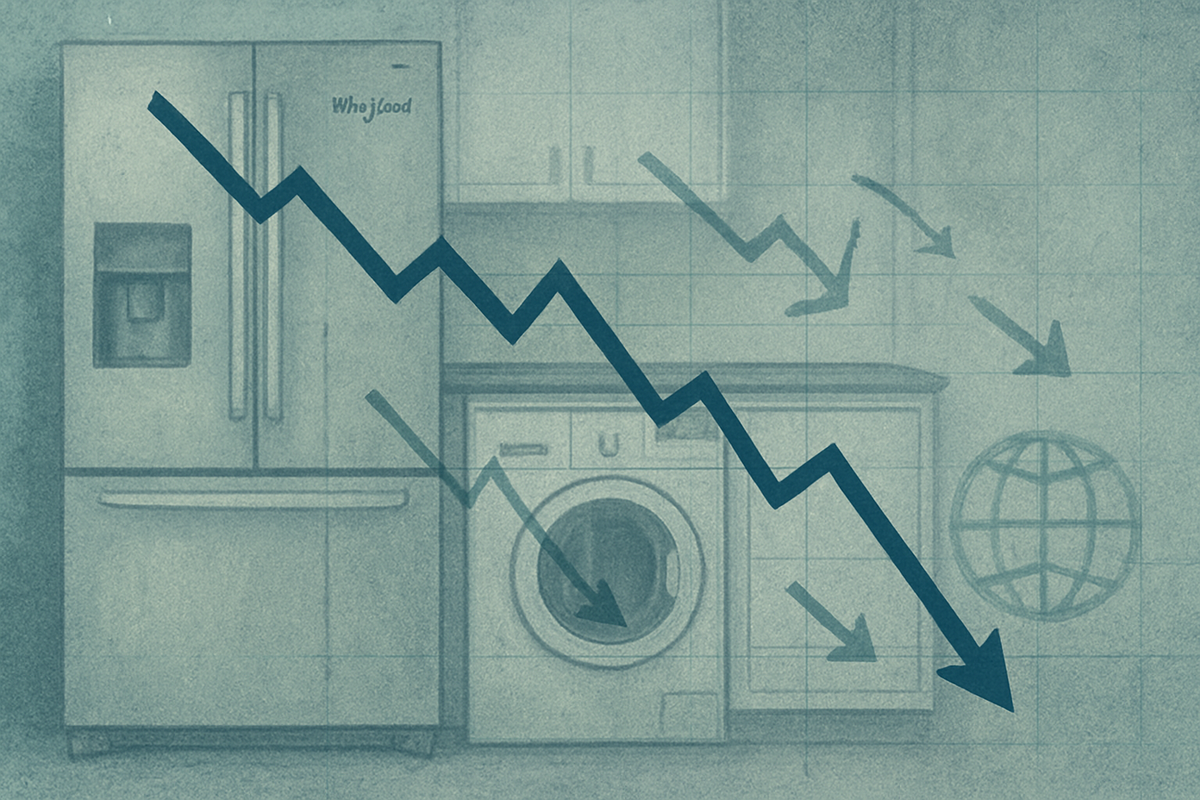
Whirlpool's journey through the first half of the 2020s has been anything but smooth. Following a robust rally in 2020 and 2021, where the stock surged by over 25% and 35% respectively, culminating in an all-time high of $257.68 on May 9, 2021, the tide dramatically turned. From 2022 onwards, the company's stock entered a steep decline, shedding 36.63% in 2022, another 10.52% in 2023, and a marginal decrease in 2024. As of December 12, 2025, Whirlpool (NYSE: WHR) is down approximately 32.5% year-to-date and over 57% over the last five years, closing at $77.64. This precipitous fall has undeniably shaped the prevailing investor sentiment.
The timeline leading to this point is marked by several pivotal events and ongoing challenges. The Trump administration's tariffs on steel (25%) and aluminum (10%) in 2018 initially squeezed Whirlpool's profitability by increasing raw material costs, forcing the company to implement price increases. While Whirlpool's CEO, Marc Bitzer, later claimed the company was a "net-winner" in the long run due to increased U.S. production capacity for washers, the short-term pain was undeniable. By mid-2025, tariffs were still cited as hurting results, with Asian competitors reportedly stockpiling imports ahead of duties, intensifying competitive pricing pressures. Beyond tariffs, a broader economic slowdown, particularly in the housing market, coupled with rising interest rates and falling consumer sentiment, has significantly dampened demand for big-ticket appliance purchases, which now represent a smaller portion of overall demand.
Key players in this unfolding narrative include Whirlpool's management, who have focused on cost reduction initiatives (aiming for $300-$400 million in reductions in 2024) and strategic divestitures, such as selling parts of its stake in Whirlpool of India, to manage debt. Investors, on the other hand, have reacted to the stock's underperformance, evidenced by the company's decision to cut its quarterly dividend from $1.75 to $0.90 in 2025—a move that likely disappointed income-focused shareholders. Analyst ratings reflect this mixed outlook, with a consensus ranging from "Hold" to "Reduce," and price targets suggesting only a modest upside, with some as low as $51. The debate between Whirlpool being a "value opportunity" (trading at a discount to intrinsic value) or a "value trap" (due to structural issues, declining revenues, and high debt) continues to define market reactions.
The Shifting Sands of Competition: Who Wins and Who Loses?
In the highly competitive home appliance market, Whirlpool (NYSE: WHR) finds itself in a precarious position. While it maintains a significant U.S. market share (21.2% in major household appliances), its profitability has been challenged, with increasing losses and declining EPS over the past five years. The company's operating margin has also decreased, indicating difficulty in passing rising costs to consumers. High leverage, with approximately $6 billion in net debt by late 2024, and declining free cash flow (negative $907 million in Q3 2025) further compound its challenges, limiting financial flexibility and raising concerns about its long-term health.
The primary beneficiaries of Whirlpool's struggles appear to be its international competitors, particularly Chinese manufacturers like Haier and Midea. These companies are reportedly gaining market share and profitability, intensifying the promotional pricing environment. While U.S. tariffs aimed to protect domestic manufacturers, the strategy has had a double-edged effect. It raised input costs for Whirlpool while simultaneously allowing foreign competitors to strategically preload the market with imports ahead of new duties, exacerbating competitive pressures. The global nature of the supply chain means that even as Whirlpool prioritizes domestic suppliers, it still faces tariffs on imported components, creating a retail price disadvantage for U.S.-made products if "loopholes" are not addressed.
The broader home appliance industry is also feeling the pinch of shifting consumer behaviors and economic headwinds. A slowdown in the housing market directly impacts demand for new appliances, while general consumer hesitancy regarding big-ticket purchases further constrains growth. This environment favors companies with strong global supply chains, efficient manufacturing processes, and aggressive pricing strategies, potentially putting traditional American manufacturers like Whirlpool at a disadvantage unless they can rapidly adapt and innovate.
Broader Implications: Trade Wars, Housing Woes, and Industry Evolution
Whirlpool's recent struggles are not isolated incidents but rather symptomatic of broader industry trends and macroeconomic forces. The impact of tariffs on the global supply chain and manufacturing sector continues to be a significant theme. While intended to bolster domestic industries, tariffs have often led to increased input costs, supply chain recalibrations, and retaliatory measures, creating an unpredictable operating environment. Whirlpool's experience highlights the complex reality where tariffs can be both a protective measure and a significant cost burden, depending on the specific product, sourcing, and competitive landscape.
The ripple effects extend beyond direct competitors to partners and the wider economic ecosystem. Suppliers of raw materials like steel and aluminum experience fluctuating demand and pricing based on trade policies. Retailers of home appliances face pressures to manage inventory and pricing in a promotional market, impacting their margins. Regulatory and policy implications remain a key concern; future trade policies, particularly those related to manufacturing and imports, will continue to shape the competitive landscape. Any changes in tariff structures or trade agreements could significantly alter cost bases and competitive dynamics for companies like Whirlpool.
Historically, the home appliance industry has been sensitive to housing market cycles and consumer discretionary spending. Comparisons to previous economic downturns or periods of trade protectionism reveal similar patterns of companies struggling with increased costs, reduced demand, and intensified competition. The current environment is further complicated by rapid technological advancements and evolving consumer preferences for smart home devices and energy-efficient appliances, pushing companies to invest heavily in R&D and innovation to remain relevant.
The Road Ahead: Navigating Uncertainty and Seeking Opportunity
Looking ahead, Whirlpool faces a critical juncture. In the short term, the company will likely continue its focus on cost reduction initiatives and operational streamlining to improve profitability. The success of its new product launches and the growth of its small domestic appliances (SDA) global business could provide some much-needed positive momentum. However, the lingering concerns about consumer spending, the housing market, and intense competition will remain significant headwinds.
Long-term possibilities for Whirlpool hinge on several strategic pivots. The company may need to further diversify its manufacturing base, explore new market segments, or engage in more aggressive M&A activities to consolidate market share or acquire innovative technologies. Continued investment in automation and supply chain optimization will be crucial to mitigate future cost shocks and enhance efficiency. Market opportunities may emerge from a potential rebound in the housing market or a sustained increase in consumer confidence, but these are contingent on broader economic improvements. Challenges will undoubtedly include managing its substantial debt load, fending off aggressive international competitors, and adapting to evolving consumer demands for increasingly smart and sustainable appliances.
Potential scenarios range from a gradual recovery, driven by successful cost management and strategic initiatives, to a more prolonged period of struggle if economic headwinds persist and competition intensifies. Investors should watch for signs of improved profitability, sustained free cash flow generation, and a clear strategy for debt reduction. Any shifts in global trade policies or significant innovations from competitors will also be critical indicators of Whirlpool's future trajectory and its ability to regain investor confidence.
Wrap-Up: A Challenging Horizon for Whirlpool Investors
In summary, Whirlpool Corporation (NYSE: WHR) has navigated a challenging period marked by significant stock depreciation from its 2021 highs, leaving many investors with a sense of missed opportunities. The confluence of Trump-era tariffs, a slowing housing market, cautious consumer spending, and fierce competition, particularly from Asian manufacturers, has created a formidable operating environment. While the company has implemented cost-cutting measures and strategic divestitures, these efforts have yet to fully translate into sustained stock recovery or robust profitability. The dividend cut in 2025 further underscored the financial pressures facing the appliance giant.
Moving forward, the market will closely scrutinize Whirlpool's ability to improve its financial health, particularly its operating margins, free cash flow, and debt levels. The effectiveness of its strategic pivots, including investments in innovation and supply chain resilience, will be paramount. The broader economic landscape, especially the trajectory of the housing market and consumer confidence, will continue to be a dominant factor influencing demand for its products.
For investors, the key takeaways are caution and vigilance. While some analyses suggest Whirlpool may be undervalued, the "value trap" argument, citing structural issues and intense competition, remains potent. Investors should watch for concrete signs of sustained operational improvements, a clearer path to debt reduction, and any favorable shifts in trade policy or economic conditions. The journey for Whirlpool and its shareholders remains an uphill battle, with the ultimate significance and lasting impact yet to be fully determined.
This content is intended for informational purposes only and is not financial advice