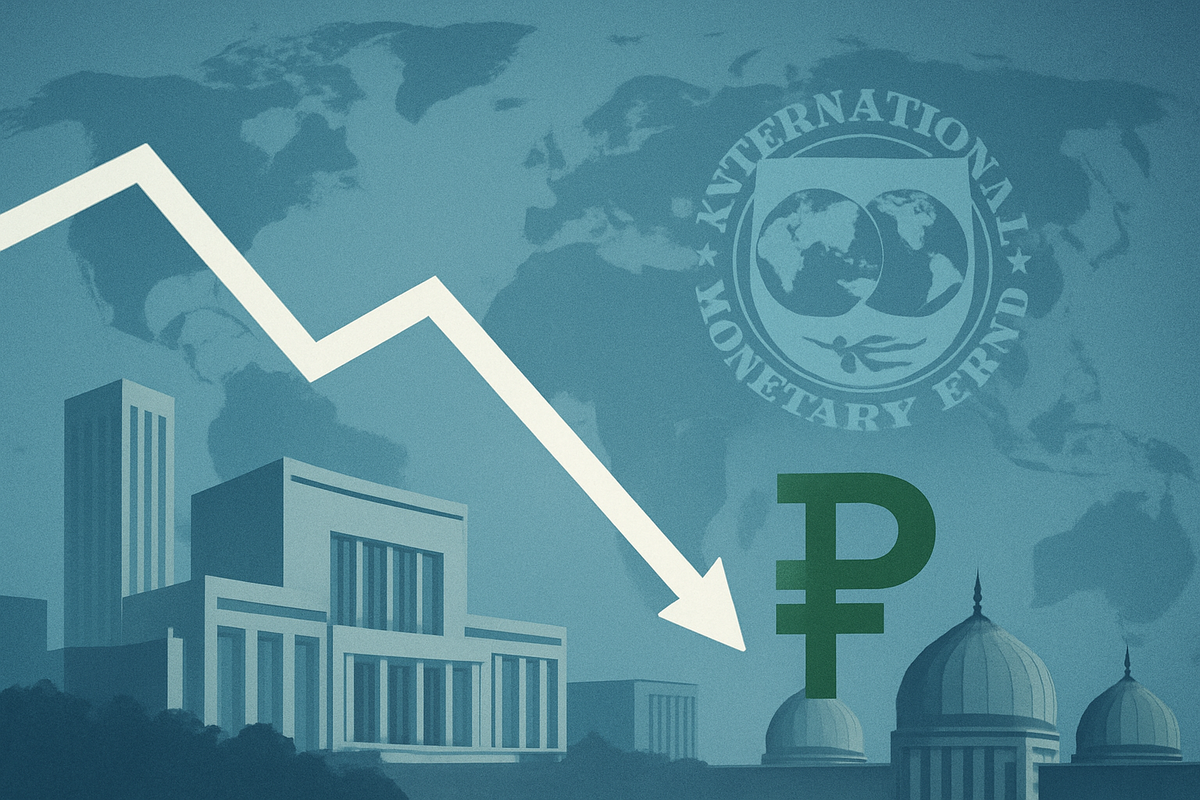
Islamabad, Pakistan – December 15, 2025 – In a move that caught many analysts off guard, the State Bank of Pakistan (SBP) today announced an unexpected 50-basis-point reduction in its benchmark interest rate, bringing it down to 10.5%. This pivotal decision closely follows a significant $1.2 billion disbursement from the International Monetary Fund (IMF) just last week, injecting much-needed liquidity and confidence into the nation's economy.
The SBP's latest monetary easing signals a clear pivot towards stimulating economic growth, leveraging what it perceives as a stable inflation outlook and bolstered foreign exchange reserves. While designed to encourage investment and consumption, the unexpected nature of the cut underscores a delicate balancing act between fostering economic expansion and maintaining price stability in a historically volatile economic environment.
SBP's Bold Move: An Unexpected Easing Amidst IMF Support
The State Bank of Pakistan's Monetary Policy Committee (MPC) decided on December 15, 2025, to lower the policy rate by 50 basis points to 10.5%. This cut came as a surprise to many market observers who had largely anticipated a hold, marking a significant departure from four previous meetings where the rate had remained unchanged at 11%. The central bank justified its decision by citing a stable inflation outlook, which has averaged within the SBP's target range of 5%-7% during July-November of fiscal year 2026, alongside improving economic activity, particularly stronger-than-expected growth in large-scale manufacturing (LSM). The SBP also noted that the real policy rate remained adequately positive to stabilize inflation over the medium term while creating space to support sustainable economic growth.
This latest reduction is part of a broader easing cycle initiated in June 2024, following a period of aggressive tightening where the policy rate reached a record high of 22%. Since then, the SBP has cumulatively reduced the rate by 1,150 basis points. Key cuts leading up to today's decision include a 100-basis-point reduction to 11% on May 5, 2025, another 100-basis-point cut to 12% on January 27, 2025, and a substantial 200-basis-point decrease to 13% on December 16, 2024. These earlier cuts were similarly driven by moderating inflation, a stable exchange rate, and improved growth prospects.
The timing of today's rate cut is particularly noteworthy, coming on the heels of a crucial financial injection from the International Monetary Fund. On December 9-10, 2025, the IMF's Executive Board approved the release of $1.2 billion to Pakistan. This disbursement included approximately $1 billion under its main Extended Fund Facility (EFF) and an additional $200 million from the Resilience and Sustainability Facility (RSF), which supports climate-related initiatives. This latest tranche brings Pakistan's total receipts from the current $7 billion aid package to roughly $3.3 billion, significantly boosting the nation's foreign exchange reserves above $15.8 billion and providing a vital buffer against external shocks.
Initial market reactions to the December 15, 2025, rate cut were largely positive, albeit with an element of surprise. The unexpected nature of the move was interpreted by some as a strong signal of the central bank's commitment to fostering economic growth. Following earlier rate cuts in 2025, the stock market had already shown positive responses, particularly in interest-sensitive sectors such as real estate, banking, and automobiles, which typically benefit from reduced financing costs and increased consumer demand. Key stakeholders in this decision include the State Bank of Pakistan's Monetary Policy Committee, the International Monetary Fund (IMF) – which has previously cautioned against "premature easing" – the Government of Pakistan, and various trade and industry representatives who consistently advocate for lower rates to spur investment.
Corporate Beneficiaries and Sectoral Shifts
The significant reduction in interest rates, coupled with increased liquidity from the IMF loan, is poised to reshape the fortunes of various public companies and sectors within Pakistan's economy. Lower borrowing costs are a direct stimulant for corporate expansion, consumer spending, and investment, creating a more favorable environment for growth-oriented industries.
The real estate sector is already experiencing a notable uplift. Reduced interest rates make bank deposits less attractive, redirecting investment towards property. Furthermore, lower mortgage rates are expected to stimulate housing demand, leading to increased construction activity and potentially higher property prices. This environment creates favorable conditions for real estate developers and construction companies, such as Lucky Cement (LUCK:KSE) and DG Khan Cement (DGKC:KSE), who will see increased demand for their products. The abolition of the Federal Excise Duty (FED) on first-time property transfers is also anticipated to enhance liquidity and boost investor confidence in the sector.
The automotive sector has demonstrated a robust positive response to falling interest rates. Auto financing and sales have seen a significant increase, with passenger car sales rising by 32.2% in the first ten months of the current fiscal year (ending June 2025). This trend is expected to continue, benefiting publicly listed auto manufacturers such as Pak Suzuki Motor Company (PSMC:KSE), Indus Motor Company (INDU:KSE), and Honda Atlas Cars (Pakistan) Limited (HCAR:KSE), who could see higher sales volumes. Similarly, the consumer goods sector is likely to thrive on improved consumer confidence and increased spending, translating into potential growth for companies in this segment.
While lower interest rates might exert some pressure on the net interest margins of banking sector players like Habib Bank Limited (HBL:KSE), MCB Bank Limited (MCB:KSE), and Allied Bank Limited (ABL:KSE), the overall impact is expected to be positive due to a surge in private credit growth. Banks are anticipated to benefit from increased loan origination, particularly in textiles, wholesale, retail, chemicals, and consumer financing, offsetting some pressure on interest income. Additionally, lower government debt servicing costs for the treasury could indirectly benefit the financial system. The manufacturing sector, including large-scale manufacturing (LSM), is also poised for significant gains, as reduced financing expenses encourage expansion, investment in new projects, and potentially a boost in exports.
Wider Implications: A Pivot to Growth and Regional Dynamics
The SBP's unexpected interest rate cut, following a substantial IMF payout, signifies a critical juncture for Pakistan's economy, marking a decisive pivot from a prolonged period of austerity and stabilization towards a growth-oriented policy. This move is not merely a technical adjustment but a strategic signal of confidence in the nation's economic recovery and its ability to manage inflationary pressures. It aligns with a broader trend among some emerging markets to ease monetary policy once inflation appears contained, aiming to unlock domestic investment and consumption.
The ripple effects of this decision could extend beyond Pakistan's borders. A more robust Pakistani economy, driven by lower borrowing costs and increased domestic demand, could lead to shifts in regional trade dynamics. For instance, if local manufacturing becomes more competitive due to cheaper financing, it might alter import patterns from neighboring countries or boost exports to regional partners. The increased economic activity is also likely to fuel demand for key commodities. The steel and cement sectors, crucial for construction and infrastructure, are direct beneficiaries. Cement sales, for example, were projected to grow by 20-25% year-on-year in August 2025, with plant utilization rates on the rise, indicating a strong domestic appetite for building materials. Similarly, increased construction and manufacturing activities will positively impact steel consumption.
Regulatory and policy implications are also significant. The SBP's decision, while welcomed by the government, highlights the ongoing delicate balance between the central bank's independence and the broader government's growth agenda. The IMF, a critical stakeholder, continues to emphasize the importance of structural reforms, particularly in the energy sector and broadening the tax base, as essential for long-term stability and enhancing trade competitiveness. Historically, such periods of monetary easing following stabilization efforts have been crucial for kickstarting economic cycles, but they also carry the risk of reigniting inflationary pressures if not managed prudently. The challenge lies in ensuring that the liquidity injection translates into productive investment rather than speculative bubbles.
The Road Ahead: Opportunities and Challenges
Looking ahead, Pakistan's economy faces a blend of short-term opportunities and long-term challenges in the wake of these monetary policy adjustments and IMF support. In the short term, the rate cut is expected to immediately boost domestic consumption and investment, potentially leading to increased job creation across various sectors. The enhanced liquidity in the market, coupled with improved business sentiment, could accelerate the pace of economic recovery. However, vigilance over inflation, especially core inflation, will be paramount, as any unexpected price surges could force the SBP to reconsider its easing stance.
In the long term, the success of this growth-oriented strategy hinges on Pakistan's ability to maintain macroeconomic stability, attract sustained foreign direct investment, and continue implementing crucial structural reforms. The IMF's ongoing engagement underscores the need for reforms aimed at improving the energy sector, broadening the tax base, and enhancing the business environment. A failure to address these underlying structural issues could undermine the benefits of monetary easing and lead to renewed economic imbalances.
Market opportunities are likely to emerge in sectors directly benefiting from lower borrowing costs and increased demand, such as manufacturing, real estate, automotive, and consumer discretionary. Investors might find attractive entry points in companies poised for expansion. However, challenges persist, including managing the external balance amidst potentially rising imports due to increased economic activity, navigating global commodity price volatility, and ensuring that the rate cuts translate into tangible economic stimulus rather than merely fueling asset price inflation. The government's ability to maintain political stability and policy consistency will also be crucial in shaping investor confidence and the overall economic trajectory.
A New Chapter: Balancing Growth with Prudence
Pakistan's unexpected interest rate cut, closely following a vital IMF loan payout, marks a significant turning point in the nation's economic narrative. The key takeaway is a clear signal from the State Bank of Pakistan that it perceives a stable enough macroeconomic environment, particularly concerning inflation and foreign exchange reserves, to pivot towards actively stimulating growth. This move underscores a newfound confidence, albeit a cautious one, in the country's economic resilience.
Moving forward, the market will remain optimistic in the short term, buoyed by the prospect of cheaper credit and increased economic activity. However, the true assessment of this strategy's success will depend on how effectively Pakistan can translate monetary easing into sustainable, inclusive growth without compromising price stability. Investors should closely monitor several key indicators in the coming months: headline and core inflation data, the stability of the Pakistani Rupee, the SBP's future monetary policy statements, and the progress of critical structural reforms mandated by the IMF.
This period represents a delicate balancing act for policymakers, where the imperative to foster economic expansion must be carefully weighed against the risks of reigniting inflationary pressures or exacerbating external vulnerabilities. The long-term impact will be determined by the sustained commitment to prudent fiscal management, robust structural reforms, and a stable political environment. Pakistan is embarking on a new chapter, one that holds the promise of renewed prosperity, but also demands unwavering vigilance and strategic foresight from all stakeholders.
This content is intended for informational purposes only and is not financial advice