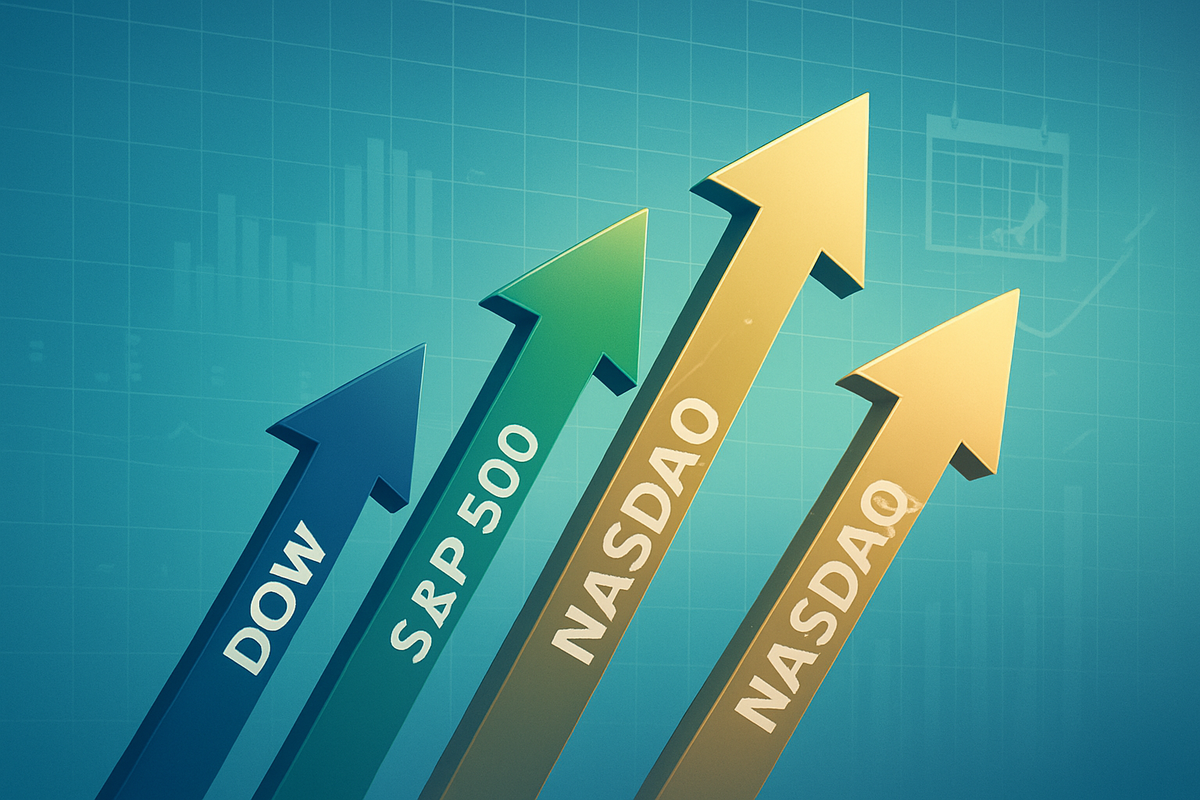
As of Monday, December 15, 2025, the U.S. stock market is signaling a notably bullish start, with futures for the Dow Jones Industrial Average, S&P 500, and Nasdaq Composite all registering gains in premarket trading. This widespread uptick comes as investors brace for a data-heavy week, filled with critical economic reports that could significantly shape the Federal Reserve's monetary policy trajectory and broader market sentiment. The early positive momentum suggests a prevailing sense of optimism among market participants, who appear to be positioning for either favorable economic news or a market-friendly interpretation of the upcoming data.
The immediate implication of this premarket surge is a heightened expectation for a robust opening when regular trading commences. Investors seem to be anticipating resilience in the economy, or perhaps a scenario where forthcoming data might encourage continued accommodative policies from central banks, thereby supporting equity valuations. This collective confidence, particularly across all major index futures, points to a broad-based positive outlook that could set the tone for the trading week ahead, though the inherent volatility of a data-intensive period remains a key consideration.
Detailed Coverage: A Pre-Data Bull Run Fueled by Optimism
The current premarket ascent across the Dow, S&P 500, and Nasdaq futures on December 15, 2025, is not a singular event but rather the culmination of several factors influencing investor sentiment. This bullish momentum primarily stems from a pervasive anticipation of favorable economic data releases throughout the week, coupled with strategic positioning by market participants. Investors appear to be banking on reports that will either confirm robust economic health, thereby bolstering corporate earnings prospects, or signal a cooling economy just enough to prompt a more accommodative stance from the Federal Reserve, potentially leading to interest rate cuts. This "Goldilocks" scenario—where the economy is neither too hot nor too cold—is a significant driver of the current optimism.
The timeline leading up to this Monday's premarket surge has been a continuous ebb and flow of global market reactions and forward-looking analysis. Over the weekend and through the early hours of Monday, futures markets have been actively trading, absorbing news from Asian and European sessions, alongside any late-breaking corporate announcements. This continuous activity allowed traders to react to the previous week's closing sentiment and begin forming expectations for the critical data points ahead. The anticipation of key economic reports, such as the November U.S. jobs report (Non-Farm Payrolls and unemployment rate) due on Tuesday, and the Consumer Price Index (CPI) for November scheduled for Thursday, has been building since the close of trading last Friday. These reports are particularly scrutinized as they hold considerable sway over the Federal Reserve's future monetary policy decisions.
Initial market reactions to the rising futures have been unequivocally bullish. The upward trajectory in all three major index futures serves as a strong indicator that the underlying cash indices are poised for a higher open when the regular trading session begins at 9:30 AM ET. This typically translates into immediate buying pressure as the market opens, with investors and algorithmic trading systems acting on the positive premarket signals. While the overall sentiment is positive, the inherent nature of a data-heavy week suggests that volatility will remain elevated. Any significant deviation of the actual economic data from consensus expectations could trigger sharp and rapid price adjustments, underscoring the cautious optimism that underpins the current market mood. Furthermore, this broad-based rise suggests a "risk-on" appetite, indicating investors are willing to embrace higher-growth or more speculative assets, a sentiment often observed when confidence in the economic outlook is high.
Companies Poised to Win or Lose in a Buoyant Market
In an environment marked by a broad market futures rise, fueled by the anticipation of robust economic data and potentially accommodative monetary policy, a distinct "risk-on" sentiment emerges, creating clear winners and relative underperformers across various sectors. As of December 15, 2025, with discussions around potential Federal Reserve interest rate adjustments in late 2025 and 2026, coupled with the ongoing momentum from artificial intelligence (AI) advancements, these dynamics are particularly pronounced.
Technology (XLK) companies are positioned as significant beneficiaries in this scenario. Lower interest rates translate to reduced borrowing costs, making capital more accessible and cheaper for research, development, and expansion—crucial for innovation-driven sectors. Furthermore, cheaper capital enhances the present value of future earnings, which are often projected far into the future for growth stocks. The pervasive "AI-driven supercycle" continues to be a powerful tailwind, propelling record capital expenditure and rapid earnings expansion. Companies involved in data centers, cloud computing, and advanced software solutions, particularly those leveraging or enabling AI, are likely to attract increased investment and see their valuations climb.
The Financials (XLF) sector is also set to thrive. While some might argue that rising rates are better for banks, a declining or stable low-rate environment can also expand net interest margins as funding costs often fall faster than lending rates. A strong economy, signaled by optimistic futures, stimulates mortgage activity, corporate lending, and overall loan demand. Major banks, brokerage firms, and mortgage lenders stand to benefit from increased transaction volumes and improved profitability. Similarly, Consumer Discretionary (XLY) companies are highly sensitive to consumer confidence and spending. Positive economic data and strong employment figures, combined with cheaper credit, typically translate into increased consumer spending on non-essential goods and services. Companies like Lululemon Athletica (NASDAQ: LULU) or major automotive manufacturers could see higher sales and profits as consumers feel more secure about their financial outlook.
Conversely, traditionally Defensive Sectors, such as Utilities (XLU) and Consumer Staples (XLP), may experience relative underperformance. In a "risk-on" environment, investors tend to rotate out of these safe-haven assets, which offer stable but typically lower growth, in favor of sectors with higher growth potential. While utilities might benefit from lower borrowing costs, their appeal diminishes when investors are chasing more dynamic returns elsewhere. Consumer staples companies, selling everyday necessities, might not see the same surge in demand as their discretionary counterparts. However, it's worth noting that healthcare, another often-defensive sector, has shown resilience in some rallies, particularly specialized sub-sectors. The Energy (XLE) sector's performance, while generally benefiting from a stronger economy, is heavily influenced by volatile commodity prices and geopolitical factors, meaning it might not always align perfectly with broader market optimism if supply-side issues or global demand concerns persist.
Wider Significance: Navigating Shifting Tides and Echoes of History
The premarket surge in Dow, S&P 500, and Nasdaq futures on December 15, 2025, extends beyond mere daily trading sentiment; it reflects a complex interplay of evolving industry trends, potential ripple effects across the competitive landscape, and critical implications for monetary policy and market stability. This upward movement, while signaling immediate optimism, underscores a period of significant transition and re-evaluation within the financial markets.
One of the most prominent broader industry trends highlighted by this market activity is a potential "Great Rotation" in investor capital. After years of dominance by high-growth technology and AI-driven companies, there's growing evidence of a shift towards more stable, higher-quality earners and value stocks in sectors like financials, industrials, and consumer discretionaries. This rotation suggests increasing caution among investors, who are now seeking more tangible value and profitability rather than solely speculative growth. While the initial "AI bubble" concerns might have cooled, Artificial Intelligence remains a significant long-term growth driver, yet the market is now demanding concrete returns and sustainable business models from AI innovators.
The ripple effects of such market dynamics are substantial. Companies with robust balance sheets and less reliance on debt are gaining a significant competitive advantage over those burdened by substantial debt or facing higher refinancing costs. This could accelerate industry consolidation, as financially weaker "zombie companies" struggle to survive. Across global supply chains, partners are compelled to adapt to potentially increased costs and evolving demand patterns, prompting a re-evaluation of long-term alliances and a search for alternative suppliers. Furthermore, the interconnectedness of global financial markets means that significant shifts in the technology sector, for instance, can trigger cascading effects across international boundaries through algorithmic trading, overnight futures, and portfolio rebalancing mechanisms.
From a regulatory and policy standpoint, central banks, particularly the Federal Reserve, will be scrutinizing the upcoming economic data with extreme prejudice. These reports are crucial for validating narratives about contained inflation and informing future monetary policy decisions. Any unexpected resurgence in inflation could swiftly reverse monetary policy expectations, potentially dampening the current market enthusiasm. Concerns about an "AI bubble" also draw attention from regulatory bodies, which may increase scrutiny on market concentration and potential antitrust issues, aiming to ensure market stability and investor protection. The Commodity Futures Trading Commission (CFTC) continues to evolve its approach to regulating futures markets, particularly regarding nascent areas like blockchain-based derivatives, indicating a move towards a more defined federal oversight.
Historically, the current market environment draws comparisons to several notable periods. The "Dot-Com Bubble" of 2000-2002 serves as a stark reminder of how speculative surges in overvalued tech stocks can lead to dramatic collapses and subsequent shifts towards fundamentally sound companies. Similarly, the "Nifty Fifty" era of 1973-1974, where a select group of blue-chip stocks commanded high earnings multiples before external shocks, illustrates the vulnerability of concentrated market leadership. The lessons from "Black Monday" in 1987, emphasizing the critical role of central bank liquidity in preventing widespread defaults, underscore the importance of the Federal Reserve's current monetary policy. These historical precedents collectively remind investors of the cyclical nature of markets and the enduring importance of fundamental value alongside technological enthusiasm, suggesting that while optimism is present, caution remains a prudent stance.
What Comes Next: Navigating a Data-Driven Crossroads
The current bullish premarket sentiment, as observed on December 15, 2025, sets the stage for a critical week that will undoubtedly shape both short-term market movements and long-term trajectories. Investors are bracing for a barrage of economic data, including crucial inflation and employment figures, which will provide vital clues regarding the Federal Reserve's future monetary policy. This environment, characterized by both optimism and uncertainty, demands strategic adaptation from all market participants.
In the short term, the market's trajectory will be heavily dictated by the upcoming economic releases. Tuesday, December 16, will bring the delayed November employment report (Nonfarm Payrolls) and unemployment rate, alongside October retail sales data, offering critical insights into the health of the labor market and consumer spending. These are pivotal for the Fed's next steps. Thursday, December 18, will see the release of the November Consumer Price Index (CPI) and core CPI, with inflation data remaining the primary concern for central bankers. Any significant deviation from expectations in these reports could trigger swift and substantial market reactions, potentially leading to increased volatility. A stronger-than-expected GDP could boost the S&P 500 (SPX), while an upside surprise in CPI typically leads to declines, particularly in the technology sector.
Looking further into the long term, the market's outlook will largely hinge on how the upcoming data influences the Federal Reserve's monetary policy trajectory into 2026. A sustained period of disinflation coupled with a stable labor market could solidify expectations for further rate cuts next year, thereby fostering continued economic growth and market expansion. However, underlying concerns persist, particularly regarding the sustainability of the artificial intelligence (AI) boom. Investor skepticism about the enormous development costs and whether consumers will ultimately bear these expenses could lead to a shift in market leadership. Some analysts foresee a diminished dominance for the "Magnificent Seven" tech giants in 2026 as AI competition intensifies, potentially paving the way for other S&P 500 (SPX) components to gain ground. Geopolitical tensions and evolving trade policies also continue to add layers of volatility and influence economic data, presenting a complex long-term landscape.
For investors, strategic pivots and adaptations are paramount. Diversification across different asset classes, industries, and geographic regions remains a fundamental risk mitigation strategy. Tactical asset allocation, adjusting portfolios in response to market conditions, and a strong focus on risk management through tools like stop-loss orders are crucial. Investing in high-quality companies with robust fundamentals and stable earnings can provide resilience during turbulent times. Maintaining a long-term perspective and staying informed and disciplined, avoiding emotional decisions, will be key to navigating the potential shifts. Businesses, in turn, are advised to conduct scenario analysis, preparing for multiple possibilities from best-case to worst-case outcomes to identify and manage risks effectively.
Market opportunities may emerge from continued sector rotation, with value, small-cap, and cyclical stocks potentially benefiting from an accommodative Fed and lower interest rates. A sustained disinflationary environment could further stimulate economic activity. Despite AI valuation concerns, a "powerful capex wave around AI and infrastructure" is expected to provide a "second engine for expansion," creating opportunities in related sectors. Conversely, challenges include the risk of data surprises from critical economic reports, the potential for an AI investment bubble correction, and the threat of sticky inflation or a weak labor market reigniting "stagflation fears." Geopolitical and trade tensions also continue to pose unpredictable market movements, compounded by the "data fog" from potentially less accurate economic data due to previous government shutdowns.
Several potential scenarios could unfold. A bullish continuation (soft landing/growth reacceleration) could see sustained market gains if data confirms a stable labor market and continued disinflation, reinforcing rate cut expectations. A bearish correction (stagflation/recession concerns) might emerge if data signals a significant labor market slowdown or persistent inflation, leading to a market downturn. Lastly, a mixed/volatile market could result from conflicting economic indicators, leading to continued sector rotation and ongoing speculation until the Fed's policy path becomes clearer. The market's future will ultimately be shaped by the interpretation of these economic indicators, influencing central bank policy and investor sentiment in both the immediate and distant future.
Wrap-up: Cautious Optimism Amidst Economic Crossroads
The premarket rally on December 15, 2025, with Dow, S&P 500, and Nasdaq futures all advancing, encapsulates a moment of cautious optimism in the U.S. financial markets. The key takeaway is that investors are entering a data-heavy week with a positive outlook, largely anticipating either favorable economic reports or a market interpretation that supports continued equity appreciation, possibly driven by expectations around interest rate adjustments and corporate performance. This broad-based enthusiasm signals a "risk-on" appetite, suggesting a willingness to embrace growth-oriented and cyclical sectors.
Moving forward, the market remains at a critical juncture, highly sensitive to the deluge of economic data scheduled for release. The assessment is that while the current sentiment is bullish, the underlying fragility stems from the inherent uncertainty surrounding these reports. The market's resilience will be tested by how closely the actual data aligns with expectations, particularly concerning inflation and employment. A "Great Rotation" from high-growth tech to value stocks appears to be a significant trend, indicating a mature market seeking fundamental strength and profitability.
The lasting impact of this period will depend on the Federal Reserve's response to the incoming data. Should the data confirm a path of disinflation and stable growth, further accommodative policies could sustain market expansion. Conversely, any adverse surprises could quickly reverse sentiment, highlighting the delicate balance the Fed must maintain. Investors should watch for the November jobs report and CPI data with extreme vigilance, as these will be the primary catalysts for market direction in the coming months. Beyond macroeconomic figures, monitoring corporate earnings reports, particularly from Technology (XLK) and Financials (XLF) sectors, and keeping an eye on geopolitical developments will be crucial for navigating the evolving market landscape.
This content is intended for informational purposes only and is not financial advice