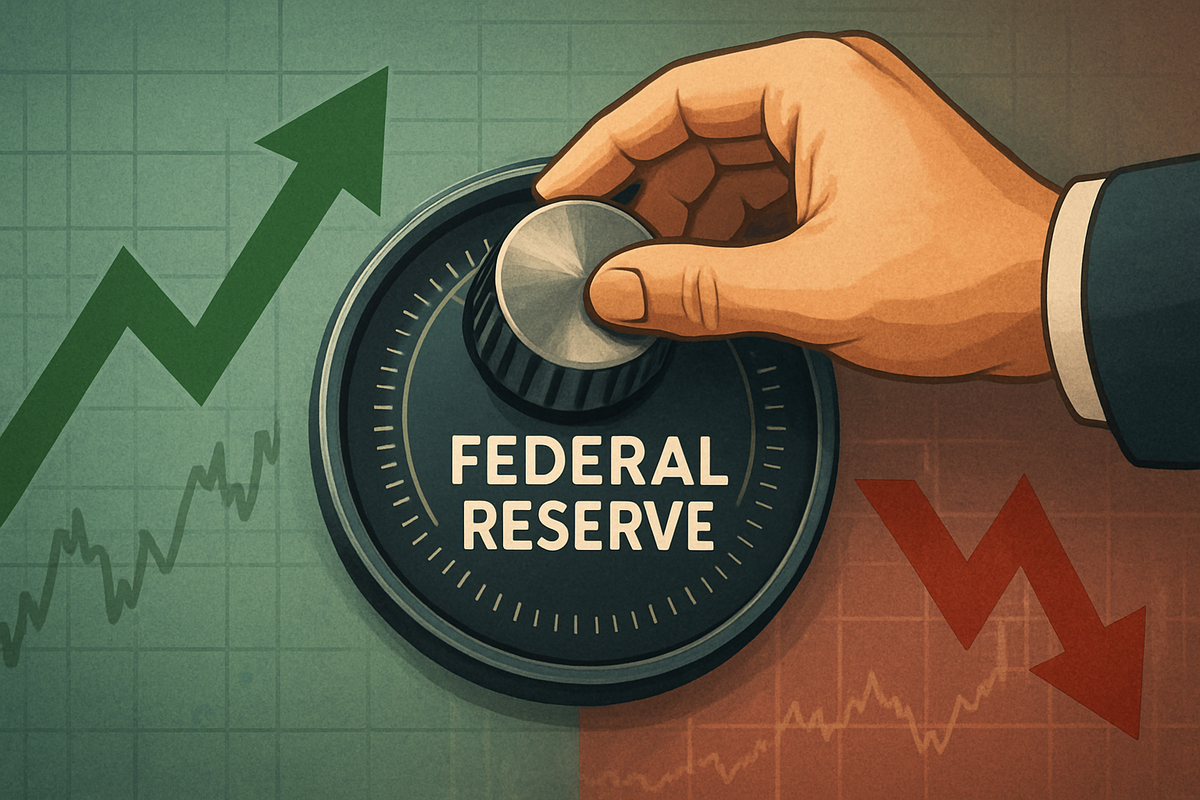
Washington D.C. – December 11, 2025 – In a move aimed at bolstering a cooling economy, the Federal Reserve's Federal Open Market Committee (FOMC) delivered its third consecutive interest rate cut on December 10, 2025, lowering the benchmark federal funds rate by 25 basis points to a new target range of 3.5% to 3.75%. This decisive action, following cuts in September and November, signals a clear pivot towards a more accommodative monetary policy. However, the immediate market reaction was a tapestry of gains and anxieties, with major indexes closing higher, yet underlying concerns, particularly in the tech sector, hinting at deeper economic uncertainties.
While the Dow Jones Industrial Average, S&P 500, and Nasdaq Composite all registered gains on the day of the announcement, premarket trading on December 11 saw the Nasdaq dip, largely overshadowed by specific corporate earnings misses and renewed "AI fears." This mixed response underscores a critical juncture for investors and businesses alike, as they grapple with the Fed's intent to stimulate growth against a backdrop of potentially lingering economic headwinds and a cautious outlook for future rate adjustments.
The Fed's Balancing Act: Stimulus Meets Skepticism
The Federal Reserve's decision to cut rates on December 10, 2025, was a calculated maneuver reflecting a complex economic landscape. The FOMC's reasoning, though not explicitly detailed for this hypothetical future event, would typically stem from its dual mandate: achieving maximum employment and stable prices. This third consecutive cut suggests growing concerns about slowing economic growth, a weakening labor market, or persistent disinflationary pressures that necessitate monetary stimulus. Lowering rates makes borrowing cheaper for businesses and consumers, theoretically encouraging investment, hiring, and spending.
Leading up to this moment, the Fed would have meticulously analyzed a broad spectrum of economic indicators. A timeline of events would likely include months of moderating inflation figures, a slight uptick in unemployment, or a deceleration in Gross Domestic Product (GDP) growth during the spring and summer of 2025. Speeches by Federal Reserve Chairman Jerome Powell and other FOMC members would have gradually shifted to a more "dovish" tone, emphasizing "data dependency" and acknowledging increasing "downside risks" to the economic outlook. Previous FOMC meetings in September and November would have seen initial rate cuts, possibly accompanied by adjustments to forward guidance, signaling a readiness for further easing if conditions warranted. The December 10th decision, reached by a nine-to-three vote, further highlighted internal divisions within the committee, underscoring the delicate balance policymakers are attempting to strike between stimulating growth and managing inflation expectations.
Key players in this decision include the twelve members of the FOMC, comprising the seven members of the Board of Governors, the President of the Federal Reserve Bank of New York, and presidents of four other Federal Reserve Banks on a rotating basis. Their collective assessment shapes the monetary policy that impacts all stakeholders, from large corporations to individual consumers. Initial market reactions, beyond the major indexes, saw specific sector movements. Interest-rate sensitive sectors like housing and automotive generally saw positive sentiment, anticipating increased demand from cheaper loans. However, the mixed overall reaction, particularly the premarket dip in the Nasdaq (NASDAQ) on December 11, was partly attributed to a cautious "dot plot" from the Fed, which signaled only one additional 25 basis point cut in 2026 and another in 2027. This more conservative outlook for future easing, compared to potentially more aggressive market expectations, led to a rise in Treasury yields, putting pressure on stock valuations, especially for growth-oriented companies.
Winners and Losers: Navigating the Rate Cut Landscape
A Federal Reserve interest rate cut reshapes the economic playing field, creating distinct opportunities and challenges for various industries and public companies. The primary beneficiaries are typically sectors that thrive on cheaper borrowing and increased consumer spending.
Technology companies, especially those focused on high growth, are often among the biggest winners. Firms like Apple (NASDAQ: AAPL), Alphabet (NASDAQ: GOOG, GOOGL), and Meta Platforms (NASDAQ: META) benefit from reduced borrowing costs, making it cheaper to fund research and development, innovation, and expansion. Lower interest rates also tend to increase the valuation of growth stocks, as future earnings are discounted at a lower rate, enhancing their long-term appeal. Similarly, the Real Estate sector, including homebuilders and Real Estate Investment Trusts (REITs), stands to gain significantly. Lower mortgage rates boost housing affordability and demand, benefiting companies like construction equipment supplier Builders FirstSource (NYSE: BLDR) and industrial REIT Prologis (NYSE: PLD). The Consumer Discretionary sector also experiences a tailwind, as lower interest payments on consumer loans free up disposable income. Retailers such as Target (NYSE: TGT) and companies in the automotive and hospitality industries could see increased sales. Capital-intensive Utilities like Duke Energy (NYSE: DUK) and AT&T (NYSE: T) see reduced debt servicing costs, improving their profit margins. Industrials and Materials companies, such as Caterpillar (NYSE: CAT) and Sherwin-Williams (NYSE: SHW), also benefit from cheaper financing for large projects and increased demand if economic activity picks up. Small-cap stocks, which often rely heavily on external funding, are particularly sensitive to rate changes and can see significant boosts from reduced cost of capital. Furthermore, certain Financials sub-sectors, like investment banks such as Goldman Sachs (NYSE: GS) and financial advisory firms like PJT Partners (NYSE: PJT), can benefit from stimulated capital markets activity and M&A, as well as fintech companies like LendingTree (NASDAQ: TREE) which see increased loan activity.
Conversely, some sectors face headwinds in a lower interest rate environment. Traditional banks and other financial institutions that heavily rely on net interest margin (NIM)—the spread between interest earned on loans and interest paid on deposits—can see their profitability squeezed. As lending rates fall, banks often cannot lower deposit rates proportionally, compressing their margins. While increased loan demand could partially offset this, it remains a challenge. Insurance companies also face difficulties, as lower interest rates reduce the returns on their investment portfolios, which are typically heavily weighted towards bonds. This can impact their overall profitability and capital growth. The Consumer Staples sector, while defensive, might see a nuanced impact; if rate cuts successfully stimulate the broader economy, investor attention could shift away from stable, dividend-paying staples towards more growth-oriented sectors.
Wider Significance: A Global Economic Barometer
The Federal Reserve's interest rate cut reverberates far beyond U.S. borders, acting as a crucial barometer for broader economic trends and influencing global financial markets. This move fits into a larger narrative often characterized by concerns over inflation, recession fears, and the overall health of the global economy. While the immediate aim is to stimulate growth, the Fed’s action highlights a delicate balance: cutting rates to boost employment while inflation potentially remains above the 2% target, a scenario that can breed internal FOMC divisions and market apprehension. The presence of tariffs, which can elevate inflation, further complicates this balancing act.
The ripple effects are profound. Other central banks globally, particularly in emerging markets, often feel compelled to recalibrate their own monetary policies. A weaker U.S. dollar, a common consequence of Fed rate cuts, can provide significant relief for emerging economies by easing pressure on their exchange rates and making dollar-denominated debt cheaper to service. This can, in turn, create space for these central banks to consider their own rate cuts, potentially initiating a synchronized global easing cycle. However, it can also intensify global policy uncertainty, as some emerging markets prioritize domestic stability over aligning with Fed actions. In bond markets, a rate cut typically leads to higher prices and lower yields for existing bonds, especially U.S. Treasuries, as they become more attractive. Longer-term yields might decline more significantly if expectations of prolonged stimulus take hold, potentially flattening or even inverting the yield curve, a historical harbinger of recession. In currency markets, the U.S. dollar generally weakens against other major currencies, as lower interest rates make dollar-denominated assets less appealing to foreign investors, attracting capital flows into higher-yielding regions.
From a regulatory and policy perspective, these rate cuts are central to the Fed's monetary policy toolkit. The internal debate within the FOMC reflects the challenge of navigating conflicting signals, such as a cooling labor market against persistent inflation. Historically, the Fed has employed rate cuts to avert or mitigate recessions, as seen during the 2008 global financial crisis or the 2000-2001 tech bubble. However, not all rate cut cycles successfully avoid a recession, and the market's reaction depends heavily on whether the cuts are perceived as proactive measures for a "soft landing" or reactive steps to a "hard landing." Comparisons to "mid-cycle adjustments" like those in 2019, which aimed to counter trade war concerns, offer a precedent for cuts during economic expansion. Yet, the current environment, with its unique blend of inflation concerns and AI-driven market volatility, presents a distinct challenge, underscoring that while history rhymes, it rarely repeats exactly.
What Comes Next: Navigating the Evolving Landscape
Following the Federal Reserve's rate cut, the economic and financial landscape is poised for a period of adaptation and re-evaluation. Both short-term and long-term possibilities present a nuanced picture for businesses and investors, influenced by the mixed market reactions and the Fed's cautious forward guidance.
In the short-term (3-12 months), consumers can expect reduced borrowing costs on various loans, potentially stimulating spending and offering refinancing opportunities for mortgages. Savers, however, may see lower returns on deposits. For businesses, lower rates translate to cheaper capital for investment, expansion, and debt refinancing, which could boost corporate profitability. The stock market may experience continued volatility as investors digest incoming economic data and further Fed communications. Growth stocks, particularly in technology, could see continued support from lower discount rates, while bond investors might benefit from price appreciation as yields decline.
The long-term (beyond 12 months) outlook is more complex. If the rate cuts successfully ignite sustainable economic growth and job creation without reigniting inflation, the economy could enter a period of prolonged expansion. However, sustained low rates also carry the risk of fueling inflation expectations down the line. The effectiveness of these cuts hinges on whether they are indeed proactive measures to sustain growth or reactive steps to a more significant slowdown. The mixed market reaction, exemplified by the Nasdaq's premarket dip, highlights that investors are acutely sensitive to the Fed's underlying assessment of economic health. Concerns over a weakening labor market or persistent inflation could dampen long-term optimism, even with lower rates.
Strategic pivots will be crucial for both businesses and investors. Businesses may accelerate capital investments, expand operations, and refinance existing debt to capitalize on cheaper borrowing. Industries like commercial real estate, retail, and hospitality could see increased activity. Investors, on the other hand, might re-evaluate cash holdings due to lower yields and consider reallocating to fixed income, potentially extending duration in Treasuries or exploring corporate credit for higher income. In equities, a shift towards growth stocks and potentially emerging markets (due to a weaker dollar) could be observed. Diversification across asset classes remains paramount to navigate potential volatility. Emerging markets stand to gain from a weaker U.S. dollar and increased capital inflows, potentially allowing their central banks to also ease monetary policy. However, policy uncertainty and the risk of sudden capital outflows remain challenges. Potential scenarios and outcomes range from a "soft landing," where the Fed successfully averts a recession, leading to continued growth and strong stock market performance, to a more challenging "recessionary cuts" scenario, where the economy still dips despite stimulus. A "stagflationary" concern, with persistent inflation alongside a slowing labor market, presents the most difficult dilemma for the Fed and could lead to market instability.
Wrap-up: Navigating the New Monetary Terrain
The Federal Reserve's recent interest rate cut on December 10, 2025, represents a significant recalibration of monetary policy, signaling a proactive stance to support economic growth amidst evolving challenges. The key takeaway is a clear shift towards an accommodative environment, making borrowing cheaper for consumers and businesses, and theoretically stimulating investment and spending. However, the mixed market reaction—with major indexes showing initial gains, yet specific sectors like technology experiencing premarket jitters—underscores a market grappling with the nuances of the Fed's intentions and the broader economic outlook. The cautious "dot plot" for future rate cuts, signaling fewer adjustments than some might have hoped, played a crucial role in tempering enthusiasm.
Moving forward, the market will remain highly sensitive to incoming economic data and the Fed's subsequent communications. While lower rates typically foster a more favorable environment for equities, particularly growth stocks and rate-sensitive sectors like real estate, overall market gains could be constrained if underlying economic concerns persist or if inflation remains stubbornly elevated. The bond market is likely to see continued yield compression, especially in shorter-duration Treasuries, while the U.S. dollar may continue its softening trend, potentially benefiting international investments and commodity prices. The housing market, in particular, stands to benefit from improved affordability, though the impact on fixed-rate mortgages may be more gradual.
The lasting impact of this rate cut cycle will hinge on its ability to effectively stimulate sustainable economic growth without reigniting inflationary pressures. If the Fed successfully navigates this delicate balance, it could pave the way for a period of stable expansion. However, if economic headwinds prove more resilient or if the market perceives the Fed's actions as reactive rather than proactive, continued volatility and uncertainty could define the landscape. Investors should remain vigilant, focusing on diversification and adapting their strategies to the evolving monetary terrain.
What investors should watch for in coming months:
- Fed Communications: Closely monitor statements from Fed officials, including Chairman Powell's remarks and the FOMC's updated "dot plot" projections for future rate paths.
- Inflation Data: Keep a keen eye on key inflation indicators like the Consumer Price Index (CPI) and Personal Consumption Expenditures (PCE) to gauge inflationary pressures.
- Labor Market Data: Track job growth, unemployment rates, and wage growth, as a weakening labor market is a primary driver for rate cuts.
- GDP Growth: Analyze Gross Domestic Product (GDP) reports for insights into overall economic health and expansion.
- Corporate Earnings: Monitor corporate earnings reports for signs of how businesses are responding to the changing economic environment and lower borrowing costs.
- Global Economic Conditions: Observe international economic data and central bank policies, as they can influence global capital flows and U.S. market performance.
- Geopolitical Events: Be aware of unforeseen geopolitical developments or policy changes that could introduce significant uncertainty and alter the Fed's strategy.
This content is intended for informational purposes only and is not financial advice