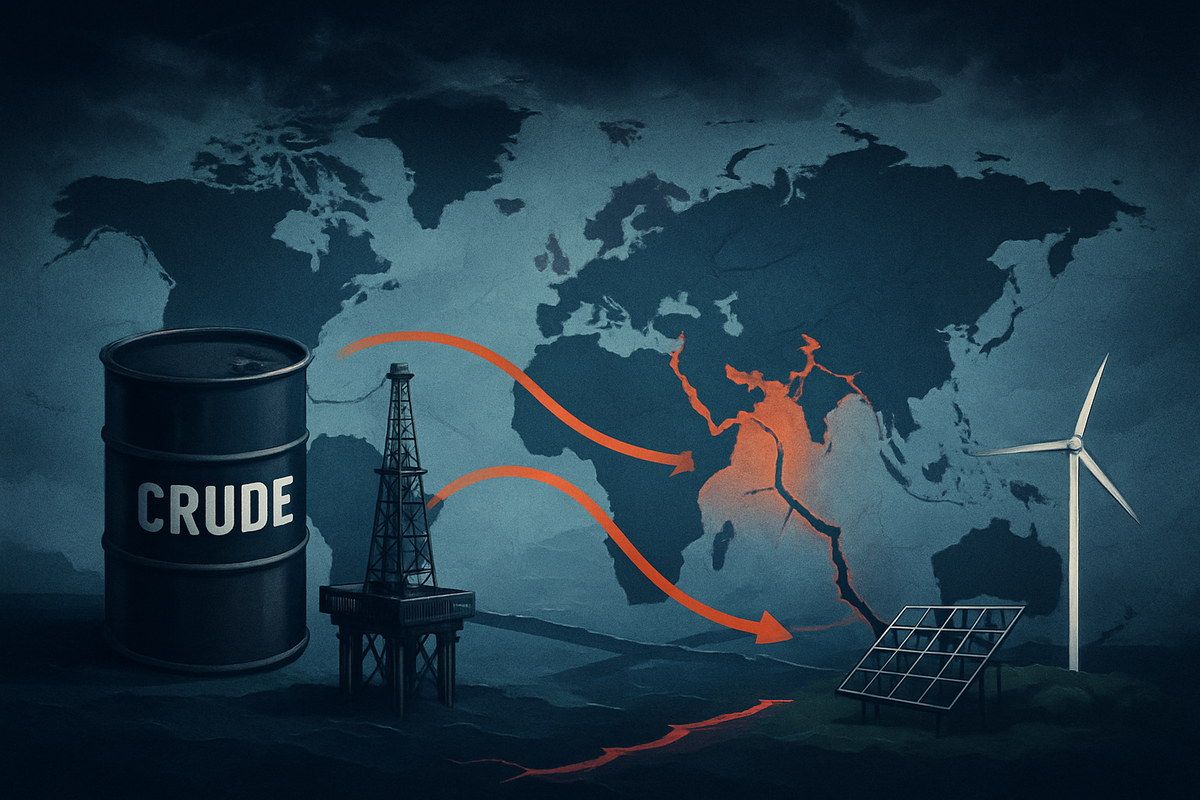
The global energy landscape is currently in a state of unprecedented flux, continually reshaped by a relentless barrage of geopolitical events. From the enduring conflict in Eastern Europe to escalating tensions across the Middle East and strategic maneuvers by major oil producers, these events are not merely footnotes in international relations; they are direct drivers of crude oil price volatility and profound instability within the global energy market. As of December 1, 2025, the ripple effects of these developments continue to dictate economic trajectories, influence corporate strategies, and challenge the very notion of energy security worldwide.
The period spanning 2023 to 2025 has served as a stark reminder of crude oil's inherent sensitivity to geopolitical tremors. These events have not only triggered immediate price spikes but have also forced a fundamental rethinking of supply chains, energy policies, and long-term investment strategies across the globe. The ongoing saga underscores that in an interconnected world, a conflict in one region can send shockwaves that reverberate through every barrel of oil, every shipping route, and ultimately, every consumer's wallet.
A Turbulent Timeline: Conflict, Disruption, and Strategic Plays
The past two years have been characterized by a series of high-impact geopolitical events, each leaving an indelible mark on crude oil prices and the broader energy market.
The Russia-Ukraine conflict, which commenced in February 2022, continued to be a dominant factor throughout 2023-2025. While the initial dramatic price spikes predate this period, the sustained Western sanctions on Russian exports and Europe's determined pivot away from Russian energy have maintained a persistent level of market volatility. Russia, a major oil and natural gas exporter, found new markets in Asia, particularly India and China, for its discounted crude, fundamentally reconfiguring global trade routes. This realignment has kept a risk premium embedded in oil prices, with ongoing embargos contributing to approximately 2% higher prices after one quarter. The conflict has not only altered supply dynamics but also accelerated Europe's drive for energy independence.
Simultaneously, the Middle East has been a crucible of escalating tensions. From late 2023 into 2025, two major flashpoints emerged: the Houthi attacks in the Red Sea and heightened friction between Israel and Iran.
The Red Sea disruptions, initiated by Houthi rebels in Yemen in November 2023, have targeted merchant vessels in solidarity with Palestinians. With over 190 attacks by October 2024, these actions severely impacted the crucial Suez Canal route, which handles about 12% of global trade. Shipping companies, including giants like Maersk (MAERSK-B.CO) and CMA CGM (CMAP), were forced to reroute around Africa's Cape of Good Hope, adding 10-14 days to journey times and substantially increasing transportation and insurance costs. Oil prices reacted sharply to these events, with an immediate 2% jump following attacks on Greek vessels and WTI crude topping $78 per barrel in January 2024 after a fuel tanker strike. A risk premium of $2-4 per barrel was consistently applied to oil prices due to these tensions, though the overall impact on energy prices was somewhat muted compared to expectations due to stable global supplies and the establishment of alternative routes.
Further exacerbating regional instability were Israel-Iran tensions. Reports of potential Israeli strikes against Iranian nuclear facilities in April 2024 led to a 3% surge in oil prices. A more significant escalation in mid-June 2025 saw Israeli airstrikes on Iranian nuclear infrastructure trigger a 7-11% increase in Brent crude prices, reaching $79.50. Subsequent airstrikes reportedly killing a senior Iranian commander pushed crude oil futures up by as much as 14% on June 13, 2025. These events stoked fears of supply disruptions, particularly concerning the Strait of Hormuz, a critical chokepoint for nearly 20% of global crude. Analysts warned that a full disruption could send prices soaring to $110-$130 per barrel.
Amidst these conflicts, the OPEC+ alliance, led by Saudi Arabia and Russia, actively managed crude oil production to stabilize the market. In April 2023, OPEC+ announced surprise cuts of over 1.1 million barrels per day (bpd), effective May, with Saudi Arabia adding a voluntary 500,000 bpd cut. These cuts were repeatedly extended, most recently until December 2026. Further voluntary cuts of 2.2 million bpd were agreed upon for Q1 2024, extended until March 2025. However, in April 2025, eight OPEC+ members, including Saudi Arabia and Russia, agreed to a gradual reversal of 2.2 million bpd of voluntary cuts over an 18-month period, concluding in September 2026, signaling a flexible approach to market management. The April 2023 cuts led to Brent crude reaching almost $86 per barrel, with Goldman Sachs (NYSE: GS) raising its Brent crude forecasts. However, the market's response to later cuts was more muted, suggesting they were either priced in or deemed insufficient to counter broader supply-demand imbalances, especially with increasing production from non-OPEC+ countries projecting a global oil market surplus in 2025.
Corporate Fortunes: Winners and Losers in a Volatile Market
The tumultuous geopolitical environment has created a distinct landscape of winners and losers across the energy sector, influencing the operations, profitability, and stock performance of public companies.
Exploration & Production (E&P) companies generally emerge as significant winners when crude oil prices are high. Integrated oil and gas giants like ExxonMobil (NYSE: XOM), Chevron (NYSE: CVX), and Shell plc (LSE: SHEL) see substantial increases in their upstream segment revenues and profitability, often leading to improved earnings and higher dividends. Independent E&P firms, whose profitability is highly sensitive to per-barrel prices, also benefit immensely. ConocoPhillips (NYSE: COP) and EOG Resources (NYSE: EOG) are prime examples, with EOG Resources posting strong profits in Q1 2025. Occidental Petroleum (NYSE: OXY) and Diamondback Energy (NASDAQ: FANG) also recorded robust profits, while smaller firms like Riley Permian and HighPeak Energy demonstrated significant per-unit profits. Conversely, E&P companies with high operating costs or those exposed to regions with reduced demand could struggle if price increases don't offset these factors.
The refining segment's profitability hinges on the "crack spread"—the difference between crude oil and refined product prices. Refiners with efficient operations and diversified access to crude supplies can navigate higher crude costs, especially if crack spreads are robust. While no specific refiners were explicitly named as direct winners or losers purely from these geopolitical crude price shifts, a strong demand for refined products in 2023-2025 has generally supported the sector. However, refiners heavily reliant on specific crude grades from disrupted regions or those unable to pass on increased acquisition and transportation costs could see profitability squeezed.
Shipping companies have seen mixed fortunes, with container shipping giants often benefiting from the Red Sea disruptions. Companies like Maersk (MAERSK-B.CO) and CMA CGM (CMAP), with their diversified fleets and global networks, have been able to reroute effectively, leveraging increased demand for longer routes and the resulting surge in freight rates and insurance premiums. Their profitability has been enhanced by the reduced effective capacity in the market due to longer journey times. In contrast, companies heavily dependent on the Suez Canal route, such as Hapag-Lloyd (ETR: HLAG), have seen earnings drop due to rerouting costs. Smaller regional carriers, like ECS Liners, face existential threats as increased costs can outpace their ability to raise prices.
Oilfield services companies like Schlumberger (NYSE: SLB), Halliburton (NYSE: HAL), and Baker Hughes (NASDAQ: BKR) generally experience increased demand for their drilling, completion, and support services when higher oil prices incentivize E&P companies to expand output. Baker Hughes, in particular, has benefited from the booming growth in liquefied natural gas (LNG) capacity, driven by Europe's energy security concerns. Their operations and profitability are boosted by higher activity levels from their E&P clients. However, the sector can be sensitive to E&P capital expenditure decisions, with offshore service providers, for example, underperforming in late 2024 due to lower demand for rigs and contract delays.
The renewables sector faces a mixed impact. While geopolitical events highlighting energy insecurity can accelerate the long-term energy transition, boosting strategic investment in solar, wind, and battery storage, short-term volatility in fossil fuel prices can make traditional energy sources temporarily more attractive. Companies like NextEra Energy (NYSE: NEE) and Ørsted (CPH: ORSTED), focused on clean energy, could see an accelerated push for their technologies. LNG infrastructure providers like Cheniere Energy (NYSE: LNG) also benefit from heightened energy security concerns, particularly in Europe. However, some renewable companies, such as Enphase Energy (NASDAQ: ENPH) and NextEra Energy Partners (NYSE: NEP), experienced stock value declines in 2024-2025 due to declining revenue, competitive pressures, and project headwinds. A significant increase in oil output by OPEC+ leading to cheaper oil could also temporarily undercut investment in renewables.
Wider Significance: Reshaping the Global Energy Paradigm
The geopolitical events of 2023-2025 have had a far-reaching impact, extending beyond immediate price fluctuations to fundamentally reshape broader industry trends, ripple effects, regulatory frameworks, and geopolitical alignments.
The most profound shift has been the acceleration of the energy transition. The Russia-Ukraine conflict, in particular, acted as an "unintended catalyst" for Europe's pivot away from Russian fossil fuels. This led to new policies like the REPowerEU strategy, aiming for 45% renewable energy by 2030, and a surge in clean energy investments. While the transition introduces new geopolitical dynamics, such as competition for critical minerals (e.g., lithium, cobalt), it underscores a global drive towards energy independence and diversification. Countries like Germany, despite short-term reliance on coal, have seen their long-term renewable shift accelerate.
These events have also triggered a fundamental rethinking of supply chain resilience. The Red Sea disruptions, alongside lessons from the COVID-19 pandemic, exposed fragilities in energy supply chains, prompting a move away from "just-in-time" models towards an urgent demand for robustness. Energy supply chains are now viewed through a national security lens, leading countries to reduce reliance on single markets and secure access to critical minerals. Policies like the US Inflation Reduction Act (IRA) and the EU Critical Raw Materials Act reflect these geopolitical dimensions.
Ripple effects are evident in global energy diplomacy. European nations have actively diversified their energy sources, strengthening ties with new LNG suppliers like the United States and Qatar. Russia, in turn, has cemented its energy ties with Asian economies. This increased competition for LNG, especially in Europe, drives up global prices, affecting developing nations who may face direct competition and higher costs. The rising production from non-OPEC+ producers like the US and Brazil also creates competitive pressures on the OPEC+ alliance, influencing their output decisions.
Regulatory and policy implications have been swift and significant. The EU underwent a rapid overhaul of its energy policy, focusing on phasing out Russian fossil fuels, accelerating renewable energy adoption, and implementing emergency measures like coordinated gas storage targets. Energy security and resilience have become central concerns for policymakers globally. There's also a growing trend of protectionism, with potential trade wars (e.g., between Europe and China over wind turbines) that could impact the stability and costs of renewable energy supply chains. In the US, President Biden's ban on new offshore oil drilling in vast areas of US coastal waters in December 2024 highlights the politicization of energy policy, though President-elect Trump has signaled a willingness to reverse such decisions.
Historically, the current energy turbulence draws strong comparisons to the oil crises of the 1970s. Both periods featured high energy prices, concerns about supply tightness, and geopolitical triggers (the 1973 Arab oil embargo versus today's Russia-Ukraine conflict and Middle East tensions). Both eras also saw a renewed emphasis on energy security and calls for conservation. However, key differences exist: the global economy's reliance on oil has significantly diminished since the 1970s, supply sources are more diversified (with the US as the largest producer, not importer), and strategic petroleum reserves now provide a buffer. Crucially, today's crisis is compounded by the imperative of climate change, which pushes for a deeper and faster shift away from fossil fuels, an element less at the forefront in the 1970s.
What Comes Next: Navigating an Uncertain Horizon
Looking ahead, global energy markets face a complex array of short-term and long-term possibilities, necessitating strategic pivots and presenting both challenges and opportunities.
In the short-term (2023-2025 and immediate future), elevated uncertainty and price sensitivity to geopolitical developments will persist. The Russia-Ukraine conflict will continue to influence energy prices, particularly for natural gas, as Europe consolidates its reliance on diverse LNG imports. Middle East tensions, especially those threatening critical chokepoints like the Strait of Hormuz, will remain a primary driver of oil price volatility, with potential for significant spikes. The Red Sea disruptions are expected to continue impacting shipping costs and transit times, with a meaningful return to normal routing unlikely before late Q2 2025. OPEC+ will continue its tactical management of production, aiming to stabilize prices, but its flexibility will be tested by evolving demand patterns and non-OPEC+ supply growth.
The long-term outlook (beyond 2025) is increasingly intertwined with the energy transition. The crisis has accelerated the push for cleaner alternatives, with renewable power capacity expanding rapidly. This transition, however, will introduce new geopolitical dynamics, including intensified competition for critical minerals vital for clean technologies. Energy security will increasingly be defined by the diversity of fuels and sources, and the primacy of domestic resources. While fossil fuel demand is projected to peak within the decade by some analyses, its decline is not expected to be rapid, with resilient consumption in sectors like aviation and petrochemicals. The Global South's rising energy demand will create new competition and potential friction over material processing and climate finance, risking a "fossil fuel lock-in" if conventional sources meet their growing needs.
Strategic pivots and adaptations are crucial. Governments must prioritize the diversification of energy sources and suppliers, investing in infrastructure resilience, including renewable energy capacity, storage, and smart grids. Policy frameworks must provide clear strategic direction, correct market failures, and incentivize private sector investment in clean energy, balancing energy security, affordability, and sustainability. For businesses, robust scenario planning and maintaining flexibility in procurement strategies will be key to navigating this turbulent environment.
Market opportunities lie primarily in the burgeoning clean energy sector. The acceleration of the energy transition creates immense growth in solar, wind, electric vehicles, and green hydrogen. New energy diplomacy and technological innovation in areas like energy storage and carbon capture also present significant opportunities. However, challenges include persistent price volatility and inflation from geopolitical events, ongoing supply chain vulnerabilities (affecting both fossil fuels and clean energy components), and investment uncertainty. Geopolitical fragmentation and increased protectionism threaten to politicize energy relations and fragment value chains.
Potential scenarios and outcomes include:
- Continued Volatility and Fragmentation (Most Likely): A global energy system on edge, characterized by ongoing price fluctuations, regional energy crises, and an uneven energy transition, shaped by great power rivalry.
- Accelerated, but Uneven, Energy Transition: Developed nations lead with significant investments, while developing countries face challenges in financing and technology access, potentially leading to a "fossil fuel lock-in."
- Resilient but More Expensive Global Energy System: Markets adapt through diversification and strategic alliances, but at a higher cost, reflected in elevated energy prices and increased investment in supply chain redundancy.
- Escalatory Conflicts and Severe Disruptions (Worst-Case): A significant escalation, particularly in the Middle East, leading to prolonged energy supply disruptions, extreme price spikes, and global recession.
Wrap-Up: A New Energy Order in the Making
The past two years have underscored the profound and enduring influence of geopolitical events on crude oil prices and the stability of global energy markets. The key takeaways are clear: energy security has been thrust to the forefront of national agendas, the global energy transition is accelerating, and supply chain resilience is paramount. The market is moving forward with an acute awareness of its vulnerabilities, prompting a fundamental reorientation of energy policies and investment strategies.
Investors should watch for several critical indicators in the coming months. The trajectory of the Russia-Ukraine conflict, any further escalation in Middle East tensions, and the effectiveness of international efforts to secure shipping lanes in the Red Sea will directly impact oil prices. OPEC+'s future production decisions, particularly regarding the pace of unwinding voluntary cuts, will also be crucial. Furthermore, the speed and scale of investment in renewable energy and critical mineral supply chains will shape the long-term energy landscape. The interplay between traditional fossil fuel dynamics and the accelerating shift towards cleaner energy systems will define the new energy order. The market is not merely reacting to events; it is actively adapting to a new era where energy is undeniably a tool of geopolitics, and stability is a precious commodity.
This content is intended for informational purposes only and is not financial advice