Fifth edition of Hologic Global Women’s Health Index reveals over half of women worldwide weren’t tested for key conditions in the past year
Hologic and Gallup convene experts to discuss closing gaps in screening access
Global women’s health leader Hologic, Inc. (Nasdaq: HOLX) today released data showing that while testing for some health conditions has risen among women globally, a vast screening gap remains. Over half of women and girls aged 15 and older — an estimated 1.5 billion women — were not tested for cancer, high blood pressure, diabetes or sexually transmitted infections (STIs) in the past year.
This press release features multimedia. View the full release here: https://www.businesswire.com/news/home/20260317786907/en/
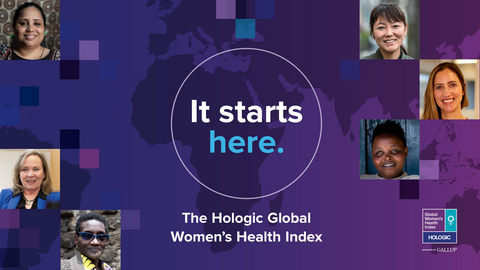
Hologic Global Women's Health Index Fifth Edition
The data are part of the fifth edition of the Hologic Global Women’s Health Index developed in partnership with Gallup. Based on an annual survey of 145,000 people in 144 countries and territories, the Index tracks progress in women’s health and well-being worldwide.
Five years of Index data show that the proportion of women screened for key preventable conditions has increased in some countries, but at the global level, screening rates remain unacceptably low, and progress has been limited. Specifically, in Year 5:
- 13% of women globally reported that they had been tested for any type of cancer in the past 12 months (up 1 point since Year 1)
- 39% had been tested for high blood pressure (up 6 points since Year 1)
- 24% had been tested for diabetes (up 5 points since Year 1)
- 10% had been tested for STIs (down 1 point since Year 1)
“It is encouraging to see needed increases in preventive care screening rates in this year’s Index data, but we cannot mistake progress for success,” said Stephen P. MacMillan, Chairman, President and CEO of Hologic. “With 1.5 billion women still missing lifesaving screenings, women’s health needs are just as urgent as they have ever been. We now have five years of data that highlight what works; now we must turn data and discussion into action.”
Beyond health screenings, the Index reveals important insights across multiple dimensions of women’s health. Most notably:
- Women’s physical health continues to suffer. A third of women reported that they experience daily physical pain, and nearly 1 in 4 reported health problems serious enough to interfere with day-to-day activities.
- High levels of worry and sadness negatively impact women’s emotional health. More women reported feeling worried (42%) and sad (28%) in Year 5 than in Year 1, underscoring a rise in negative emotional experiences over time.
- Nearly 1 billion women feel unsafe walking alone at night. Two-thirds of women (67%) said they feel safe walking alone at night in their communities — a new high. But nearly 1 billion women still feel unsafe.
- One billion women struggle to afford the basics. Nearly 4 in 10 women said there were times in the past year when they couldn’t afford food, and almost 1 in 3 struggled to afford housing.
The Index translates women’s answers to questions about five dimensions of health into a single score ranging from 0 (lowest) to 100 (highest). The world scored 54 out of 100 on the Index in Year 5, the same score as in Year 1, suggesting that global women’s health has not improved overall in recent years. At the country level, progress has been mixed: Since Year 1, Index scores have increased in 28 countries and decreased in 10. Year 5 scores range from a high of 69 in Taiwan — which led the world for the fifth straight year — to a low of 32 in Chad. As a large, multi-year, globally representative dataset centered on women’s reported health experiences, the Index provides leaders with a clear evidence base to guide action. To accelerate progress in women’s health, it calls for:
- A global commitment to expand access to early detection, particularly for conditions that disproportionately affect women.
- Developing national women’s health strategies that establish a lifelong road map for health and wellness.
- Closing research gaps for conditions that disproportionately impact or affect women differently.
Global Health Experts Discuss Strategies for Closing the Screening Gap
The Index will be launched today at an event hosted by Hologic and held at Gallup World Headquarters in Washington, D.C. The event will bring together women’s health experts, screening advocates and industry representatives to commemorate five years of the Index and discuss the health challenges facing women worldwide — including gaps in access to screenings.
Speakers include Dr. Mia Keeys, Director of Global Health and Innovation at Hologic; Jody Hoyos, CEO of the Prevent Cancer Foundation; Ritu Sharma, Chief Global Policy Officer at CARE USA; and Janet Fleischman, an independent consultant on global health and gender equity and nonresident senior associate at the CSIS Global Health Policy Center.
For more information and to download the full report, visit WomensHealthIndex.com.
About Hologic, Inc.
Hologic, Inc. is a global leader in women’s health focused on developing innovative medical technologies that effectively detect, diagnose and treat health conditions and raise the standard of care around the world. To learn more, visit www.hologic.com and connect with us on LinkedIn, Facebook, X, Instagram and YouTube.
About Gallup
Gallup delivers analytics and advice to help leaders and organizations solve their most pressing problems. Combining more than 90 years of experience with its global reach, Gallup knows more about the attitudes and behaviors of the world’s constituents than any other organization.
SOURCE: Hologic, Inc.
View source version on businesswire.com: https://www.businesswire.com/news/home/20260317786907/en/
1.5 Billion Women Miss Essential Preventive Tests, Despite Uptick in Global Screening Rates
Contacts
Media Contact
Bridget Perry
Senior Director, Corporate Communications
(+1) 617.997.3840
bridget.perry@hologic.com